
Easter Has Come, What Now? The Great Commission and the Renewal of the World
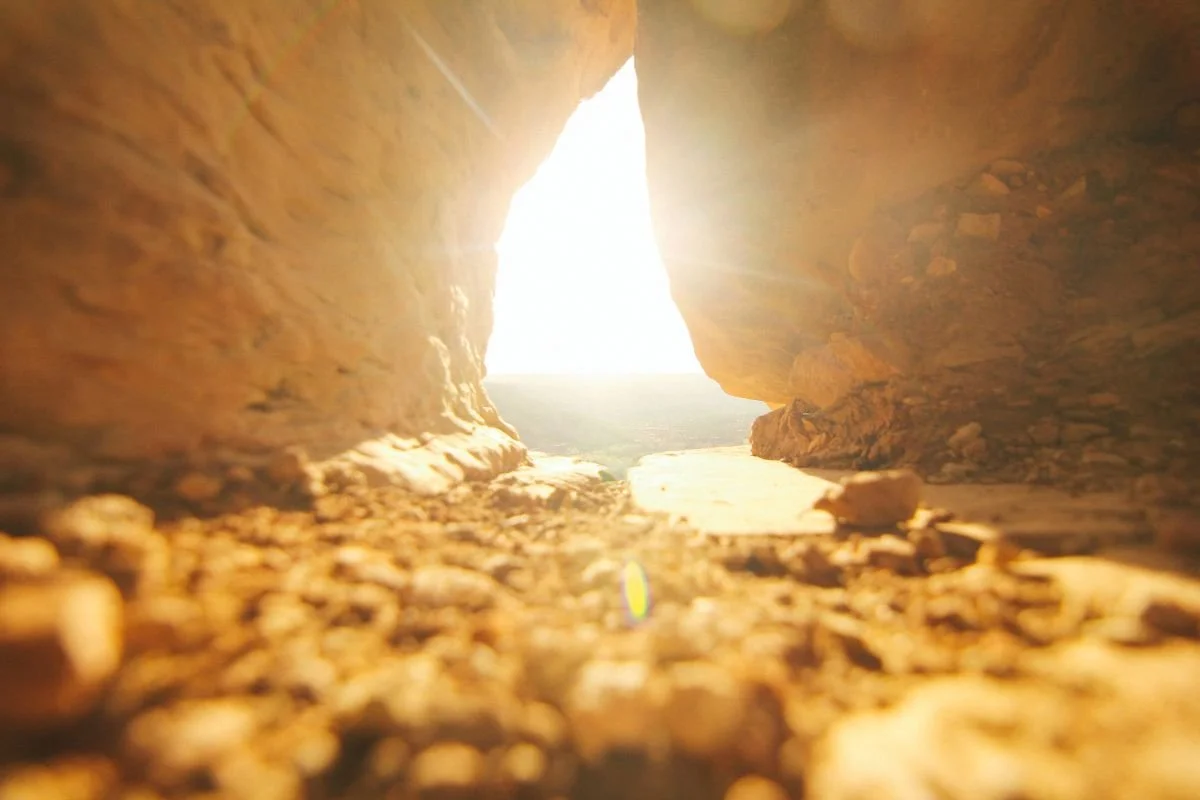
Photo by Andrew Holzschuh
You would think that seeing Jesus alive would solve everything. But sometimes, even resurrection leaves us asking, "What now?" This is that moment after a tremendous, mountaintop event in life—a graduation, a wedding, even retirement—when the celebration is over and real life creeps back in. It leaves us unsure of what comes next, even full of doubt and hesitation.
Easter Sunday is the mountaintop of Christian celebration, and yet, as the season of Easter unfolds, many believers find themselves wondering, "Now what?" The world still seems broken. The church still struggles. Our lives still have unanswered questions. In moments of hesitation, I’ve found John Wesley's sermon, "The General Spread of the Gospel," to be a deep well of inspiration, offering a compelling vision for a church called to act.
Wesley’s scripture text for this sermon is out of Isaiah 11, a chapter often associated with the Advent and Christmas seasons. Yet, as Wesley reminds us, we find more than a prophecy of Christ’s coming; we see a vision for God’s mission to renew the world. The prophet proclaims, "The earth shall be full of the knowledge of the Lord as the waters cover the sea" (Isaiah 11:9). Wesley saw in this prophecy a call not only to celebrate the Incarnation but to labor for the spread of God's holiness and peace across the entire earth.
In his sermon, Wesley casts a hopeful vision: a world transformed by the loving knowledge of God, a world where holiness and happiness would actively spread from person to person. He insisted that this transformation would not come through passive onlooking but through the faithful action of God's people. As Wesley put it directly, “the kingdom of God will not come with observation; but will increase, wherever it is set up, and spread from heart to heart, from house to house, from town to town, from one kingdom to another.” This vision offers a foundation for shaping today’s Wesleyan theology of mission, particularly for our new movement within the Global Methodist Church.
Wesley’s missional vision is obediently faithful to Christ’s Great Commission in Matthew 28. After his resurrection, Jesus meets his disciples not in a throne room or political power center, but on a mountain—a place of divine encounters and new beginnings. The Risen Christ finds them in a state we know all too well: “they worshiped, but some doubted” (Matthew 28:17, NRSV, emphasis added). The Greek word Matthew uses here for doubt is distazō. It does not necessarily mean doubt about whether Jesus rose from the dead. They had followed his instructions to come to Galilee. They could see him standing before them. This wasn’t an intellectual uncertainty about the identity of Jesus at this moment. Instead, their distazō, their doubt, was perhaps more in line with another meaning of this Greek word: “to be uncertain about taking a particular course of action, [to] hesitate” (BDAG, “δισταζω”). They believed. They worshiped. But they were uncertain about what resurrection meant for their next steps.
Isn’t that where many of us find ourselves? We believe in the resurrection. We gather for worship. We in the Global Methodist Church have been blessed to witness and be on the ground floor of a new movement of God! Yet faced with the enormity of a broken world, the hostility toward faith, and confusion within the church, we hesitate. We stand at the edge of obedience, uncertain whether we can—or should—step forward. We are unsure how to live as resurrection people in a world that seems determined to resist new life.
But the Great Commission proclaims otherwise: the world isn’t doomed, the mission isn’t over, and God’s not done!
Jesus' response to his hesitant disciples is stunningly simple: "Go therefore and make disciples of all nations" (Matthew 28:19). He doesn't instruct them to watch, wait, or withdraw. He sends them forward. The Risen Christ doesn’t call his followers to sit and ponder the resurrection; he commissions them to live it out, empowered by the Holy Spirit.
Our calling is active. Again, as Wesley reminded us in his sermon, the kingdom of God "will not come with observation." It will not arrive because we watch and wait passively. It will spread through active, faithful lives—one heart, one house, one town at a time.
God rarely does things the way we would do them. Some of those hesitant disciples on that Galilean mountaintop may have assumed that Jesus would head straight for the temple or the palace after his resurrection, where he would assert his authority and fix everything visibly and immediately. They asked him as much in Acts 1:6, “Lord, is this the time when you will restore the kingdom to Israel?” He had risen from the dead! Surely now he would throw Herod off his throne, topple Rome's power, and establish his kingdom by force. Their world had gotten so bad that perhaps they thought this was the only way to fix such a broken place. Instead, Jesus called them to a mountain. Mountains are a biblical symbol of revelation and commissioning. He sent them out not with swords or political strategies, but with a mission: to go and make disciples.
Today, many Christians fall into disappointment and resigned pessimism about the state of the world. They feel hesitant about how the church should respond. It is not uncommon to hear the sentiment: “the world is going to hell in a handbasket." This perspective presumes all we can do is endure until Christ returns to set everything right. But that attitude misunderstands the mission the Risen Christ has given us. Jesus did not rise from the dead to hand us survival strategies; he rose to send us on a mission of holiness. If resurrection is real, then renewal is possible—not just someday, but here and now.
This is the crucial reminder we need in our moment. When we look at the state of the world, full of wars, political division, economic uncertainty, and struggles of every kind, it is easy to become disillusioned. But if Jesus is truly risen, the mission is alive, and we have work to do. If Jesus is the “shoot” that comes from the line of David (Isaiah 11:1), then his glory will fill the earth "as the waters cover the sea” (Isaiah 11:9), just as Isaiah prophesied and as Wesley preached. The same power that rolled away the stone is the power that sends us out into the world.
Jesus didn’t rise from the dead so we could stay in our graves. Furthermore, Jesus didn’t rise from the grave so we could stand around waiting for him to come back. He rose so we could go and make disciples.
In his hopeful vision, Wesley saw a revived and consecrated Church bringing holiness and renewal to the world. It spread from heart to heart, from believer to believer, and across the nations. We are inheritors of this vision as part of the Global Methodist Church. We are not called to nostalgia or mere preservation and survival. We are called to a resurrection movement—a mission fueled by the living Christ and rooted in the authority of Scripture and empowered by the Holy Spirit. Our missional theology must be one of hope, Spirit-empowered action, and global vision.
This vision looks like disciples living out everyday faithfulness. It looks like making disciples where we are in our homes, workplaces, schools, and neighborhoods. Our churches must be less focused on survival and more focused on sending our flocks out to every frontier where the Christian witness is still needed. In this vision, believers refuse to be paralyzed by the world's brokenness and are instead mobilized by Christ's victory.
Christians are not meant to sit back and watch the world decay. We are meant to go and bear witness to the Kingdom that is already breaking in. Here is the good news: We are not alone! "And remember," Jesus said, "I am with you always, to the end of the age" (Matthew 28:20). The Great Commission comes with a promise. The Risen Christ goes with us. His presence empowers our going and sustains our doing.
In God's eyes, the world isn't going to hell. The world is going to Jesus. He invites us to be part of that story. By his grace, our hesitation, our distazō, can be turned into action. Our uncertainty about the next steps can be transformed into conviction for the mission, and our doubts can be reshaped into daring obedience.
The mission is still on. The Gospel will fill the earth. The question is not whether God is working. The question is whether we are willing to work with God. Let us go, not with hesitation, but in resurrection power. Let us do, not in our strength, but in the strength of the Risen One. Let us watch, not passively, but actively, as the kingdom of God spreads, heart by heart, until the whole earth is filled with the knowledge that Jesus Christ is Lord.
Kelly McCuaig is an ordained elder in the Global Methodist Church and serves as the lead pastor of First Methodist Church in Carlsbad, New Mexico.