
Gloom or No Gloom—That Is the Question! (Thoughts on Isaiah 8 and 9)
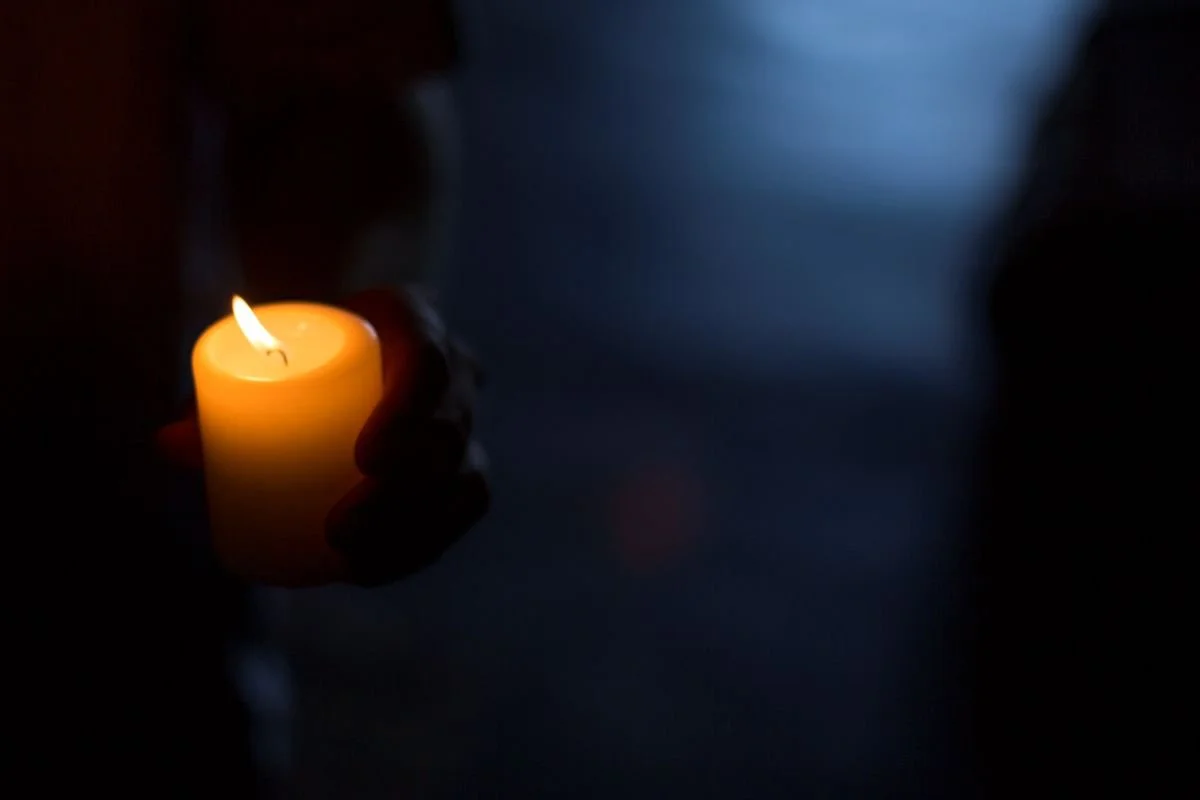
Photo by Forgiven Photography
The ninth chapter of Isaiah opens with a passage often heard during Advent (9:1-7). The prose introduction to the familiar oracle of hope reads: “But there will be no gloom for those who were in anguish. In the former time he brought into contempt the land of Zebulun and the land of Naphtali, but in the latter time he will make glorious the way of the sea, the land beyond the Jordan, Galilee of the nations” (v. 1, NRSV). Despite the notoriously difficult translation issues in this verse, its function as a bridge between the oracles of Isaiah 8 and that of Isaiah 9:1-7 is clear. (In the Hebrew numbering, it is the final verse of chapter 8.) The versions are consistent in translating the opening conjunction (kî) as an adversative, indicating a movement of contrast, often with even more emphasis than the NRSV's simple "but" ("nonetheless," CEB; "nevertheless," NIV, NLT, KJV). The immediate contrast is between two conditions of the people of God: "gloom," intensified by the accumulation of ominous words in 8:20-22 ("no dawn," "darkness," "thick darkness") versus the "no gloom" promised in 9:2-3 ("great light," "light"). What becomes clear as we take seriously the sequence of chapters 8 and 9 is that these two conditions (gloom, no gloom) are not simply or even primarily a matter of chronology (once you were in darkness, now you are in light), but rather an issue of choice.
In Isaiah 8:19-22, the description of the choice for darkness is at once comic and tragic. Some among Isaiah's fellow Israelites have made the truly ridiculous decision to seek teaching and instruction from "ghosts and spirits," consulting the dead on behalf of the living. Reminiscent of Elijah with the prophets of Baal (1 Kings 18:27), Isaiah mocks these feeble, false guides as voices that "chirp and mutter"; their whispering incoherence might be laughable—if the consequences weren't so tragic. Those who abandon the living God in order to seek wisdom from the dead—and who encourage others to do so— “will have no dawn” (v. 20). Their existence will be characterized by dark distress, gloomy anguish, and, ultimately, the thick darkness of rage when their chosen gods fail them. Jeremiah gives us God’s own perspective on this choice that is not just blatantly foolish but inherently evil: “Be appalled, O heavens, at this be shocked, be utterly desolate,” says the Lord, “for my people have committed two evils: they have forsaken me, the fountain of living water, and dug out cisterns for themselves, cracked cisterns that can hold no water” (Jer. 2:12–13, NRSV).
Lest we shake our heads and sigh condescendingly over such ludicrous foolishness, perhaps we should pause for personal and collective reflection over our own choices. Where have we sought wisdom and direction from dead things and false gods? Where have chirping, muttering voices drawn us into dark, God-dishonoring actions and attitudes? Where do we need to abandon broken cisterns and return to the Fountain of living water (John 7:37-39)?
In the familiar Advent text (Isaiah 9:2-7), we see the light we are called to embrace, the shadow-banishing work of God that reveals the futility of penultimate, paltry powers. How is that choice made, particularly when the incessant muttering of false gods lures us so insistently toward darkness? The clues seem to be found in the imperatives given to and the actions taken by the prophet (8:11-18).
First, in verses 12-13, we see Isaiah being called to choose, intentionally and deliberately, a different perspective from the one that prevailed among his countrymen. As Brueggemann puts it, "Isaiah has been 'seized' to see differently" (Isaiah 1-39, 1998, 79). The Lord’s word to his prophet is an invitation to refuse the distorted thinking and misplaced fears of his day: “Don’t call conspiracy all that this people calls conspiracy. Don’t fear what they fear, and don’t be terrified” (v. 12, CEB). The counter perspective sets Isaiah’s focus where it should be and offers him a different interpretive grid through which to see the events of his day: “It is the LORD of heavenly forces whom you should hold sacred, whom you should fear, and whom you should hold in awe” (v. 13).
Second, Isaiah “binds up” (NRSV) or “preserves” (NLT) the testimony and the teaching of God (v. 16), the very things that have been rejected by his foolish compatriots (v. 20). This is a solid foundation in the midst of current and looming darkness, because, as Christopher Seitz says, “what is finally established is neither the house of David (Ahaz) nor ‘this people,’ but only the word of God as a testimony and a teaching” (Isaiah 1–39, 1993, 83).
Finally, Isaiah resolves to wait for the Lord and to hope in him (v. 17), two actions that are inextricably intertwined in the life of the faithful (cf. Pss. 39:7; 130:5). Brueggemann’s description of Isaiah’s choice is aptly put: “[The prophet] will not submit to this frantically chosen gloom but will live in determined and unflinching anticipation that Yahweh will yet enact another, alternative, new thing” (79).
Whatever initial historical referents the beautiful promise of Isaiah 9:2–7 had for the prophet’s original audience (Ahaz, Hezekiah?), the Son that has been born, upon whose shoulders authority rests, who embodies and fulfills the glorious names (Wonderful Counselor, Mighty God, Everlasting Father, Prince of Peace), who now occupies not only the throne of David but the throne of the universe—this is Jesus, the victorious Lion of Judah and the Lamb slain from the foundation of the world (Rev. 5:5–6). It is his kingdom that has been inaugurated in victory through his death, resurrection, and ascension, and into which we have been empowered to live through the gift of his Spirit. We stand in the in-between times, heirs of hope, rejoicing in the current reality of Jesus’ rule and anticipating its final and full revelation in endless peace and enduring justice and righteousness (Isa. 9:7).
So, as Christian readers of this text in this season, how do we dwell faithfully in both its reality and its promise? By making the same choices Isaiah did. We deliberately reject the distorted and fearful perspectives of our day, setting our eyes and our hearts on the Lord, offering him our undiluted reverence and loyalty. We preserve the testimony and teaching of God, binding his Word on our hearts, allowing Scripture to be the central formative voice that speaks into and shapes our lives. And we cling passionately and with perseverance to hope, waiting expectantly on the definitive action of the One who has declared: “The zeal of the Lord of hosts will do this” (9:7).
“Gloom or no gloom—that is the question.” Ultimately, the choice between the two conditions is a choice of postures in relationship to the King. Will we follow the foolish, ludicrous choices of Isaiah’s compatriots, turning our backs on the living God, to seek direction and instruction from dead things, or will we choose Isaiah’s path of trust and hope, shaped by a fierce clinging to truth and to the One who is true? That choice will decide not just the “gloom or no gloom” question; it will also determine whether the Lord of lords and King of kings is for us a stumbling block or a sanctuary (Isa. 8:14). Perhaps that is the real Shakespearean (and biblical) antithesis that confronts us: “To stumble or to find sanctuary—that is the question.”
Rachel Coleman is affiliate professor of Biblical Studies at Asbury Theological Seminary, profesora adjunta de Nuevo Testamento for United Theological Seminary, and the regional theological education coordinator (Latin America) for One Mission Society. She serves on Firebrand’s Editorial Board.