
The Reversal: When Politics Starts Discipling the Church
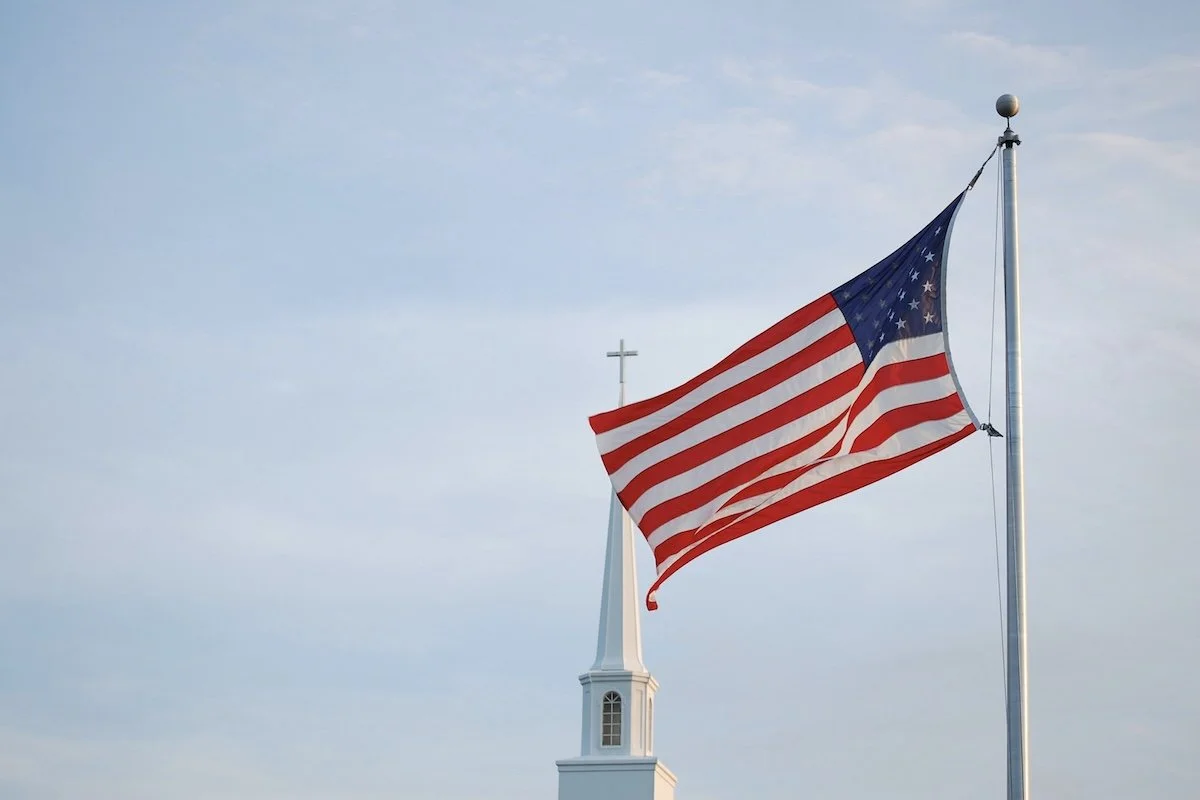
Photo by Brad Dodson on Unsplash
There is a song in the musical Hamilton called “The Room Where It Happens.” It is about power, about who gets to sit at the table where decisions are made. I think about that song often because, in a very real sense, I am often in the room where it happens. I have served as an officer of my state’s Republican Party, and I have spent years watching political life up close, in the rooms where the cameras are off and the crowd has gone home.
What I have seen there points to something more serious than hypocrisy. Hypocrisy is as old as humanity. What I have witnessed is the wholesale replacement of genuine Christian faith with political identity: the moment when a person’s party becomes their gospel, their candidate becomes their savior, and anyone who votes differently becomes their enemy. I have watched it on both sides of the aisle, Republicans who believe God is a registered member of their party and Democrats equally certain the Almighty would feel at home at their convention. Both have allowed their politics to inform their faith rather than allowing their faith to inform their politics.
That reversal now runs deeper than how a person votes. There was a time when faith determined politics. Today people increasingly choose their church to fit their politics and adjust their convictions to match their party. The political commitment comes first, and the faith gets selected to support it. That is the reversal in its most complete form: the point at which politics has stopped influencing faith and started replacing it.
The impulse is not new. Thomas Jefferson, with a razor and paste, cut the Gospels down to a Jesus who gave good moral advice and stayed dead. The worldview came first, and Scripture got trimmed to fit. Today the Chinese Communist Party does the same work with the machinery of a totalitarian state, producing a state-approved Bible in which, in one university textbook, Jesus personally stones the woman caught in adultery. The tool is different but the impulse is identical: make the Bible say what the political vision requires. And here is the question that should settle uncomfortably on every American Christian: how many of us have quietly edited Scripture in our own minds, setting aside the parts that cut against our tribe and calling the result a Christian worldview?
The church’s surrender to this reversal takes two forms. The pastor goes silent, sanding the edges off the prophetic word until the pulpit becomes a place of careful neutrality on anything that might cost him. The churchgoer goes loud, not with the gospel but with a party platform, fusing political identity with faith identity until a different political conclusion feels like spiritual error. I once lived that second surrender myself. Both cost the church its witness: the silent church tells the world the gospel has nothing to say about public life, and the partisan church tells the world the gospel is tribal identity dressed in religious language.
Here is where the Wesleyan tradition has something the moment desperately needs. Every Christian political book I have encountered tells us what we should think about politics. Fewer tell us who we must be as we engage in it. The problem in the rooms of political power is not primarily intellectual. People do not lack information about what the Bible says. They lack holiness. And without holiness, all the correct political positions in the world will not produce faithful engagement.
Wesley understood holiness as the renewal of the soul in the image of God, the Holy Spirit conforming the believer to God’s character in every domain of life, including the political one.
He preached often on Jeremiah 17:9, the heart deceitful above all things, and he knew the conservative heart will find Scripture supporting its preferred conclusions just as reliably as the progressive heart finds Scripture supporting its own. His answer was not better political analysis. It was entire sanctification: the complete yielding of every corner of the heart to God, so that holy love rather than tribal instinct sets the agenda. His “Almost Christian” names the partisan believer with unsettling precision: every outward mark of faith is present, while in one domain of life something other than God holds the throne.
Wesley also modeled what sanctified engagement looks like. Six days before his death he wrote his final letter to William Wilberforce, urging him to press on against the slave trade “in the name of God and in the power of his might.” Wilberforce pressed on for four more decades, sustained not by conviction alone but by the Clapham community that prayed with him, held him accountable, and would not let him quietly become something else. There is no holiness but social holiness, and there is no durable political faithfulness without the local church behind it.
Wesley even left us election-season instructions. In October 1774, days before a heated Bristol parliamentary contest between Edmund Burke and Henry Cruger that was pulling the city’s religious communities into partisan fever, Wesley met with members of the society at Pill who held votes. His journal records what he told them: “I met those of our society who had votes in the ensuing election, and advised them (1) to vote, without fee or reward, for the person they judged most worthy; (2) to speak no evil of the person they voted against; and (3) to take care their spirits were not sharpened against those that voted on the other side.” ( John Wesley, The Journal of the Rev. John Wesley, vol. 6).
Two hundred and fifty years later, those three rules remain among the most practically useful pieces of pastoral guidance ever offered to Christians in political life. Notice what Wesley did not give his people: a candidate endorsement or a partisan alignment. He gave them a posture. Vote by worthiness rather than tribe. Guard your tongue toward the opponent. Guard your heart toward the neighbor who votes differently. Every one of those rules aims at the interior life, because Wesley understood that the real battlefield of political engagement is not the ballot box but the believer’s own spirit, which can be sharpened into something unholy by an election long before it casts a single vote.
That formation is now up against a discipling voice that speaks far more often than the church does. The pastor speaks once a week; the podcasters and commentators speak to the same people every day, and the voice a person hears most often becomes the real pastor. Algorithms disciple people into tribes. The local church forms people into the image of Christ. That difference is irreplaceable.
The reversal can be undone. But it will not be undone by a sharper argument or a winning election. It will be undone the way Wesley always said the heart is changed: by grace, pursued through the ordinary means, until faith informs politics again because there is finally a holy person doing the informing.
Tony M. Hodge is a Republican Party official in West Virginia, host of the podcast Viewpoint with Tony Hodge, an elder in his local church, and the author of The Reversal: Reclaiming Christian Holiness in a Politicized Age (Aldersgate Publishing, 2026).