
10 Scriptural Truths about Women in Leadership [Firebrand Big Read]
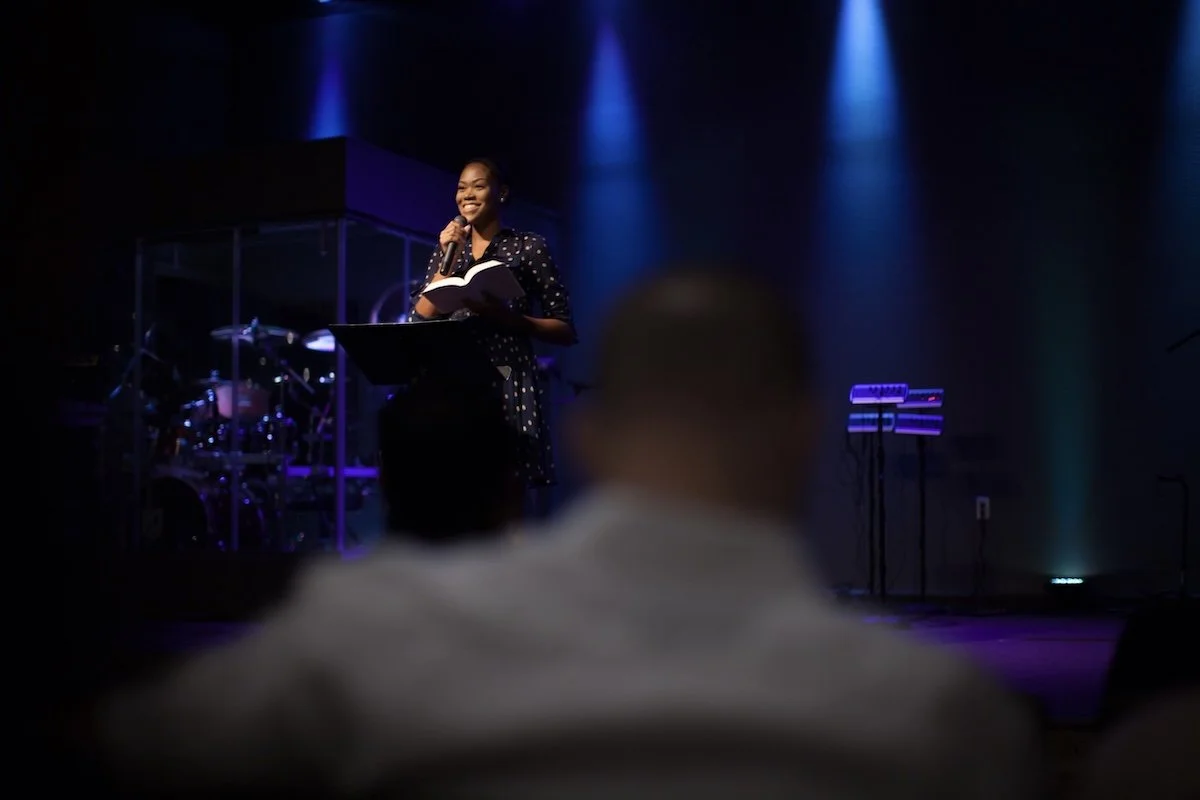
Photo by Pearl
Cultural tides regularly beat against the shores of Scripture, slowly working to erode the truths God has entrusted to the church. In response, the people of God must continually build and repair the bulwarks that protect “the faith that was once for all entrusted to God’s holy people” (Jude 1:3). One cultural tide that has repeatedly arisen is the claim that God intended men to lead and women to follow. A closer look at the testimony of Scripture, however, reveals a different story. This article will explore ten scriptural truths about women in leadership—although many more could be added to this list.
1. Women are made in the image of God and have the same call as men to have dominion over God’s creation.
In the creation narrative, God crafts both men and women in his image, giving to both—without differentiation—the call to be fruitful and multiply, to “have dominion” over the earth, and to “subdue” it (Gen. 1:26-28). Tremper Longman III describes this calling: “As benevolent rulers, who are the earthly counterpart of the heavenly king, they are to care for and protect the rest of the creation” (Genesis, The Story of God Bible Commentary, 2016, p. 37). This charge to both men and women represents the culmination of the creation narrative in Genesis 1. During the first six days, God repeatedly declared his creation “good.” But after the creation of men and women and their calling to have dominion over the earth, God looked at everything he had made and declared it even better than good, it was “very good.” This is the seventh occurrence of “good”—a number symbolizing completion and perfection.
It is all the more striking, then, that the first time something in creation is declared “not good” occurs in Genesis 2, which depicts God’s creation of Adam (prior to Eve). There God declares that it is “not good” for man to be alone; in response, God creates woman as his helper (ezer kenegdo in Hebrew). The phrase, which means “helper corresponding to him,” does not depict weakness or subordination. Rather, the term for helper is often used in the Old Testament of God, who comes to the help of his people when they are in need (e.g., Exod. 18:4, Deut. 33:26, Ps. 70:5).
Thus, both men and women are created in the same image of God, both have the same calling and authority, and both help one another in fulfilling their God-given responsibilities.
2. The subordination of women is part of the curse of the Fall, not God’s original intention.
It is undeniable that much of human history has demonstrated power structures in which men rule over women in society and the home (although a small minority of cultures, like the Mosuo in China, have matriarchal structures). Scripture itself describes these kinds of patriarchal cultures in the Ancient Near East. But it is important to recognize that description does not mean prescription. That is, biblical stories that describe what life was like for ancient people groups do not necessarily mean that God approves of or assigns these societal norms. As described above, God’s original plan involved men and women working together to steward creation. This balance became distorted after Adam and Eve chose to follow their own desires rather than God’s good plan. Gen. 3:16 announces the curse upon Eve as a result of her sin, which includes the pronouncement, “your desire shall be for your husband, and he shall rule over you.”
We see this curse reflected in the patriarchal family structure among the people of Israel—including patrilineal inheritance and polygamy—and in the surrounding cultures. The Old Testament describes the people of God trying to live into God’s plan, but often failing miserably, as evidenced by dysfunctional families (such as Jacob’s wives competing for his attention and children) and other sinful behaviors (such as King David sleeping with the already married Bathsheba). We must take care not to confuse failure with fidelity, sin with sanctification, or hierarchy for holiness.
3. In Christ, God has worked to overturn the effects of the Fall and undo earthly hierarchies.
The advent of Christ brings a clearer understanding of what holy relationships look like (more on this below). After Christ’s death, resurrection, and ascension, God sent the Holy Spirit to empower believers. When the Spirit arrived at Pentecost, the apostle Peter described to his fellow Jews in Jerusalem the meaning of the event by quoting from the prophet Joel:
In the last days it will be, God declares,
that I will pour out my Spirit upon all flesh,
and your sons and your daughters shall prophesy,
and your young men shall see visions,
and your old men shall dream dreams.
Even upon my slaves, both men and women,
in those days I will pour out my Spirit,
and they shall prophesy (Acts 2:17-18).
In using this passage, Peter demonstrated the continuity of the plan of God and the universality of God’s provision to believers. Similarly, Paul declares in Gal 3:28, “There is no longer Jew or Greek; there is no longer slave or free; there is no longer male and female, for all of you are one in Christ Jesus.” The status markers of the ancient world—gender, age, social status, and ethnicity—do not sway God or limit the provision of God’s blessings. Rather, God has created one family in which all believers are children of God and heirs of the inheritance to come (Rom. 8:14-17). This is an astonishing statement in a world where slaves were property to be inherited rather than inheritors of wealth, and where women (at least in the Jewish world) typically could not inherit property. God’s kingdom provides an equality of status that overturns the hierarchies of the world.
4. Jesus lifts up and affirms women, often doing so in ways that defy first-century patriarchal culture.
This equality of all believers is not only for the kingdom to come. Jesus repeatedly treated women in ways that gave them dignity and honor, including allowing them the same privileges as men. When Mary wanted to sit at the feet of Jesus, for example, she was taking the position of a disciple whom the Master would instruct. Jewish rabbis never would have allowed women this privilege. When Martha intervened and urged Jesus to instruct Mary to take her culturally expected place serving in the kitchen, Jesus declared, “Mary has chosen what is better, and it will not be taken away from her” (Luke 10:42b).
Jesus allowed other women to join his band of disciples as well. Luke 8:1-3 describes a number of women who traveled with the disciples and Jesus as he brought “the good news of the kingdom of God.” These women provided for the group financially—an unusual role for women in that culture.
Jesus also lifted up women as examples of piety that all people (including men) should follow, such as the widow who tithed all she had (Mk. 12:41-44), the bleeding woman who had faith to be healed (Mk. 5:21-34), or even the parable of the woman who lost a silver coin, diligently searched until she found it, and then rejoiced with her neighbors (Lk. 15:8-10). In this latter story, the woman serves as a metaphor for God, who seeks the lost and rejoices with the angels in heaven when the lost are found.
In addition, Jesus engaged in theological dialogue with women, such as the Samaritan woman at the well (John 4:1-42) and the Gentile woman who successfully presented her case for a Jewish Messiah to heal her daughter (Matt. 15:21-28). In this latter story Jesus prioritized the woman’s desire to be heard over his male disciples’ desire to send her away (v. 23).
Believers, who are called to imitate Christ (1 Cor. 11:1), should consider how to give the same dignity and honor to women that Jesus did.
5. God calls women to spread the Good News of his kingdom.
The testimonies of women are so important that God has ensured their words have been recorded in holy Scripture, whether Rahab’s declaration that “the Lord your God is God in heaven above and on the earth below” (Josh. 2:11), Mary’s song praising God because “His mercy extends to those who fear him, from generation to generation” (Lk. 1:46-55), or the Samaritan woman’s testimony about Jesus: “Could this be the Messiah?” (Jn. 4:29).
The greatest example of this call for women to speak Gospel truth occurs at the tomb on the morning of Jesus’s resurrection. All four gospels agree that Jesus’s female disciples were the first to arrive at the tomb and the first to instruct the men that the tomb was empty. In Matthew’s Gospel, for example, the angel commands the women to “go quickly and tell his disciples: ‘He has risen from the dead and is going ahead of you into Galilee. There you will see him’” (28:7). In John’s Gospel, it is Jesus himself who commissions Mary Magdalene to tell his disciples that he has risen (Jn. 20:17). Although Jewish women were not generally allowed to testify in courts during this time, Jesus entrusted the most important aspect of the Gospel message to a Jewish woman. The church today should not expect any less from women.
6. God has repeatedly used women to serve as leaders.
Both testaments of the Bible offer examples of women’s leadership. Deborah served as one of the great judges of Israel—she was both a prophet and ruler (Judges 4). Queen Esther risked her life to save her people (Esther 4:15-16). Huldah served as a prophet to King Josiah and instructed the king regarding the judgment God would bring upon the land of Judah (2 Ki. 22:14-20).
The New Testament describes Priscilla and her husband Aquila as ministry partners with the apostle Paul. In Ephesus the couple instructed Apollos, who already had an excellent knowledge of the Scriptures and “taught about Jesus accurately” (Acts 18:25). When they heard him speak, Priscilla and her husband “invited him to their home and explained to him the way of God more adequately” (v. 26). It is significant that Priscilla’s name is listed first here: in the ancient world, the more prominent figure was always named first. Craig Keener suggests the order of names in Acts 18:26 points to Priscilla’s role as Apollos’ primary tutor (Acts: An Exegetical Commentary, vol. 3: 15:1-23:25, 2014, p. 2809).
Phoebe served as another leader in the early church. She was a deacon in the church in Cenchreae, and she was the minister whom Paul entrusted to deliver his letter to the churches in Rome (Rom. 16:1-2). If the Romans had questions about the letter when it was read, Phoebe stood in the place of Paul to respond. Thus, Phoebe was the first interpreter of Paul’s letter to the Romans.
Although Paul names numerous other women who served with him in ministry, perhaps one of the most significant is Junia. Paul describes Junia and Andronicus (presumably her husband) as fellow Jews who were in prison with him (Rom. 16:7). Not only are they believers, but they had become Christians even before Paul had. He describes them as “outstanding among the apostles.”
Despite what later generations of church leaders believed about women in ministry as the churches were swayed by the surrounding patriarchal culture, we must remember that the first generation of Christ-followers celebrated the leadership of women.
7. God prioritizes truth-speaking, not gender-based leadership.
Despite the patriarchal cultures that provide the context for the Bible, Scripture provides multiple examples of women whom God applauded for their wisdom and initiative, even as they defied societal expectations. When Ishmael (Abraham’s son by Hagar) began to mock Isaac, Sarah wished to send away Hagar and Ishmael. Abraham was torn, but God told him to “listen to whatever Sarah tells you, because it is through Isaac that your offspring will be reckoned” (Gen. 21:12). Sarah’s understanding of the promise was greater than Abraham’s, and God used her wisdom to instruct her husband.
When the daughters of Zelophehad were concerned that their father’s name would “disappear from his clan” because he had no sons to inherit his property in a society where only sons receive inheritance, these women boldly approached Moses and the leaders of Israel to request that they might inherit the land. The Lord told Moses that the women were correct: “What Zelophehad’s daughters are saying is right. You must certainly give them property as an inheritance among their father’s relatives and give their father’s inheritance to them” (Num. 27:7). Thus, God established a new precedent in the Law through the boldness of these women to challenge societal norms (vv. 8-11).
When Nabal, the wicked husband of Abigail, refused to offer hospitality to David and his men, Abigail intervened and placated David with the very hospitality Nabal had denied. As a result, David relented of the vengeance he had planned, declaring that God had “kept his servant from doing wrong” (1 Sam. 25:39).
Regardless of gender, God blesses those who teach and act rightly, and God opposes those who teach falsely. This latter aspect provides the context for 1 Tim. 2:11-12, where we hear the command to “Let a woman learn in silence with full submission. I do not permit a woman to teach or to have authority over a man; she is to keep silent.” Both letters to Timothy describe a concern for false teaching, and 2 Timothy suggests that women in the church in Ephesus had been particularly susceptible (2 Tim. 3:1-6). When the first letter to Timothy gives instructions regarding the silence of women, it both affirms that women should learn and also rebukes false teaching by correctly restating the Genesis narrative and encouraging holy behavior (1 Tim. 2:13-15). Elsewhere in Scripture false teachers are also rebuked—but in Jeremiah, for example, the prophets are male (see, for example, Jer. 23:9-40). The command in Eph. 2:12 not to have authority over a man uses a word (authentein) that refers specifically to teaching in a “high-handed or despotic manner” (Alice Matthews, Gender Roles and the People of God, 2017, p. 105). The question in 2 Timothy is not about gender but rather the manner and content of teaching.
Scripture thus repeatedly points to the importance of speaking and living God’s truth, regardless of whether the speaker is male or female.
8. All of the gifts of the Spirit are given to both men and women.
The New Testament describes the gifts of the Holy Spirit in a variety of ways, but the gifts are never administered by gender. That is, Scripture never says some gifts are only for women and some gifts are only for men. The first time we hear the Spirit pouring forth on believers occurs at Pentecost in Acts 2, and both men and women are present (Acts 1:14; 2:1, 2:16-18); they both receive the same powerful anointing. The crowds in Jerusalem were astonished, saying, “in our own languages we hear them speaking about God’s deeds of power” (Acts 2:11). Both women and men were proclaiming the works of God.
Elsewhere in the New Testament we see gift lists that clearly indicate leadership roles, such as apostle, prophet, and teacher (e.g., 1 Cor. 12:28-30, Eph. 4:11-12). Paul nowhere says that some of these gifts are for men while others are for women. Although he often uses masculine language, biblical Greek always uses masculine grammatical word endings for a group of people that includes both men and women. One would only use feminine word endings if the group were comprised exclusively of women. Thus, masculine language does not mean that only men are addressed.
Similarly, the manner in which the Spirit develops character in believers is not gender-specific. Both men and women are called to develop the fruit of the Spirit (love, joy, peace, patience, kindness, generosity, faithfulness, gentleness, and self-control; Gal. 5:22-23). For example, women stereotypically are depicted as being gentle, but the Spirit also calls men to be gentle. Both men and women should exhibit self-control, and so on. All believers, regardless of gender, are called to faithfully imitate Christ and demonstrate love of God and neighbor.
9. Women, like men, must exercise their leadership in orderly ways that build up the body of Christ.
The equality of men and women in the Kingdom of God also means that both genders bear the responsibility for honoring God in how they worship. When the apostle Paul addresses worship standards for women in both 1 Corinthians 11 and 14, he has orderly worship in mind. In chapter 11, Paul clearly assumes that women are praying and prophesying in the church; thus, he accepts that women are demonstrating leadership roles. At issue is the manner in which women are doing so. In that culture, veiling oneself indicated both modesty and social status. A married woman either tied her hair back or placed a veil over her head to signal her sexual unavailability to others—much like married women today wear a wedding ring. Slaves, however, did not wear head coverings. In addition, some of the pagan worship practices in Corinth may have involved ecstatic prophecies in which women unveiled themselves. Paul declares, however, that in the family of God all believers must maintain orderly worship (the theme of all of chapters 11-14) that builds up the body of Christ. For Paul, orderly worship includes modesty. A woman should not disgrace her husband by removing her veil when she prophesies—just like a woman today would not remove her wedding ring when attending church. Yet slaves—who normally would not be allowed to cover their heads—ought to be allowed to veil themselves during Christian worship to show the proper modesty expected of all believers. Christian ethics take precedence over social expectations.
A few chapters later Paul tells women to “remain silent in the churches. They are not allowed to speak, but must be in submission, as the law says” (14:34). This is an odd thing for Paul to say when earlier he assumes that women are speaking publicly in the church! The next verse, however, provides important context: “If they want to inquire about something, they should ask their own husbands at home; for it is disgraceful for a woman to speak in the church” (14:35). It appears that some women—who generally were much less educated than their husbands—were interrupting worship with their questions. Paul calls for quiet, humble learning (Ps. 25:9) rather than disruptive questioning. Thus, gender is not the issue: “everything should be done in a fitting and orderly way” (1 Cor. 14:40).
10. God calls men and women to submit to one another out of reverence for Christ. Leadership means serving the needs of others.
Ultimately, the path of leadership for both men and women is one of service in the church, in society, and in the home. When Paul offers household codes in Ephesians 5 and 6, he begins the section with a general statement that outlines the underlying principle for all relationships: “submit to one another out of reverence for Christ” (Eph. 5:21). Both men and women are called to submit to one another. Paul then goes on to address what this looks like in the various relationships in a household. Each person is expected to honor and build up the other person in the relationship, and the commands given to each party reflect instructions Paul gives elsewhere to all believers (e.g., Eph. 4:2, 5:2). Paul spends more time addressing those with nearly unlimited cultural power—husbands, fathers, and masters—to emphasize their calling to limit their culturally given power and live in a more Christlike pattern of love and service. As Cynthia Long Westfall argues, “The analogy between Christ and the husband [Eph. 5:25] should lead men to share authority, status, power, and resources, and bring freedom that is comparable to what their head, Jesus Christ, provided for them and intends for the rest of his body” (Paul and Gender, 2016, p. 95). A wife, in turn, gives honor to her husband, showing respect for the one who in that culture was the source of her food, clothing, and other provision. Westfall summarizes Paul’s theology of marriage as mutual submission expressed in mutual service (102).
Conclusion
The church must strengthen its bulwark against the cultural tide that glorifies the curse of hierarchy rather than the redemptive work of Christ. The plan of God brings not only salvation through Jesus, but also transformation. Enmity and power struggles fade as the Holy Spirit empowers men and women to live in harmonious relationships expressed in mutual love and service. This is the powerful testimony of Scripture.
Suzanne Nicholson is Professor of New Testament at Asbury University in Wilmore, Ky., an elder in the Global Methodist Church, and a member of the Firebrand editorial lead team.