
A Church That Can Hold: Wesleyan Imagination, Agrarian Formation and the Renewal of Ecclesial Life
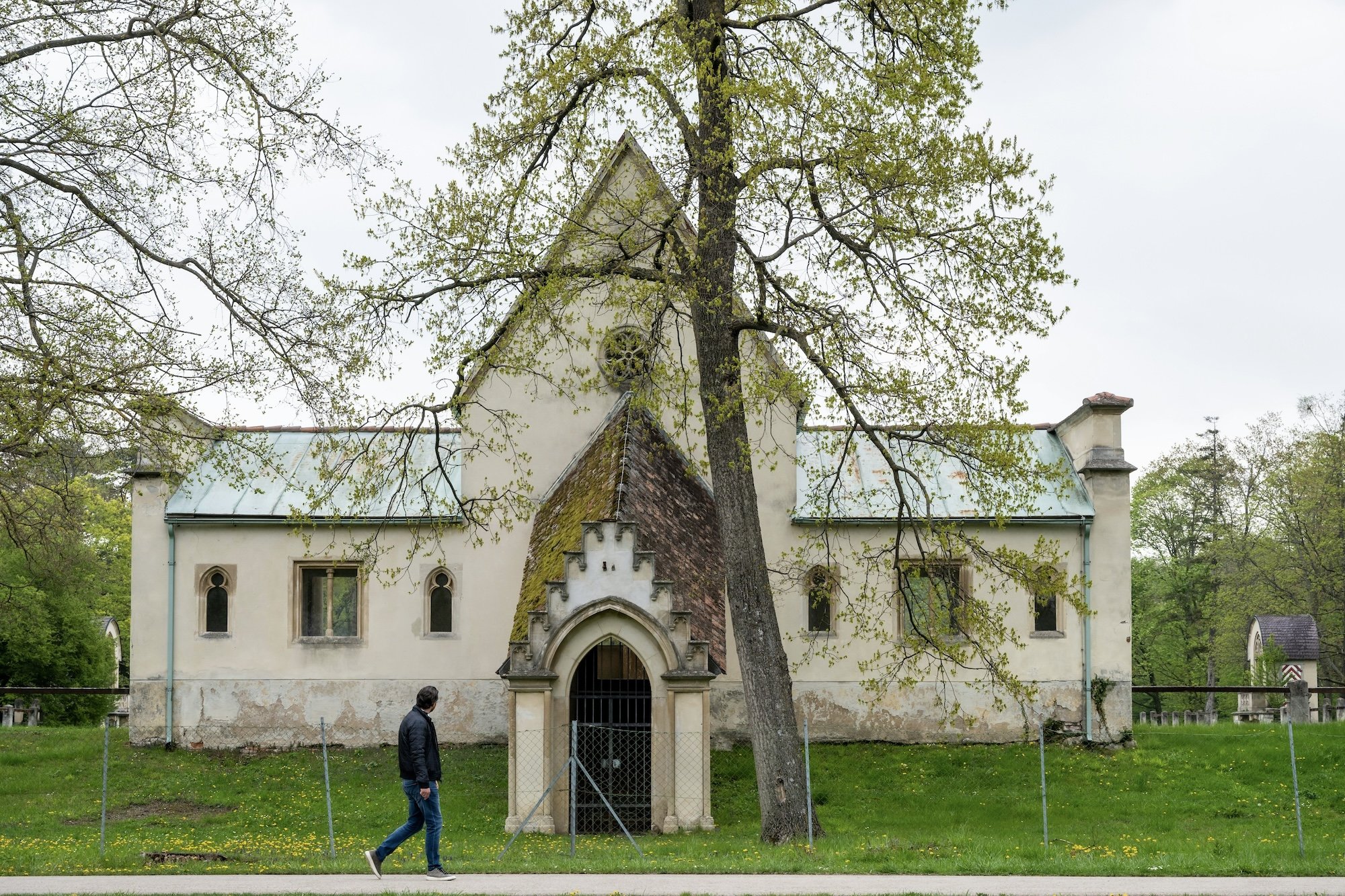
Photo by Carrie Borden on Unsplash
The modern church cannot hold. Not attendance or budgets or programs but people. In many congregations there is a growing sense of ecclesial thinness: communities that gather but do not form; worship that inspires but does not sustain; institutions that speak of belonging but often cannot bear the weight of people’s stories, wounds, callings and questions. The problem isn’t organizational. It is theological and spiritual.
If the church is to experience renewal, it won't happen primarily through better branding or more efficient structures or increasingly sophisticated ministry strategies. Renewal will only come when we recover an ecclesial imagination able to see the church once again as a Spirit-formed community of holy love rooted in place, shaped by shared discernment, participating in God's new creation.
N. T. Wright’s reading of Romans reminds us this crisis is not entirely new. Paul wrote to a fractured community struggling to hold together Jews and Gentiles, diverse histories and competing loyalties. Romans presents a vision of people whose unity is not preference or affinity but the reconciling work of Christ and the transforming power of the Spirit. For Wright, Romans is ultimately about God creating a renewed human family: a community in which God’s healing of humanity becomes visible. The church’s ability to “hold” people is not therefore a secondary concern. It lies at the very heart of the gospel itself.
Three streams converge here to offer a compelling version of such renewal. Wesleyan imagination, agrarian formation, and communal discernment. Together they give us a theological, ecological, practical framework for church that can hold people in a fragmented age. Wright's vision of Romans supplies the biblical grammar that joins them together. Wesley teaches holy love, Berry teaches place and membership, and Paul offers new-creation community through which both find their deepest coherence.
Wesleyan Imagination: The Church as a Community of Holy Love
John Wesley’s vision of the church wasn’t institutional at all. His imagination was relational, communal, hopeful. The church existed as community in which God’s healing work became visible in transformed lives and relationships. Christian growth was not an individual achievement but a communal pilgrimage toward holiness.
Three aspects of Wesley’s vision are especially relevant for the church today.
First, holiness is communal.
Christians are formed in participation with people, not apart from them. Wesley's class meetings and bands were not optional programs but structures through which grace was mediated and discipleship practiced.
Second, holiness is practical.
God's transforming work is embodied in habits, relationships, vocations, and ordinary acts of faithfulness — holiness is visible in daily life.
Third, holiness is hopeful.
The Spirit is already at work restoring people and communities, drawing creation toward God's promised future.
Wright's reading of Romans 6-8 reinforces this Wesleyan vision. Holiness is not mere moral striving but participation in Christ's death and resurrection by the life of the Spirit; the Spirit restores true humanity and forms a people whose common life reflects God's new creation. Christian discipleship is therefore not only about improvement in individuals; it is becoming a community in which resurrection life can be seen.
This vision challenges individualism as well as consumer Christianity. Church is not a vendor of religious goods and services. It is the community in which God makes people who love God and neighbor with their whole selves. Wesley's imagination gives us the theological basis for a church that holds because it views formation as a shared journey rather than a private project.
Agrarian Formation: The Church Rooted in Place
If Wesley gives us the theological vision, Wendell Berry's agrarian imagination gives us ecological grounding. Berry has long argued that modern life is marked by hyper-mobility, abstraction, speed, and placelessness. These forces shape churches as much as they shape culture. Congregations become providers of spiritual experiences rather than communities embedded in particular places. Relationships get shallow; ministries programmatic; belonging consumer-driven.
Agrarian formation corrects this by reminding the church of several neglected truths.
Place matters. Churches are not generic entities but communities embedded in specific neighborhoods, histories, and landscapes.
Limits matter. Faithfulness often means embracing creaturely boundaries rather than endless expansion.
Membership matters. People are formed through commitment and belonging, not consumption and choice.
Work matters. The life of a congregation is sustained by shared labor and mutual responsibility.
Attention matters. Renewal comes from patient attention to what God is doing in a particular place.
Berry’s vision reminds the church that it is not an event but a community of practice; not a brand but membership; not an abstraction but a creaturely fellowship. Agrarian formation gives Wesleyan holiness location. It roots spiritual formation in actual communities and embodied lives.
Wright's reading of Romans 8 deepens this agrarian insight. Paul says creation itself groans for redemption and waits for the children of God to be revealed. The church's vocation is not detached from creation's destiny but intimately bound up with it. As God's people learn lives of fidelity, stewardship, and reconciliation, they bear witness to the renewal toward which whole creation moves. The church becomes a local sign of cosmic hope.
In an age of fragmentation, rootedness is spiritual discipline. A church that can hold people must first learn how to dwell faithfully in places God has given it.
Communal Discernment: Listening Together for the Spirit
If Wesley provides the theological grammar and Berry offers geographical grounding, then the work of communal discernment supplies practice. Communal discernment is listening together for the Spirit’s guidance. It assumes that the church is not just an organization managed by leaders but a people created through shared attentiveness to God’s presence.
Such discernment renews congregational life in several ways:
it deepens belonging (by giving people places to share vulnerabilities, hopes and questions);
it strengthens witness (by aligning congregational action with God’s mission instead of institutional maintenance);
it heals fractures (communal truth-telling and mutual accountability);
courage is cultivated (communities act together rather than react to circumstances);
and vocation is restored (people see their work and lives as participation in God’s larger purposes).
Communal discernment is not a skill to be mastered. It is a practice through which the Spirit teaches the church how to be a people again. This is where Wright's reading of Romans 14-15 is most helpful. These chapters are often read as ethics, but they are also visions of communal discernment—Paul addresses a divided community learning to live as one body. Faithfulness is not uniformity but patient listening, forbearance between members and shared submission to Christ; unity is not sentimental agreement but Spirit-formed belonging. Membership is not optional. It's one of the first signs of God's new creation. A church that can hold people must become a community that listens together.
Integrated Vision: A Church That Can Hold
When Wesleyan imagination and agrarian formation and communal discernment are brought together, a compelling vision of ecclesial renewal emerges.
Such a church is rooted in place. It understands faithfulness happens somewhere, among particular people with particular histories and responsibilities.
Such a church is formed through membership. It refuses to define itself as a gathering of autonomous individuals but embraces the biblical vision of a people bound together in covenantal love.
Such a church is guided by shared discernment. Decisions emerge through communal listening rather than being made by efficiency or managerial expertise.
Such a church is part of new creation. The congregation becomes a foretaste of the world God is making.
Wright’s reading of Romans brings this entire vision together. God is creating a unified renewed human family in Christ. The church exists as the firstfruits of that new creation, a community whose life anticipates resurrection and reconciliation. Its common life is evidence of God’s future breaking into the present.
The result is not a church that merely offers spiritual formation. It is a church that is itself an instrument of spiritual formation. It becomes the place where holiness is practiced, belonging is nurtured, discernment is learned, and hope is sustained.
A Sign of New Creation
The renewal of the church will not be achieved through novelty or technique. It will come by recovering a richer vision of who the church is called to be.
We need the Wesleyan imagination that understands holiness as communal and hopeful. We need the agrarian imagination that roots discipleship in place, limits, membership, and creaturely life. We need communal discernment that forms congregations capable of listening and responding together. And we need the Pauline vision, articulated so compellingly by Wright, that sees the church as God's renewed family and the first fruits of a new creation.
This vision offers no guarantees for institutional success. It promises something deeper and ultimately more durable: ecclesial faithfulness. It forms communities capable of holding people, holding place, holding hope, and holding witness in a world that increasingly struggles to hold anything at all.
Such churches do not just survive. They become signs of God’s coming kingdom— communities through which the world catches a glimpse of the new creation already taking shape.
They become churches that can hold.
Kelli Summers Sorg is a PhD candidate in Intercultural Studies at Asbury Theological Seminary, where her research explores Image-Bearing, communal discernment, and the theology of place in spiritual formation. She serves as Spiritual Director in Residence at Asbury and writes on ecclesial renewal, agrarian imagination, and the recovery of embodied Christian practices.