
“But Now, O God, Strengthen Our Hands”—Lessons from Nehemiah for the Mission of the Church
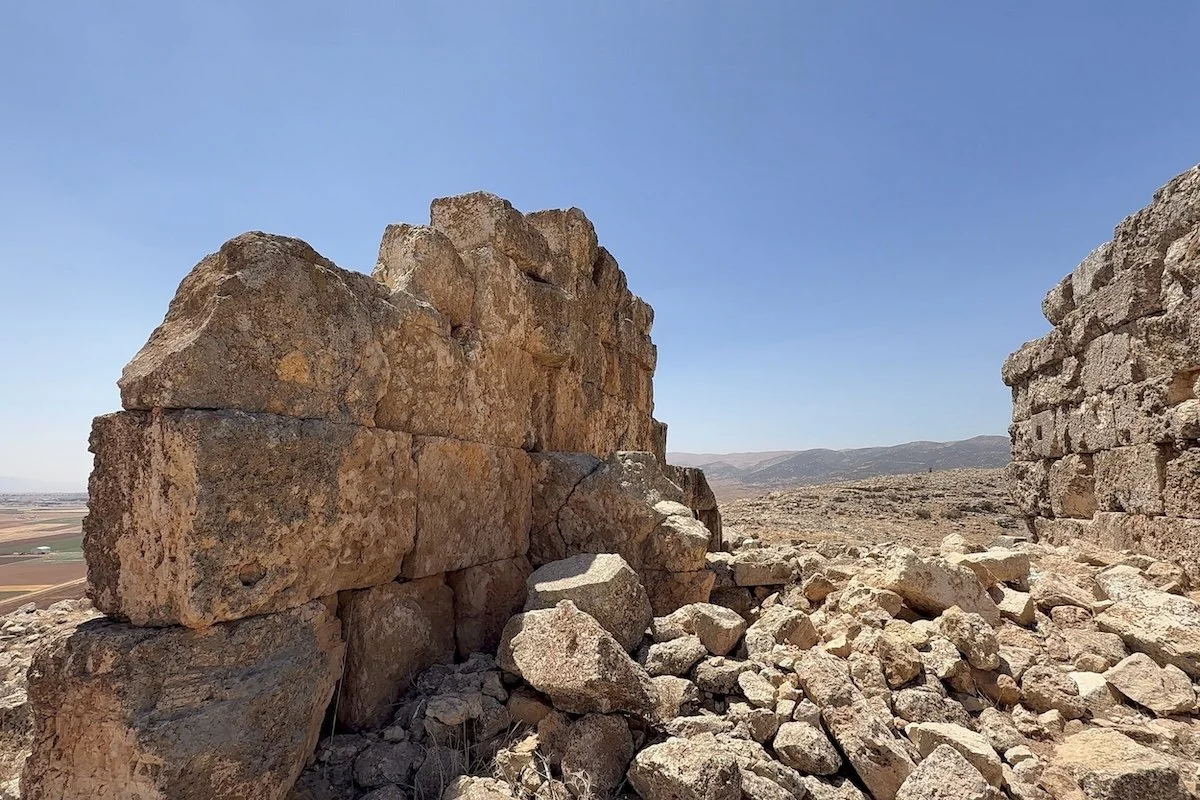
Photo by Anthony Rahayel
If we are paying Spirit-sensitized attention to the headlines and sound bites of our day, they surely become calls to prayer. In many of the places behind the news flash, our brothers and sisters in Christ (including our Methodist family) are living out their faith under enormous hostile pressure. This is real external pressure with a particular and ugly agenda: it seeks to turn the church from its exclusive loyalty to Christ and its uncompromising commitment to Christ’s mission. As we see in the letters to the churches in Revelation 2–3, these forces of darkness employ two principal tactics against God’s people—accommodation (get Christians to give in and become like the surrounding culture) and outright apostasy (convince believers to give up and reject Jesus altogether). The congregations and individual believers that resist these insidious pressures face the very real threat of danger, even to the point of martyrdom (Rev. 2:13). This is the pan del diario vivir (the “daily bread”) of Jesus’ followers in places like Nigeria, Iran, and Cuba.
The mission of the church is unchanging. No matter the circumstances in which it finds itself, the church of Jesus Christ exists to make disciples of all nations (Matt. 28:19–20; Acts 1:8). However, a careful reading of the New Testament in all its parts (Gospels, Acts, Epistles, Revelation) should clue us in to the expectation that the current experiences of our brothers and sisters in the global church are more likely to be the norm than the false sense of security that has lulled the Western church (particularly in the U.S.) for many decades. If the veneer of cultural acceptability is wearing ever more thin and the potential for truly hostile opposition is increasing, how do we prepare to carry out the unchanging kingdom mission in the midst of such a situation? First, we ask the global church! We humble ourselves to sit with our brothers and sisters in the Majority World and to sit under their instruction, learning from their embodied witness and their daily experience of Christ’s faithfulness to his suffering church.
Second, we go to Scripture! One of the places where we might linger prayerfully is the Old Testament book of Nehemiah, particularly chapters 4–6. In this portion, which describes the project of repairing and rebuilding the walls of Jerusalem, we see the experience of people carrying out the missio Dei in the midst of serious and persistent opposition. This section of Nehemiah contains several key lessons for the church, not least of which is an insight underscored by its structure. Two chapters detail the external opposition that was coming against the mission (Neh. 4 and 6), forming a frame around the center chapter, which deals with the spiritual condition of the community of builders. The experience of external pressure does not excuse the people of God from spiritual examen and accountability! (We’ll come back to this.)
Nehemiah 4 gives a close-up look at the nature of the opposition and a strategy for responding to it. The power-holders in the regions around Jerusalem are incensed when they see the progress of the Jews’ building project. In their fury they launch a campaign of mockery against the builders, using public humiliation as a demoralizing distraction (vv. 1–3). However, as painful as it is to be despised by powerful people (v. 4), it is not the overt scorn that poses the greatest threat to the mission, but the covert opposition. Verses 11 and 12 hint at three aspects of the nature of that danger; the rest of Scripture seems to suggest that these characteristics are quite typical of what God’s people can expect. First, this covert hostility is insidious and invisible: “They won’t realize it until we’re among them” (Neh. 4:11, CSB). In his diatribe against false apostles, Satan’s servants, and even Satan himself, Paul famously describes this evil stealth as disguise: “Even Satan disguises himself as an angel of light. So it is no wonder that his servants also disguise themselves as servants of righteousness” (2 Cor. 11:14–15, NLT). Second, this covert opposition has a relentlessly ruthless intent: once the enemy is within, the goal is to “kill them and put an end to the work” (Neh. 4:11, NIV). Jesus himself echoes this description of the opposition’s goal: “The thief comes only to steal and kill and destroy” (John 10:10a, NIV). Once the insidious and ruthless strategies of the enemy have penetrated the defenses of the community, God’s people become aware of the third characteristic of the opposition, its pervasive presence: “Everywhere you turn, they attack us” (Neh. 4:12, CSB). You hear a sound of desperation creeping into the people’s voice in Nehemiah 4, as they feel battered on every side by a surrounding force (cf. Pss. 22:12; 27:3; 57:4).
So what is Nehemiah’s strategy for responding to this insidious, ruthless, and pervasive threat? It is important to notice that the overarching rubric of resistance in these chapters is not aggression but prayer. Nehemiah prays boldly that God himself will step in and take care of the enemies; the sharpness of his prayer is captured well in The Message paraphrase: “Boomerang their ridicule on their heads; have their enemies cart them off as war trophies to a land of no return; don’t forgive their iniquity, don’t wipe away their sin—they’ve insulted the builders!” (vv. 4–5). In other words, Nehemiah calls on God to take care of the threats to God’s mission. But within that submission to the divine hand, Nehemiah and the community of builders take a key step. Nehemiah stations people at “the vulnerable sections” of the wall (v. 13). He recognizes the weak places, where the enemy will have an easier entrance, and he bolsters them and watches over them. Verse 16 details how they carried out this vigilance—half of the people worked, carrying out the task of rebuilding, while half stood at the ready with “spears, shields, bows, and armor” (CSB). Laying this alongside Eph. 6:10–20, where the recurring command is to stand, clothed in God’s armor, and where the singular task is prayer, a picture emerges for the church of prayer warriors (intercessors) assigned to stand behind the vulnerable places to claim divine protection over them. Neh. 4:20 provides an interesting glimpse into this care for the vulnerable places; there is a readiness to rally to whatever section of the wall was weakest in any given moment. “Wherever you hear the trumpet sound, rally to us there. Our God will fight for us!” (CSB). Perhaps this is a way to reframe the headlines and sound bites—to think of them as trumpet calls, indicators of where intercession is needed for our suffering sisters and brothers and where their prayers on our behalf are most urgently needed.
Nehemiah 6 reiterates the sneaky, persistent, manipulative, and lying nature of the enemy’s tactics. In this case, those strategies are narrowly focused on the leader (Nehemiah himself); if the opposition can bring down the human head of the mission, then there is a good chance the people will falter in their purpose. Once again, we see Nehemiah’s strategies of response to this more personal attack. First, he is not impulsive; he doesn’t make a knee-jerk response to the threats. Second, he refuses to be distracted by the opposition, discerning clearly the purpose of their lies: “They were all trying to intimidate us, saying, ‘They will drop their hands from the work, and it will never be finished’” (v. 9a, CSB). He recognizes that their ultimate target is not the leader, but the mission. Most importantly, just as he did when the opposition was trained against the whole people, so also now when it is focused directly on himself, he anchors all of his response in prayer: “But now, my God, strengthen my hands” (v. 9b).
Sandwiched between Nehemiah 4 and 6, with their emphasis on external opposition, is the central episode of this segment. Nehemiah 5 makes clear that the single most important strategy for confronting the enemies of God’s mission is the holiness of God’s people. Nehemiah confronts an outcry that arises from within the Jewish community, where the “nobles and officials” are actively enriching themselves at the expense of their Jewish brothers and sisters. Their greed leads to abusive practices that tear families apart and leave the fabric of Israel’s collective existence wounded and scarred. It is a wake-up call for Nehemiah, as he is forced to face his own complicity and that of his family in behaviors that run contrary to the expressed will of God (v. 10; cf. Exo. 22:25). Nehemiah models the only appropriate response and calls the other offenders to join him: repentance, rejection of evil practices, and restoration of ill-gotten gains.
For a church that seeks to understand what it will look like to be faithfully loyal to Christ and firmly committed to his mission in contexts of hostility and opposition, Nehemiah 5, with its emphasis on holiness, is a good place to linger. For the church in the West (my context and that of many readers), our best preparation for the anticipated increase in hostility is an increase in holiness. As part of being “perfected in love,” Nehemiah 5 presses at very specific points, offering us some weighty reflection questions: Where and how have we been complicit, consciously or otherwise, in practices and systems that keep other human beings (including our fellow believers) bound in crushing, implacable poverty and its accompanying loss of hope? As the Holy Spirit reveals places of participation in these evils, are we willing to follow Nehemiah’s lead—rather than brushing off the seriousness of the offense, will we acknowledge God’s perspective, naming sin for what it is? Will we honestly and sincerely repent, turn from the former practices, and consider together practical ways to reverse the damage that they have caused? These are questions that each local congregation and each connectional unit will need to confront prayerfully. As we do so, may we have the spirit of Nehemiah, welcoming God’s correction and submitting to his sanctifying work in and among us.
Rachel Coleman is affiliate professor of Biblical Studies at Asbury Theological Seminary, profesora adjunta de Nuevo Testamento for United Theological Seminary, and the regional theological education coordinator (Latin America) for One Mission Society. She serves on Firebrand’s Editorial Board.