
Concerning Abuja: Understanding the Ongoing Controversy in Global Anglicanism
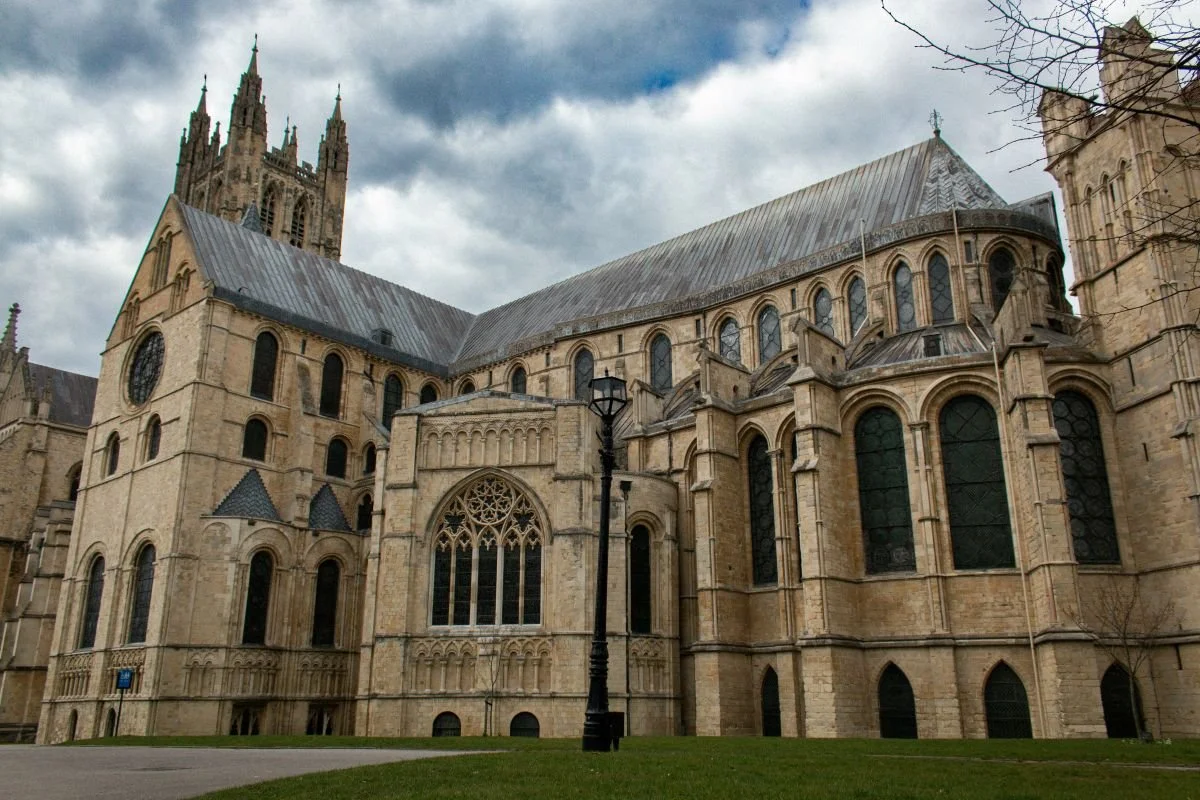
Photo by Cameron Agostino on Unsplash
A few weeks ago, many prominent leaders of the Anglican Communion gathered for a meeting in Abuja, Nigeria to discuss the direction of the Anglican Church. Prior to the meeting, the expectation was that the bishops would elect a new Archbishop to lead the Communion in defiance of the Archbishop of Canterbury, Sarah Mullally. Instead, the bishops established a new Global Anglican Council and elected Archbishop Laurent Mbanda of Rwanda to chair the council. Abp. Mbanda oversaw the writing of a new statement, The Abuja Affirmation, which summarizes the work accomplished at the meeting. Understanding the significance of the affirmation requires a brief history of recent events in the Anglican Communion.
The state of the Communion is complex, and it has been complex for a few decades now. The Communion refers to all non-dissenting Anglican Churches. The Communion is organized into provinces which are roughly one per country. Each province is led by a Primate or primary bishop. The meeting in Abuja is G26 or the international primates conference.
The Anglican Church is the third-largest church in the world and the largest Protestant church. It was and remains the state church of England. During the period of European colonialism, the English brought their church with them wherever they established colonies. As English colonial power decreased, the English church remained in their former colonies. Indigenous leadership grew up within the former colonies and began establishing indigenous expressions of the Anglican Church around the world.
During the same period, the Church of England established the Instruments of Communion: the Archbishop of Canterbury, the Lambeth Conference, the Anglican Consultative Council (ACC), and the Primates’ Meeting. These institutions existed to foster cooperation for ministry and clarify theological questions for the Anglican Communion. The Archbishop of Canterbury began during this time to function as an “Anglican Pope,” without, of course, the history and doctrinal basis which are claimed by the Papal See. The Archbishop of Canterbury was a primus inter pares, a “first among equals”.
In recent decades, many bishops began expressing increasing concern over the direction of the Anglican Communion, primarily due to expanding theological liberalism. This debate came to a decisive moment in the Episcopal Church (TEC) in 2004 with the succession of Gene Robinson as bishop of New Hampshire. Robinson was openly homosexual and later entered a civil union with another man in 2008.
Robinson’s succession triggered a crisis in the Episcopal Church. This crisis was in many ways similar to the recent crisis in the Methodist tradition which led to the creation of the Global Methodist Church. A key difference is the importance of Episcopal succession in Anglican theology. Disaffected Episcopalians needed leadership from bishops. Some remained in the Episcopal Church under biblically faithful bishops. Others sought new episcopal authority from overseas. Bishops from Rwanda, Nigeria, Colombia, and other provinces took these Americans under their authority and charged them to found missionary districts in the United States which would remain faithful to the Holy Scriptures. Over time many of these missionary districts formed into today’s Anglican Church in North America (ACNA).
Anglican leaders from around the globe came together in Jerusalem in 2008 at a gathering called the Global Anglican Future Conference (GAFCON). There they created the Jerusalem Declaration. This statement clarified the positions of the Anglican leaders who were beginning to break with Canterbury.
At this point, the crisis fell along several fault lines. The first was ideological. The Jerusalem Declaration identified the authority of the Bible as the primary issue of theological contention. GAFCON stressed that the Episcopal Church had strayed from the authority of Holy Scripture. The second issue was pastoral. Many congregations seeking to leave the Episcopal Church lost their buildings in the process. In the most egregious example, a congregation in Binghamton, New York had their building taken and sold to be turned into a mosque. The third facet of the crisis was the issue of authority. Prior to the missionary districts which became the ACNA, Anglican polity had restricted episcopal authority geographically. The creation of these missionary districts was in defiance of existing authority.
More importantly for the recent G26 meeting in Abuja, the crisis over jurisdictions has also been playing out globally. Many churches in the Global South Fellowship of Anglican Churches (GSFA) did not break with Canterbury over these events. While ACNA and TEC did not formally recognize one another, the GSFA was generally in fellowship with both.
Canterbury and TEC have continued in a theologically liberal direction exacerbating the crisis. TEC passed a resolution in 2015 to officially recognize and perform same-sex wedding ceremonies. While not going as far as TEC, Canterbury has continued to move in that direction. GAFCON has continued to escalate its dispute with Canterbury expressing its dissatisfaction in 2023 with the Kigali Commitment wherein it is stated: “The Instruments of Communion have failed to maintain true communion based on the Word of God and shared faith in Christ.”
The recent G26 meeting in Abuja is the latest development in the ongoing crisis. The primary actor in this development is Abp. Mbanda. Late last year, he authored a letter stating that GAFCON were at that time the true leaders of the Anglican Communion rather than Canterbury. It was unknown to what extent leaders in the GSFA would support this move.
The expectation for G26 Abuja was that the primates would elect a new primus inter pares to replace the Archbishop of Canterbury. But as they conferenced the primates decided to move in a different direction. They instead formed the Global Anglican Council to lead the Communion. As stated in the Abuja Affirmation, the Global Anglican Council is seeking to reorder the global communion. This decision reflects four primary developments.
First is a movement towards conciliarism rather than singular leadership. The primates recognized that establishing a new primus inter pares would require a reinstitution of the instruments of communion. The failure of the existing instruments is in part what led to the current crisis. The primates are instead pursuing a looser and more nimble communion adhering more to the principle of subsidiarity rather than international hierarchy. This decision is arguably a better reflection of traditional Anglican polity. But it has also received criticism from some within ACNA who view it as continued managerialism.
Second is an elevation of the Jerusalem Declaration to the status of a fifth formulary. The formularies are the traditional canon of Anglican theological texts which were produced during the periods of the Reformation and Protestant consolidation in the 16th and 17th centuries. The traditional formularies are the Book of Common Prayer, the 39 Articles, the Book of Ordination Services (commonly called the Ordinal), and the Books of the Homilies. Elevating the Jerusalem Declaration adds two key clarifications to the canon of Anglican theology: a clarification on the definition of marriage and the doctrine of the inerrancy of the Bible.
Third is a requirement that anyone in membership with the Global Anglican Council recognize and affirm the Jerusalem Declaration. Current policy is that any leader in the Council must have no formal ties with Canterbury or the Episcopal Church.
Fourth is the continuing conversation between the Global Anglican Council and the GSFA. Some in the Global South still believe that Canterbury can be turned back from its slide into theological liberalism and therefore they have not completely broken ties with Canterbury. While the Abuja Affirmation has not ended the crisis, it has clarified the position of our leaders.
I would like to make a personal appeal to conclude this report. To my brothers and sisters in Christ from other churches and denominations, please pray for the Anglican Communion. Please pray for all sides of the ongoing controversy. Pray that our ministers may be found faithful ministers of Our Father’s Word and Sacraments. Pray that our conduct would be pure and honorable and that we be witnesses for Christ our Lord. And pray for our faithful laity who have suffered for the sake of the Gospel.
Teagan McKenzie is curate at All Saints Anglican Church in Morehead City, NC.