
When Hearts Are Right, Hands Can Join
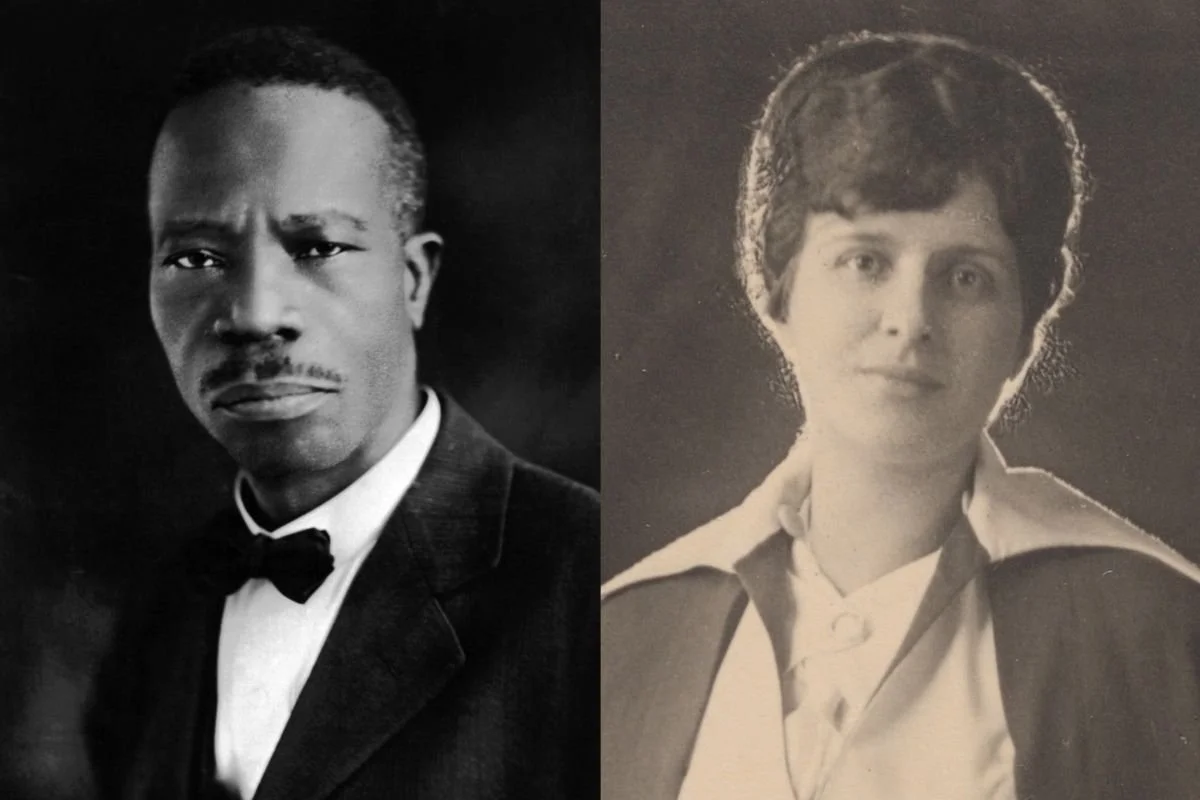
Left: Bishop Charles Harrison Mason, Sr., founder of the Church of God in Christ (Source: GOGIC.org), Right: Aimee Semple McPherson, founder of the International Church of the Foursquare Gospel (Source: WikiCommons)
"When Hearts Are Right, Hands Can Join" draws its biblical foundation from 2 Kings 10:15—the same passage that shapes John Wesley’s sermon, The Catholic Spirit.
At the center of this meditation are the lives and ministries of two extraordinary leaders whose influence shaped the Wesleyan Holiness-Pentecostal movement and left a lasting mark on Christianity in America and around the world: Bishop Charles Harrison Mason, Sr., founder of the Church of God in Christ (COGIC), and Dr. Aimee Semple McPherson, founder of the International Church of the Foursquare Gospel.
Both belong to the long, unbroken historic continuum of Wesleyan-Holiness and Holiness-Pentecostal leaders who refused to accept the status quo, who lifted their voices against slavery, racism, and injustice, who crossed boundaries for the sake of the gospel, and who believed that Spirit-formed love could reshape both the church and the world.
Bishop Mason and Dr. McPherson offer a compelling blueprint for unity across racial barriers and ecclesial traditions. Their witness demonstrates that when the heart is entirely sanctified and made holy, and when believers live under the Spirit’s full control, the walls that divide God’s people—of any kind—cannot endure. They crumble before the power of holy love.
This truth is echoed in Scripture—especially in those moments when a single question becomes a doorway. In 2 Kings 10:15, Jehu, king of Israel, meets Jehonadab—a respected leader of the Rechabite community known for their holiness and covenant fidelity. Jehu asks him, “Is your heart right, as my heart is with your heart?” Jehonadab answers, “It is.” Jehu replies, “If it be, give me your hand.”
A simple question. A simple gesture. Yet together they reveal a profound truth: when hearts are right, hands can join.
The Catholic Spirit: John Wesley’s Vision of Holy Love
John Wesley called this the catholic spirit—meaning a spirit of generous, universal Christian love. He first composed The Catholic Spirit around 1749/1750, circulated it as a pamphlet in 1755, and later included it as Sermon 39 in his definitive 1771 collection, Standard Sermons.
The catholic spirit is not a spirit of doctrinal compromise, but a spirit of holy love that reaches across boundaries for the sake of Christ’s mission in the world. For Wesley, the catholic spirit was the posture of a believer whose heart was shaped by grace so deeply that they could hold firm convictions without holding a hostile posture. It is the ability to say: I do not have to think like you to love you. I do not have to worship the way you do, to walk with you. I do not have to agree with you on every point to join hands with you in the work of God.
Wesley insisted that unity is not uniformity; it is charity in action—a willingness to see the image of God in those who differ from us and to labor together wherever conscience allows. The catholic spirit refuses to let differences harden into divisions. It refuses to let secondary matters overshadow the primary call to love God and neighbor. It refuses to let what Wesley called “opinions, modes of worship, or outward forms” become obstacles to fellowship. It is a spirit that asks the same question Jehu asked Jehonadab: “Is your heart right?” And if the answer is yes, Wesley says, “Give me your hand.”
This is the spirit that shaped two remarkable leaders in the early twentieth century: Bishop Mason and Dr. McPherson. Long before they met, long before they shared a platform, long before their names appeared together in the pages of The Foursquare Crusader, each of them was already living out the truth of 2 Kings 10:15.
Their ministries unfolded in different regions, under different pressures, and within different traditions—yet the Spirit formed in them the same holy instinct: to cross boundaries for the sake of the gospel.
This reflection tells that story—not as two biographies stitched together, not as a catalog of historical moments, but as one narrative shaped by a single biblical truth: when hearts are right, hands can join. And when hands join, the gospel advances and scriptural holiness spreads.
A Right Heart
Many years before Bishop Mason ever stepped inside Angelus Temple in 1936, the Spirit had already formed in him a heart that reached across boundaries. When he returned from the Azusa Street Revival in 1907, he carried not only the message of holiness and the fire of Pentecost, but a vision of a Spirit-baptized community where race could not divide what God had joined together. He traveled through Mississippi, Arkansas, and Tennessee preaching the Holiness-Pentecostal message with boldness. He preached in the open air beside white ministers—a decision that brought persecution, arrests, and even federal scrutiny. But it didn’t stop him. He preached in Black holiness churches. He preached in white holiness churches. He crossed every line that fear and prejudice tried to draw.
Across the South, white congregations invited him to preach because they heard of the anointing he carried from the Azusa Street Revival. Some invited him quietly, some publicly, some at great personal cost—but they invited him, and Bishop Mason went. He preached in their revivals, their camp meetings, and in their large holiness conferences. He prayed with their ministers. He laid hands on the sick, and many were healed. He sang his spontaneous spiritual songs—and the Spirit moved.
These were not isolated moments. They were the early signs of a movement that would soon become one of the most remarkable stories in American religious history. Between 1907 and 1914, the Church of God in Christ emerged as arguably the largest interracial denomination in the world. Black and white saints worked, worshiped, and evangelized side by side in an egalitarian fellowship shaped by the spirit of the Azusa Street Revival. This happened not in New York or Chicago, but in Mississippi, Tennessee, Arkansas, Florida, Louisiana, Alabama, and Georgia—the very soil where segregation was most deeply rooted. Yet in those places, Bishop Mason’s heart was right, and his hand was extended.
Because the Church of God in Christ was legally incorporated, Bishop Mason could ordain ministers whose credentials were recognized by civil authorities. This positioned him to carry the Azusa Street Revival from its movement phase into its denominational phase. White ministers came to him by the dozens, then by the scores, then by the hundreds seeking ordination.
By 1914, Mason had ordained roughly 350 white ministers—many of whom would later form the Assemblies of God. When the Assemblies of God convened their organizational meeting in April that year in Hot Springs, Arkansas, Bishop Mason traveled there. He preached on a Thursday night, held up an unusually shaped sweet potato as an illustration of God’s wonders, and sang his Spirit-given songs. The Saints Industrial singers from Lexington, Mississippi, who accompanied him also sang. He blessed the white leaders, bid them farewell, and released them to form their own organization. He even released them from their Church of God in Christ credentials so they could follow God’s call with freedom and integrity.
The events in Hot Springs revealed the depth of Bishop Mason’s spiritual maturity and leadership. He did not cling to authority or resent the white ministers who chose a different organizational path. Instead, he blessed them, released them, and trusted the Spirit to guide their steps. In an age marked by suspicion and racial division, Bishop Mason chose generosity—the generosity of a sanctified heart. That is what a right heart does. It does not cling. It does not control. It blesses.
That was the Bishop Mason who walked into Angelus Temple in 1936—a man whose ministry had already defied racial boundaries, challenged segregationist norms, and embodied a unity that the world could not explain. A transformative Holiness-Pentecostal leader whose heart was right and whose hand was always extended.
While Bishop Mason was crossing racial, denominational, and social boundaries across America, Dr. Aimee Semple McPherson was crossing her own unique boundaries in cities throughout the nation. Her ministry began in the early 1900s, at a time when women were discouraged from public ministry and leadership. Yet she built institutions, pioneered new forms of evangelism, and created ministries that reached far beyond the walls of any single church or denomination.
She traveled from city to city preaching the gospel with a boldness that drew crowds of every background. She also found herself welcomed by Black Holiness and Pentecostal leaders in places like Baltimore, Washington, D.C., Chicago, Los Angeles, Florida, and many other cities across the nation. They opened their churches to her, and she accepted their invitations without hesitation. Reports from her early ministry campaigns describe African American worshippers attending her meetings in significant numbers—not as spectators, but as full participants.
In Los Angeles in the early 1920s, before Angelus Temple was even built, Dr. McPherson frequently visited Black Holiness and Pentecostal congregations connected to the legacy of the Azusa Street Mission. She prayed with their leaders. She worshipped with their members. She affirmed publicly the spiritual vitality she witnessed among them. She invited African American choirs to sing in her meetings. She welcomed Black evangelists into her services. She maintained close friendships with respected Black pastors across Los Angeles, relationships that deepened her ministry in the city. And when Angelus Temple opened, African American worshippers attended in large numbers—not because they were merely allowed, but because they were wanted.
On one occasion in Florida, she held a revival meeting in a Black community. Local African American residents helped her team set up the large canvas tent and prepare the grounds for worship. When the services began, Black pastors, congregants, and community residents joined her beneath the canvas, filling the meeting with prayer, song, and testimony. These encounters were not symbolic gestures. They were not exceptions. They were her rhythm. They shaped her imagination. They formed in her a conviction that the gospel was meant to move freely across every barrier the world tried to erect.
That was the Dr. Aimee Semple McPherson who extended an invitation to Bishop Charles Harrison Mason to preach at Angelus Temple in 1936—a woman whose ministry had already crossed racial, denominational, and cultural boundaries. A pioneering Holiness-Pentecostal leader, prepared by the Spirit for a moment of holy convergence, would reveal to the world what unity in Christ could look like when two servants of Christ, shaped by the same Spirit, finally stood side by side.
Hands Joining
After decades of crossing boundaries in their own spheres, and decades of living out the truth that when hearts are right, hands can join, the moment finally came when Bishop Mason and Dr. McPherson stood together in the same sacred space.
It was June 19, 1936.
Angelus Temple was alive with expectation, sensing that something historic was unfolding. Pastors and congregants from COGIC churches across Southern California were present in large numbers to hear and support their beloved founder. Foursquare pastors and members gathered alongside them. Representatives from Pentecostal and Wesleyan-Holiness traditions, as well as believers from the broader Christian community, were also present.
And there, in that sanctuary, a mosaic of Black and white, people of various races, young and old, men and women, sat side by side, worshipping in open defiance of the racial segregation entrenched throughout the nation. It was a picture of the kingdom. A picture of the Azusa Street Revival. A picture of what happens when hearts are right, and hands join.
The Foursquare Crusader, published July 1, 1936, reported that Bishop Mason spoke on Sunday evening at what was called the “Holy Ghost Rally.” He stepped to the pulpit at 5:00 p.m. and preached a message titled "Pentecostal Unity and Sacrifice." His sub-theme was "Lord, Make Us One."
In his message, Bishop Mason said:
“I received my baptism in the old Azusa Street Mission. I came from Memphis, Tennessee, when I heard of this great outpouring. It is glorious to see God’s little children together. This is what the Spirit of Jesus Christ is praying for—a gathering together, a uniting of God’s people in one body. By getting together we will get this message over.
I listened to the prayers of the saints here in Angelus Temple. I heard their song: ‘Lord, make us one.’ And there is One that will make us one. That is why we should earnestly contend for the faith once delivered to the saints.
This movement looks like it is going to do that very thing. God is trying to get us together in unity of the faith so, as one, we can go forth trusting in God to fight the battle for us. God is saying to the Pentecostal people today: Come apart. Come together. God has called us to one—to love one another, to love our enemies. So, quit getting weak about speaking in tongues. Let us join together in love. We need not so much headology; we need kneeology.”
In that moment, the ministries of Bishop Mason and Dr. McPherson were no longer parallel stories. They were one testimony—a testimony to the power of the Spirit to unite what the world divides; a testimony that when hearts are right, hands can join; a testimony to the truth of 2 Kings 10:15: “Is your heart right?—If it is, give me your hand.”
What Bishop Mason proclaimed in June of 1936—Dr. McPherson echoed—with striking clarity five months later. On November 25, 1936, The Foursquare Crusader published Dr. McPherson's bold appeal to the major Pentecostal denominations of her day. Her words were not cautious. They were not diplomatic. They were prophetic.
In her published appeal, Dr. McPherson wrote:
“At a time when the national gates of Russia, Mexico, Spain, and other countries have been closed to religious freedom… this is no time to separate and build segregating walls about ourselves. Rather, this is the psychological moment to unite!
Sabotage, bigotry, and sectarianism amongst us must cease. Now is the time for the bridal body to fuse together in a seething passion for souls. Let us cease this senseless quibbling over less important doctrinal points and hair-splitting interpretation, and get down to the business of reaching the masses with the gospel.
We all have the same Christ; let’s preach Him. We all believe in the same atoning blood; let’s proclaim it. We all recognize the power of the Holy Spirit; let’s give Him right of way in our lives, our private devotions, and our public gatherings.”
In these words, Dr. McPherson was not merely agreeing with Bishop Mason. She was harmonizing with him.
Two voices. Two traditions. Two histories—One Spirit.
Their appeals were not theoretical. They were practical. They were pastoral. They were holiness. They were Pentecostal. They called the church to a unity deeper than preference, stronger than culture, and more enduring than denominational lines.
The legacy of Bishop Mason and Dr. McPherson did not remain confined to the pages of history. Generations later, their impact reached into my own life.
"Dear Sister Aimee"
Throughout my early years in ministry, I often heard the older Church of God in Christ saints in the Los Angeles area reminisce about their friendship with “Dear Sister Aimee.” They spoke with warmth and deep affection about her. Among their memories was how she would slip quietly into their COGIC churches without fanfare. She would pray with them, worship with them, encourage them, and even lay hands on those who were sick, and they testified that people were healed. No program. No protocol. No pre‑planned order of service. Just fellowship in the Spirit with a leader they described as someone who did not care about the color of their skin.
“I’m healed, I’m healed, I’m healed”
And in my own family, I heard about Bishop Mason from my grandfather. When my grandfather, Reverend Louis Elam—a Church of God in Christ leader—would visit Los Angeles, California, from New Orleans, Louisiana, I would sit with him for long hours, asking about the olden days, about life in the old church, and especially about Bishop Mason.
My grandfather told me how Bishop Mason impacted our family long before I was born. He shared how my grandmother, Louise Cuberos Elam, lay suffering with late-stage cancer, and her doctors predicted she would not live much longer.
At a church meeting when Bishop Mason visited New Orleans, Louisiana, she stepped into his prayer line expecting a miracle. When she approached Bishop Mason, he looked at her and said, “Lift up your hands, and expect a miracle.” He repeated it a second time: “Lift up your hands, and expect a miracle.”
With tears streaming down her face, my grandmother lifted up her hands. Then Bishop Mason laid his hands on her head, and my grandfather said she shook—and then suddenly cried out, “I’m healed! I’m healed! I’m healed!” Her doctors later confirmed her healing!
These personal stories are only a glimpse of how Bishop Mason and Dr. McPherson, in their own distinct ministries, touched the lives of ordinary people. They broke racial barriers, crossed denominational lines, modeled unity and collaboration, transformed communities, and shaped generations—including my own. Their lives remind us that the gospel advances when love overcomes fear, when holiness overcomes division, and when God’s people choose fellowship over fragmentation.
This is the legacy they left us: a call to be a church courageous enough to cross boundaries, humble enough to join hands, and faithful enough to believe that the same Spirit who moved in 1936 is still moving today.
And so today, we are both challenged and invited to live with hearts made right, to join our hands in holy purpose, and to trust once again that when hearts are right, hands can join, and when hands join, the gospel advances and scriptural holiness spreads.
John Mark Richardson, Sr., is the Regional Bishop of the Western United States Region of the Church of God in Christ, and Executive Director of the Wesleyan Holiness Connection.