
More than Routine: Christ, the Eucharist, and the Journey of Sanctification
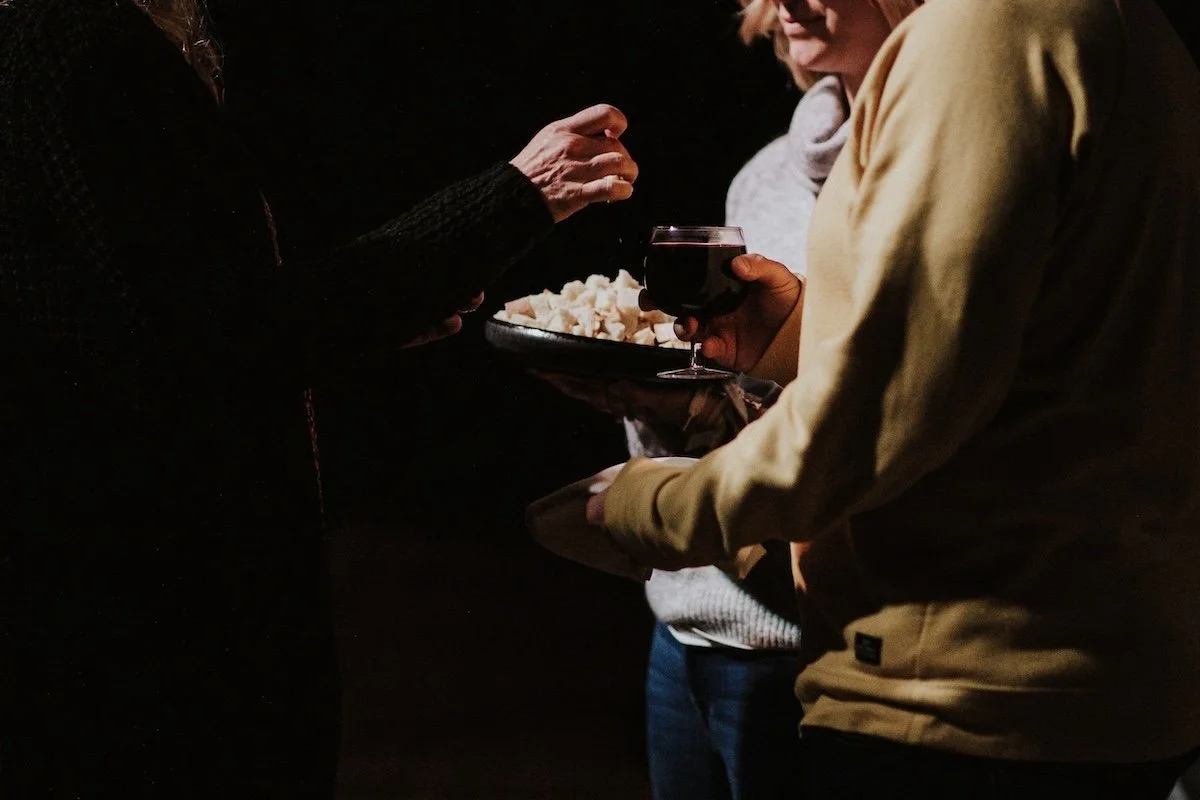
Photo by Priscilla Du Preez on Unsplash
In 1928, the bacteriologist Alexander Fleming conducted experiments with bacteria in his laboratory. As he had done countless times before, he expected to observe the normal growth of bacteria in his Petri dishes. Yet when he returned from a brief vacation, he discovered that one of the dishes had been accidentally contaminated by mold. At first, it appeared to be nothing more than a ruined experiment, a mistake to be discarded and forgotten. But Fleming noticed something unusual: surrounding the mold, the bacteria had been destroyed.
What Fleming expected to be ordinary turned out to be something extraordinary. The mold, Penicillium notatum, produced a substance capable of killing harmful bacteria. That accidental discovery eventually led to penicillin, the world’s first antibiotic, saving millions of lives and reshaping the future of medicine.
There is something deeply theological about that story. Human beings often approach life expecting only the routine, the familiar, the ordinary. Yet again and again throughout Scripture, God meets people in the ordinary and reveals something far greater than they imagined. Moses encounters God in an ordinary bush that burns without being consumed. Elijah hears the voice of God not in the earthquake or fire, but in a still small voice. The disciples gather for a simple meal with Jesus and discover they are participating in the mystery of salvation itself. So often, what appears ordinary on the surface becomes, through God’s grace, a place of profound encounter and transformation.
This pattern of ordinary things revealing deeper realities is precisely what we find in Hebrews 10:1–18. The passage brings us to the very heart of the gospel message: the fulfillment of the old covenant through the once-for-all sacrifice of Jesus Christ. Generation after generation, the people of Israel faithfully offered sacrifices according to the Law. Lambs were slain, blood was poured out, rituals were observed, and worshipers returned year after year with the same sacrifices for sin. These practices were important and ordained by God, yet they were never intended to be the final answer.
The writer of Hebrews tells us:
Since the law has only a shadow of the good things to come and not the true form of these realities, it can never, by the same sacrifices that are continually offered year after year, make perfect those who approach (Hebrews 10:1).
The sacrifices of the old covenant pointed beyond themselves. They were shadows anticipating a greater reality still to come. The blood of bulls and goats could remind people of sin, but it could not fully remove it. As Hebrews later states so plainly:
For it is impossible for the blood of bulls and goats to take away sins (Hebrews 10:4).
Yet God, in His mercy, was preparing His people for something greater. What seemed routine and repetitive in the sacrificial system was ultimately pointing toward Jesus Christ, the true Lamb of God.
The beauty of Hebrews 10 is that it reminds us Christianity is not fundamentally about humanity striving upward toward God through endless rituals or repeated attempts at self-improvement. Christianity is about God coming down to us in Christ. The writer quotes Psalm 40 and places these words on the lips of Jesus:
See, God, I have come to do your will (Hebrews 10:7).
Christ comes willingly, obediently, lovingly. Unlike the old sacrifices, which had to be repeated endlessly, Jesus offers Himself once and for all. Hebrews 10:11–12 contrasts the old priests with Christ in striking language:
And every priest stands day after day at his service, offering again and again the same sacrifices that can never take away sins. But when Christ had offered for all time a single sacrifice for sins, “he sat down at the right hand of God.”
The priests stood because their work was never finished. Christ sits because His work is complete.
This is one of the most beautiful truths in all of Scripture: Jesus has accomplished what we never could. Through His death and resurrection, sin is defeated, reconciliation with God is made possible, and a new covenant has been established. But Hebrews does not stop at forgiveness alone. The passage moves beyond justification into sanctification, beyond pardon into transformation. Hebrews 10:14 says:
For by a single offering he has perfected for all time those who are being sanctified.
Notice the tension held together in that verse. In Christ, believers are “perfected for all time,” and yet they are also “being sanctified.” In other words, Christ fully accomplishes our salvation, but God’s grace continues actively transforming us into the likeness of Christ.
This is deeply important for the Christian life. Too often, Christians may think of salvation merely as forgiveness of sins or securing a place in heaven. Certainly, forgiveness is central to the gospel, but the gospel is bigger than that. God not only forgives us; He transforms us. He does not merely pardon sinners; He makes saints.
In the Wesleyan tradition especially, this theme of sanctification stands at the center of the Christian life. John Wesley consistently taught that the grace of God does more than justify us; it renews us. Grace changes us from the inside out.
Wesley often described salvation not simply as being rescued from sin but being restored to the image of God. The goal of the Christian life, therefore, is holiness, a life filled with the love of God and neighbor. This is why Hebrews 10:16–17 is so significant:
This is the covenant that I will make with them after those days, says the Lord:
I will put my laws in their hearts,
and I will write them on their minds,
He also adds,
I will remember their sins and their lawless deeds no more.
The new covenant is more than an external obedience. God writes His law upon the heart itself. Christianity, therefore, is not simply behavior modification. It is heart transformation through the Holy Spirit. And this transformation happens through grace.
That brings us to the Eucharist. For Christians, the Eucharist is never merely a memorial exercise or religious routine. It is certainly an act of remembrance, but it is much more than remembering. In the Eucharist, Christ meets His people through bread and wine in a mysterious and grace-filled way. Jesus Himself said:
This is my body, which is given for you. Do this in remembrance of me (Luke 22:19).
And Paul writes:
The cup of blessing that we bless, is it not a sharing in the blood of Christ? The bread that we break, is it not a sharing in the body of Christ? (1 Corinthians 10:16)
The Eucharist is participation, communion, and encounter.
In the Wesleyan understanding of the Eucharist, Christ is truly present in the sacrament, not necessarily in a crude or mechanical sense, but genuinely present by the power of the Holy Spirit. Wesley referred to the Lord’s Supper as a “means of grace,” one of the ordinary ways God communicates His grace to His people. While Wesley recognized many means of grace, including prayer, Scripture, fasting, Christian fellowship, and acts of mercy, he gave the Eucharist a particularly significant place in the Christian life. He frequently encouraged believers to receive Holy Communion because he understood it to be a distinct encounter with the risen Christ, a place where Christ meets, nourishes, strengthens, and transforms His people.
This matters pastorally because so many people come to church exhausted, burdened, distracted, wounded, or spiritually dry. Sometimes we approach worship as merely going through the motions. We come expecting something familiar and routine: bread, wine, prayer, familiar liturgy. Too often, however, we become tempted to cast aside these ordinary means of grace in search of something that feels more exciting, emotional, innovative, or dramatic, as though the depth of worship depends upon our ability to manufacture an experience. Yet in doing so, we risk overlooking the very way God has chosen to meet His people. For Wesley, the Lord’s Supper was not merely a memorial or symbolic act but a profound encounter with the living Christ, who is present and active through the sacrament. The Christian life is not primarily about creating bigger experiences or chasing spiritual highs, but about learning to submit ourselves to the grace God is already offering through Word, sacrament, prayer, and the gathered life of the Church. In these seemingly ordinary acts, God beckons us into something far deeper than momentary excitement. He invites us into the slow, steady, transformative work of sanctification, through which He forms us more and more into the likeness of Christ.
In the Eucharist, we are reminded that we do not sustain ourselves spiritually. Christ meets us there and sustains us. It stands as a reminder that we do not and cannot save ourselves. Only Christ can save us. We do not transform ourselves into holy people by sheer effort or willpower. Only God’s grace can transform us.
That is why the Eucharist is both humbling and hopeful. It humbles us because we come empty-handed. We come acknowledging our need for mercy. But it also fills us with hope because Christ gives Himself to us again and again. In ordinary bread and ordinary wine, God communicates extraordinary grace.
There is a beautiful irony in this. God often chooses the ordinary things of life to communicate His presence. Water in baptism. Bread and wine in communion. Spoken words in Scripture and preaching. Human fellowship in the gathered church. God delights in meeting us through tangible, ordinary means. And perhaps that is because Christianity is an incarnational faith. God did not save humanity from a distance. He entered fully into human life in Jesus Christ. The Word became flesh and dwelt among us.
So, when we come to the Eucharist week after week, we are doing something very ordinary on the surface: eating and drinking. Yet for those with eyes to see, we are also participating in the life of Christ Himself. We are receiving grace. We are being nourished spiritually. We are being shaped into holy people. The Eucharist reminds us that sanctification is not an abstract theology, nor is it merely about moral rule-keeping or outward appearances. Holiness is about communion with God. It is about learning to love what God loves. It is about becoming the kind of people who increasingly reflect the character of Christ in the world.
Wesley described this as “going on to perfection.” He did not mean sinless flawlessness in every moment of life. Rather, he meant hearts so transformed by grace that love becomes the governing principle of our lives. This kind of holiness is deeply practical. It shapes how we speak to others, how we treat our neighbors, how we forgive enemies, how we use our time, how we care for the poor, and how we live within the body of Christ. And this transformation is ongoing.
That is important to remember because many Christians become discouraged by their failures and struggles. We often wish growth happened instantly. Yet Hebrews reminds us we are those who “are being sanctified.” The Christian life is a continual work of grace. There are moments of profound encounter with God, certainly. But there is also the steady, patient work of the Holy Spirit shaping us day by day into Christlikeness. Sometimes God transforms us dramatically. Sometimes He transforms us slowly over years through ordinary faithfulness. But in all of it, He is at work.
As we reflect on Hebrews 10:1–18, we are reminded of the incredible gift we have received in Jesus Christ. His sacrifice is complete. His mercy is sufficient. His grace is transforming. And because of that, we no longer live trapped within endless striving or fear. We live as people invited into communion with the living God.
The Eucharist stands as a continual reminder of this reality. What appears simple and ordinary becomes a place of divine encounter. Bread and wine become signs of grace. Worship becomes participation in the life of Christ. And sinners become saints through the sanctifying work of the Holy Spirit.
So, let us come with reverence, gratitude, and expectation. Let us come remembering that Christ has offered Himself once and for all. Let us come trusting that God is still at work within us. And let us come with open hearts, ready not only to remember Christ’s sacrifice, but to be transformed by His grace into people who increasingly reflect His holiness and love in the world.
Jonathan A. Powers is Associate Professor of Worship at Asbury Theological Seminary, Wilmore, KY. He serves on the Firebrand Editorial Board.