
The New Normal
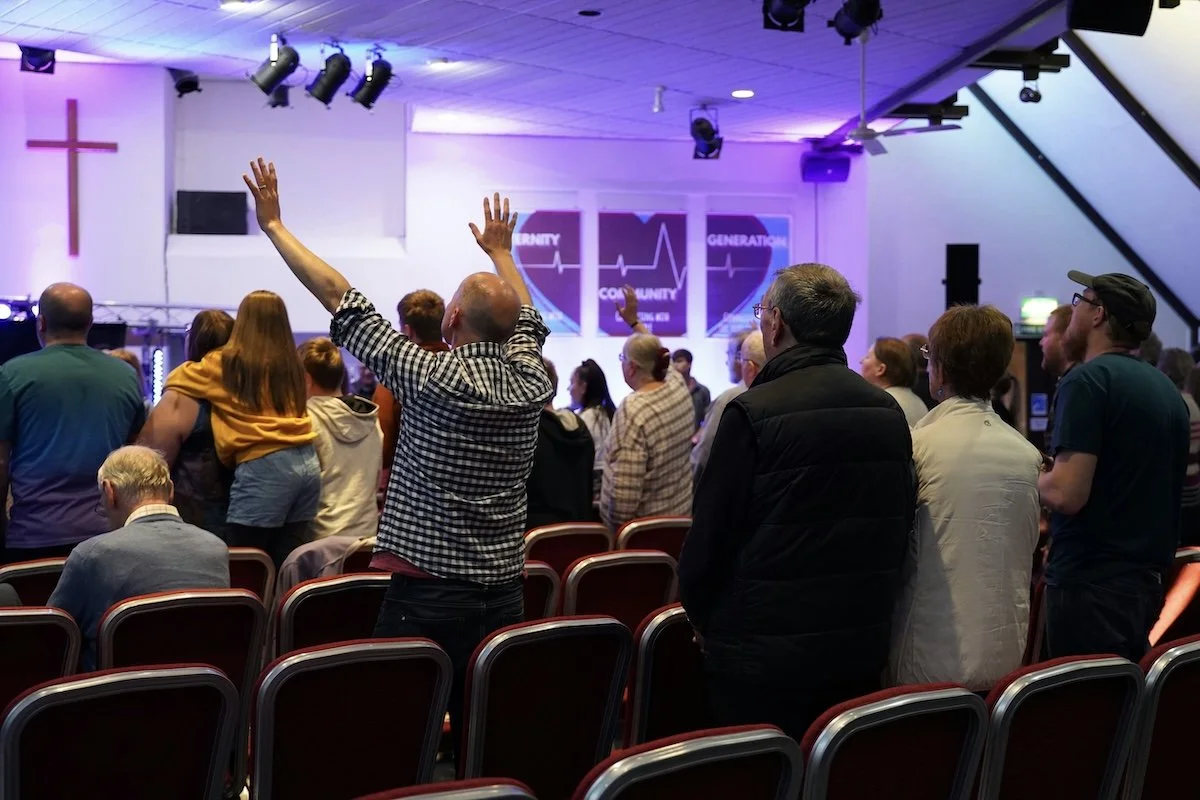
Photo by Sophie Spree on Unsplash
This is the seventh in a series of articles expounding on the need for re-formation in the church.
Links to other articles in this series: Thesis 1, Thesis 2, Thesis 3, Thesis 4, Thesis 5, Thesis 6.
[See the original overview article here: 9.5 Theses: The Needed Re-Formation of the Church.]
Thesis 7. A re-formed church will be both different from and similar to the church of yesterday
While chopping wood with his son, a father proudly explained that the axe he was using had been in the family for over three hundred years. “Our ancestors have passed it down from father to son for generations. My father passed it to me, and one day I will pass it on to you,” he said. The son gasped, “You mean we have been using this very same axe for three centuries?” Pausing only slightly, the father replied, “Well, technically, the head and handle have been changed a few times – but other than that, it’s the very same axe.”
The story reminds us how things change when they are passed from one generation to the next. Sometimes the modifications are small and insignificant. But at other times, the changes are so dramatic, especially as they accumulate over time, that the new version doesn’t resemble the original at all. This is rather innocuous when it comes to axes. But when it comes to the church of Jesus Christ, the issue takes on eternal significance.
Although institutional drift is a pernicious reality well known in the corporate world, the church almost never discusses it, even though there are multiple examples in the New Testament of churches who have gone astray (see Gal. 1:6-9; II Cor. 11:1-15; Rev. 2-3). It is a sober fact of history that, without careful attention, over time, the church will morph into something it was never intended to be.
Are We Asking the Right Questions?
Our purpose in writing these 9.5 theses is not to state conclusions, but rather to ask questions, hopefully, the right questions. Our desire is to invite others (you, for example) to join a conversation whose purpose is to discern what the Spirit is saying to the church today. A thesis, by definition, is a proposition meant to be defended by argument. We hope these ten articles will start a conversation that encourages discussion, debate, and especially prayer. We do not claim to have all the answers, but we believe that we can help the church to ask the right questions.
For example, in our first thesis, we state our conviction that “God is doing something new in the world today.” If this is true, then we want to urge Christians everywhere to ask the question: “Holy Spirit, what new thing are you doing in my locality? Where are you working?” Thesis 2 proposes that “more than the church needs revival, she needs re-formation.” If this is true, then we hope many churches will be prompted to ask the question: “Lord, what can we do to promote a re-formation in our church?” Our third thesis asserts that “the church has forgotten what the gospel is all about.” Once again, if this statement is true, then we want the church to ask a question that she has perhaps never asked before: “Lord, have we forgotten what the gospel is? Have we put our faith in a muddled gospel?” You get the idea. Each thesis is intended to provoke questions, hopefully, the kind of questions the Lord himself wants us to be asking.
In this article, our focus is on the church. Like the axe that was passed down from one generation to the next, it is not always obvious whether the church we attend is a genuine copy of the original or only a vague approximation. In our estimation, many churches are a curious hodgepodge composed of that which is vibrant, true, and authentic, and at the same time, that which is stale, theologically ungrounded, and muddled. It will take more than a revival to rectify the situation.
We, the authors, believe that we are on the threshold of a great re-formation of the global church. This realization has caused us to pause and ask: “Lord, are we (our local church, denomination, ministry, mission) in step with the new thing you are doing in the world today, or are we part of the problem?” At times, we are discouraged, because it seems that many churches we know need a complete overhaul. At other times, we are filled with hope and excitement because of the many places where we see the Spirit moving in powerful and creative ways, signaling that the re-formation has already begun! We have slowly come to realize that feeling conflicted and living with unanswered questions is what being part of a re-formation of the church is all about!
Although we write with a particular focus on our own Wesleyan tradition, we believe that God is up to something much bigger than bringing a fresh start to our little corner of the Lord’s vineyard. Israel was composed of twelve tribes, not just one. Thus, we cannot speak to the re-formation of one tribe without working in sync with the re-formation that God wants to bring to all the tribes! We will speak more to this issue in our final article (see Thesis 9.5).
What will a re-formed church look like? Will it use ancient liturgies or smoke machines? Will it meet in sanctuaries, theaters, or living rooms? Will it be high tech or low tech? Will the sign on the door say Liquid Fellowship or Saint Andrews? To state the obvious: we don’t know. But of this we are convinced: “A re-formed church will be both different from and similar to the church of yesterday” (Thesis 7). She will be a beautiful blend of the ancient and the new, the familiar and the strange.
The Same but Different
True reformers are anchored to the past and tuned to the future, at the same time. Sometimes they talk like narrow-minded conservatives. At other times they sound more like flaming liberals. This makes them something of a conundrum. Jesus speaks to this reality when he says: “Every scribe who has been trained for the kingdom of heaven is like a master of a house, who brings out of his treasure what is new and what is old” (Matt. 13:52).
One way to understand re-formation is to look at how the original church changed when it transitioned from Jerusalem to Antioch (see Ac. 1-13). Jerusalem is the mother church for all Christians everywhere and certainly models many attributes that are worthy of imitation. Yet this was an ethnocentric congregation, content to remain a subset of Judaism. When new members joined the fellowship, they were expected to become Jews. Gentiles were welcome, but only if they adapted to Jewish culture.
When the gospel came to Antioch of Syria, however, the church took on a very different character (see Ac. 11:19-30; 13:1-3). Compared to Jerusalem, the changes made at Antioch are so dramatic that we could call it a re-formation of the church. Indeed, some in Jerusalem wondered if the Christians in Antioch had betrayed the faith! A broad range of ethnicities, languages, political perspectives, and social standings were represented in the church community at Antioch, where membership was determined by one’s adherence to the creed Jesus is Lord. We can only imagine what languages were used in worship, what styles were used in music, what emotions were expressed in prayer, and what culinary delights were served at their potluck dinners! The New Testament makes it clear that Antioch was not a betrayal of the mother church. She was, rather, its fulfillment!
What to Expect
We cannot (and will not!) predict what a re-formed church will look like. However, we can anticipate that the coming changes will have an impact in the following areas:
New labels will emerge. The old theological camps (Charismatic, Fundamentalist, Evangelical, etc.) and denominational distinctions (Methodist, Baptist, Anglican, etc.) will be less and less helpful. New labels will be needed to define new groupings of Christians as believers align with other believers based on a new set of criteria in a re-formed church. (See Thesis 8 for more on this topic.)
A renaissance of interest in theology. As Christians listen more closely to what the Spirit is saying and join in where the Spirit is moving, there will be a new birth of interest in the knowledge and understanding of Scripture and historic Christian theology. The focus will not be on the battles of yesterday (justification, pneumatology, eschatology, etc.) but on the hot-button issues raging today (anthropology, sexuality, politics, etc.). We believe that questions related to the art of being human are going to define the theological center of the coming re-formation.
Ethnic diversity. A re-formed church will recognize that a monocultural fellowship cannot fully reflect the gospel she preaches. In other words, we believe that the future church is going to resemble Antioch more than Jerusalem.
Clergy/laity distinctions. While distinctions between clergy and laity will remain, as laity embrace more fully their gifts for ministry through the church, the rigid boundary between clergy and laity will become increasingly porous.
Church discipline. Unlike churches where the muddled gospel has been the norm, a re-formed church will know how to deal with sin, heresy, and sectarianism in healthy and biblical ways.
Exile. God’s people will increasingly understand their role in the world in terms of exile. This will profoundly impact how they live out their faith. Such a posture will enable them to genuinely love their ‘Babylonian’ neighbors and to pray for the shalom of the city where they live.
Worship. A re-formed church will discover the rich history of liturgy, creeds, sacraments, and song that has been practiced throughout the past two thousand years, while finding new faithful expressions of them in their ministry contexts.
Buildings. Although weekly worship will continue in spaces devoted to such a purpose, churches will be less and less identified by their buildings and more and more by the community of people who confess Jesus as Lord in a given place.
How Should We Then Live?
We believe this is a critical moment in history. We are on the threshold of a great re-formation of the global church. Therefore, we humbly urge pastors and lay leaders to consider the following:
Begin a process of self-examination.
Paul commands the believers in Corinth: “Examine yourselves, to see whether you are in the faith” (II Cor. 13:5). When God is about to do something new in the world, he always begins with the church (see I Pet. 4:17). It takes courage to look in the mirror, but this is where the work of re-formation must always begin.
Create a team.
Working through the ten theses as a group will identify those in the fellowship who have a vision for re-formation. Only when a core group of key leaders are praying and working in unison will God’s work prosper in the local church. “I appeal to you… that all of you agree… that you be united in the same mind and the same judgment…” (I Cor. 1:10).
Receive the Spirit’s vision.
The first thing the Spirit does when he comes in Pentecostal fullness is to open our eyes so we can see what he wants to do. “And in the last days… I will pour out my Spirit on all flesh… and your young men shall see visions, and your old men shall dream dreams; even on my male servants and female servants in those days I will pour out my Spirit, and they shall prophesy” (Ac. 1:17-18). When there is no vision, we languish and die.
Be holy.
Not only are we called to believe the gospel and to preach the gospel, we are also called to be the gospel. In the work of the kingdom, who we are (character) is far more important than what we do (ministry). If the world is going to believe our message, they must first see the imitation of Jesus in our lives.
Persevere.
Alan Kreider insists that it was the patient endurance of the early Christians that made them effective and fertile in their witness (The Patient Ferment of the Early Church, Baker Academic, 2016). They were not in a hurry or anxious, nor did they feel the need to manipulate events, pressure people, or use force to achieve their goals. They knew that King Jesus was returning soon, and this enabled them to live out their faith in quiet confidence and hope. The early church changed the world step by step, person by person, day by day. The modern church will be wise to rediscover the missiological power of patient endurance.
Chris Bounds is Professor of Theology at Asbury Theological Seminary.
Hubert Harriman is Former President of World Gospel Mission (WGM).
Stan Key is Former President of the Francis Asbury Society.
Dave Smith is Professor Emeritus of New Testament at Indiana Wesleyan University.