
First Re-Formation, Then Revival
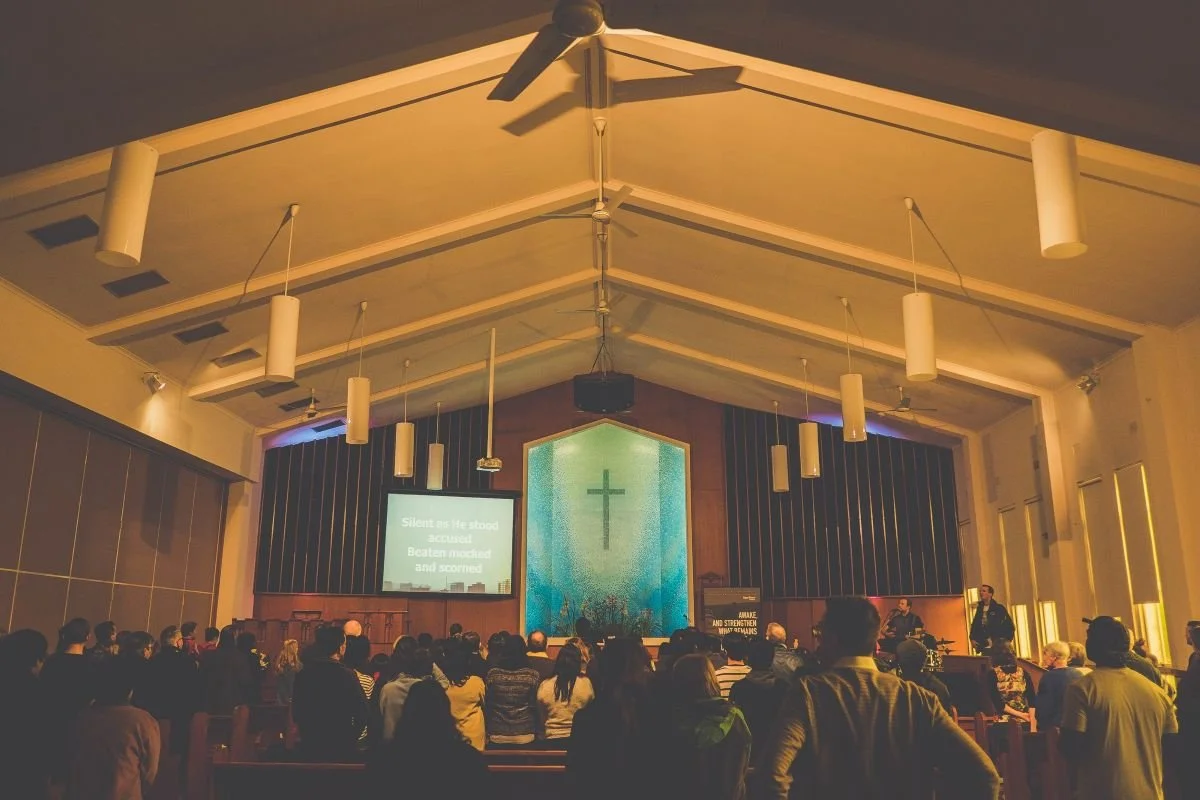
Photo by Athena Grace
This is the second in a series of articles expounding on the need for re-formation in the church.
Links to other articles in this series: Thesis 1, Thesis 3, Thesis 4, Thesis 5, Thesis 6.
[See the original overview article here: 9.5 Theses: The Needed Re-Formation of the Church.]
Thesis 2. More than the Church Needs Revival, She Needs Re-formation
I (Hubert) grew up as a missionary kid in the jungles of Bolivia. In this primitive setting I had little experience of anything faster than a bicycle or a horse. It was a big deal when a new missionary moved into our area with a motorcycle. I was fascinated by its power and speed. I convinced the owner to let me ride it. After explaining how to accelerate and brake, he let me loose. However, he said nothing about the need to change gears. With great delight, I roared up and down the grass airstrip near our home. The noise was deafening. A young man visiting our mission that summer was painting a house next to the airstrip. After several thunderous passes, his tolerance for the noise I was creating reached its limit and, from the top of his ladder, he screamed: “Get that thing out of first gear!”
We, the authors of this thesis, believe the church isn’t working as it should today because we don’t know how to change gears! If we could only learn how, a global revolution might be ignited through the power of the Spirit.
Re-forming the Way We Think and Practice Our Faith
Many understand the gospel as little more than a ticket to heaven, a rescue operation that takes us out of this world and deposits our disembodied spirits in a distant paradise after we die. Too often, we have domesticated the message of Jesus and the teaching of the New Testament. We have settled for a form of Christianity that only resembles faintly the discipleship taught by Jesus. The time has come to change gears and rediscover what the New Testament actually says about the power of the Gospel. We believe the church is on the cusp of a great re-formation. However, for this transformation to take place, we need to think differently. A. W. Tozer spoke prophetically over sixty years ago:
Evangelical Christianity is now tragically below the New Testament standard…We must have a better kind of Christian soon or within another half century we may have no true Christianity at all. Increased numbers of demi-Christians are not enough. We must have a reformation. (Of God and Men, Moody Publishers, 2015, p. 36).
In addressing the problems in the church today, many focus only on reviving the status quo and breathing new life into old structures. This is not enough. The problems are much deeper than that. In Ezekiel’s vision of the valley of dry bones (see Ezek. 37:1-10), the first priority is to put the bones in their proper skeletal formation; the foot bone connected to the ankle bone, the ankle bone connected to the shin bone and so on. Only when the body is properly constituted are we ready for the wind of God to blow across our valley and raise up the church to be the mighty movement that God intends her to be. This is the point we are making in Thesis #2: More than the church needs revival, she needs re-formation. This is how we explained that thesis in our original article:
In many cases today, the church is not the solution to the problem; she is the problem. We have little interest in tweaking the system. The church needs a total re-formation of both thought and practice. This is big. But we are not in agreement with those who advocate deconstruction. We don’t want to see the church torn apart, but we do long to see her re- shaped and re-formed. Her identity, worship, theology, understanding of salvation, and practice of mission all need to be prayerfully re-examined in the light of Scripture. Although such a process will be threatening and painful for many, we believe it is in complete harmony with the cry of the reformers of old: Semper reformanda!
In the sixteenth century, after a season of intensive Bible study, Martin Luther awoke to the sober reality that the church had forgotten an essential element to New Testament teaching on salvation: justification is only by grace through faith. The establishment responded with both shock and anger. Many tried to silence him, claiming he was a misguided troublemaker. Others, however, searched the Scriptures to see if what Luther was saying was actually true. This is one of the significant ways in which re-formation came to the church five hundred years ago.
Roughly two centuries later, building on the foundation that Luther and the Reformers had laid, John Wesley, George Whitefield, and others gave leadership to a great movement of revival. In the 18th century, masses of people discovered that the salvation promised through the gospel included so much more than justification. It was the divine promise that sinners could be transformed into the very image of God. Wesley described it like this in his booklet A Farther Appeal to Men of Reason and Religion:
By salvation I mean, not barely, according to the vulgar notion, deliverance from hell, or going to heaven; but a present deliverance from sin, a restoration of the soul to its primitive health, its original purity; a recovery of the divine nature; the renewal of our souls after the image of God, in righteousness and true holiness, in justice, mercy, and truth.
Where do we hear this anymore? What an incredible declaration of the purpose of God for his people, in this life! Like Luther, Wesley would face resistance and persecution for his views. Speaking the truth of the gospel never comes without a price. But history testifies that re-formation often lays the foundation for revival. We believe that for the dry bones that compose the church today to become a mighty movement of God, she first needs to experience a great re-formation that reshapes “her identity, worship, theology, understanding of salvation, and practice of mission.” The bones must be reassembled. Then the breath of God will bring them to life! We humbly suggest that those today who are solely fixated on promoting revival may, in fact, be putting the cart before the horse.
Obstacles to Re-Formation
So what hinders this re-formation that God wants to accomplish in his church today? Why is shifting gears so difficult? The question cannot be avoided. Be assured that it doesn’t require great theological knowledge to answer the question, but it does require great courage.
The first hindrance to the re-formation of the church is presumptive thinking. In Jesus’ day, this is what kept many people, especially religious people, from recognizing the truth of the gospel. Their assumptions about who the messiah would be and what he would do made it impossible for them to see the reality when it was standing right in front of them! Jesus didn’t fit their preconceived mold. When people today, especially church people, assume they know what the gospel is and what the gospel does, their very posture makes it difficult for them to recognize the truth. For many, the first step toward re-formation is the humble question: Lord, is there something I’m not seeing here?
A second hindrance is even more serious than the first: self-interest. While presumptive thinking is rooted in ignorance, self-interest is commonly rooted in sin. Jesus was perceived as a threat to those whose beliefs and behaviors were grounded in vanity, ego-centrism, and personal ambition. Many rejected the gospel not because they thought it was false, but because it demanded repentance, that is, a radical change of both thought and practice.
Simon Peter is a powerful illustration of someone who, with the help of the Holy Spirit, overcame both presumptive thinking and self-interest. His spiritual journey is recorded in Scripture so we can learn from his example. The following list is not exhaustive, but it illustrates some of the classic hurdles that must be crossed in order for re-formation to lay the groundwork for revival.
1. The Christ
When Peter confessed that Jesus was the Messiah, the Son of the living God, it marked one of the most significant moments in human history (see Matt. 16:13-24). And yet, after his Great Confession, Jesus “strictly charged” him not to tell anyone who he was! Why? There were many reasons, but one is front and center: Jesus knew that sharing the gospel without understanding the cross is preaching no gospel at all (see Gal. 1:6-9). Peter neither understood the centrality of the cross for Jesus, nor the necessity for his life to be conformed to that cross.
Peter was metaphorically stuck in first gear. He believed that Jesus was the Messiah. But he thought of Jesus’ messiahship in terms of nationalism and personal glory. Peter desperately needed a re-formation of both thought and practice. It was only when he began to get his thinking right about Jesus that he became a candidate for the in-filling of the Holy Spirit at Pentecost. The principle is clear: re-formation precedes revival.
2. The Cross
During the first years of his discipleship, Peter could not imagine that there could be anything good about a crucifixion. He could only envision Jesus’ death on a cross as a tragic ending. But as Peter was transformed by the renewing of his mind, he began to realize that the cross was not a mistake. It was the whole point of Jesus’ life and ministry. In fact, the cross was the Messiah’s throne! More than that, he discovered that there is not just one cross in the gospel, but two: one for Jesus, and a second one for everyone who follows him (see Lk. 9:23). Jesus’ disciples get to do with their lives what he did with his: lay them down for others, imitating Jesus in his status-renouncing, self-denying, other-oriented love. Peter put it like this: “For to this you have been called, because Christ also suffered for you, leaving you an example, so that you might follow in his steps” (1 Pet. 2:21).
3. The Culture
We are all affected by the cultures we inhabit. But when our culture (national, family, church, school, etc.) endorses ways of thinking and living which devalue, separate and harm people, that culture is wrong. Peter struggled with this hurdle when it came to the Gentiles. Acts 10 tells the story of how he first preached the gospel to non-Jews. We typically call this chapter “The conversion of Cornelius.” Lesslie Newbigin suggests that it would be better to call it “The conversion of Peter” (Mission in Christ’s Way, p.34)! Even after he was filled with the Spirit, when it came to, extending God’s grace beyond the definitions of the Levitical Law, to embrace Gentiles into the church, Peter was stuck in first gear. He desperately needed a re-formation in the way he thought about culture, other nations, and his own ethnic identity. Though we are all part of certain cultures in this world, Christian re-formation makes us citizens of the Kingdom of God. We now live, act, and react like Jesus!
Rather than hiding Peter’s mistakes and ongoing transformation, the New Testament highlights them. Seeing how Peter was able to get out of first gear encourages us today to realize that if the sanctifying Spirit can do this in his life, he can do it in ours as well.
Would you join us in praying that the Spirit of God will enable us to get this gospel out of first gear?
Chris Bounds is Professor of Theology at Asbury Theological Seminary.
Hubert Harriman is Former President of World Gospel Mission (WGM).
Stan Key is Former President of the Francis Asbury Society.
Dave Smith is Professor Emeritus of New Testament at Indiana Wesleyan University.