
The Church: Hope Of The World
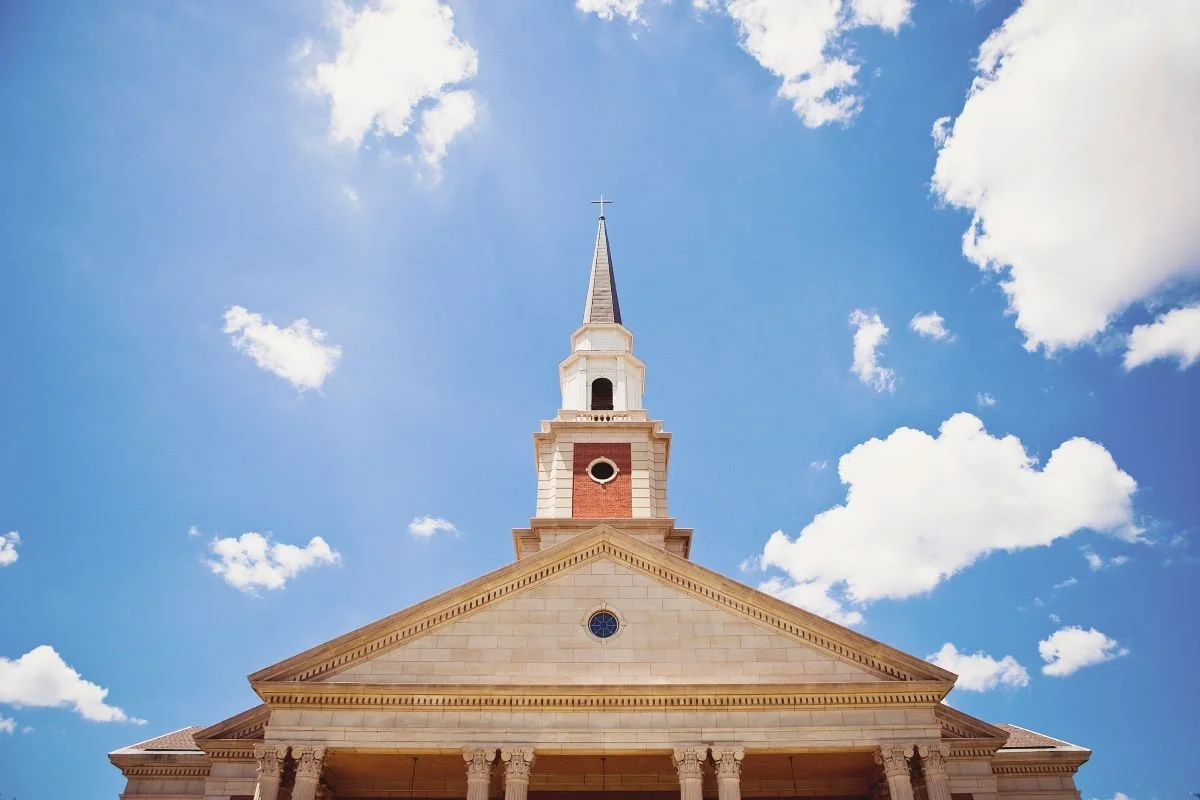
Photo by Shaun Menary
This is the fifth in a series of articles expounding on the need for re-formation in the church.
Links to other articles in this series: Thesis 1, Thesis 2, Thesis 3, Thesis 4, Thesis 6.
[See the original overview article here: 9.5 Theses: The Needed Re-Formation of the Church.]
Thesis 5. The Local Church Is Ground Zero for God’s Work in the World
Among the reasons the Protestant Reformation of the 16th century arose was a need for a biblical corrective to muddled teaching on personal salvation by the medieval church. Unwittingly, however, the reformers set into motion a preoccupation with the human self, that, through the centuries, has led to a hyper-individualism within the church that today distorts the very meaning of the gospel itself! For example, today we think reflexively “God and me” rather than “God and us.” The re-formation of the church, that we believe is coming, will raise up a new generation of believers who not only give full personal allegiance to the Jesus-is-Lord gospel (as noted in Thesis 3), but who have an unequivocal commitment to the body of Christ, the church. Yes, we must rediscover what the early Christians meant when they insisted that God was their Father, but the church was their Mother.
We rejoice in the mighty work of God that was launched through men like Luther and Calvin, yet we recognize that their emphasis on individual salvation tended to orient God’s people in a direction that, today, needs to be recalibrated. Although the Bible certainly talks about personal salvation and discipleship, what God wants to do in and through me, its primary emphasis is on what God wants to do in and through us together! While the gospel continues to have inescapable implications for the individual, we believe that God is calling us today to rediscover the supreme importance of the body of Christ, preeminently as it is expressed in the local church. Yes, it is in and through the life of the family of God that we truly experience the reign of the Lord Jesus in the world today.
Thesis 5 points to the central importance of the church in the coming re-formation. We don’t know whether the rediscovery of the primacy of the local church will be the cause or the effect of that great work of God, but we are convinced that a re-formed understanding of the church will be at the very heart of the rebirth of Christianity that is taking place in the world today.
The Bride of Christ
The Nicene Creed is a great place to begin to discover the foundational role played by the church in the Christian faith. Set solidly within a trinitarian framework, the creed articulates a succinct summation of the gospel, one that is similar to what we proposed in Thesis 3. “…We believe in one Lord, Jesus Christ… he came down from heaven… he was crucified under Pontius Pilate… on the third day he rose again… he ascended into heaven and is seated at the right hand of the Father… He will come again in glory…and his kingdom will have no end….” The creed, then, moves on to affirm the effects of this “good news.” Primary among these blessed fruits of the gospel is the church.
We believe in one, holy, catholic, and apostolic church.
We acknowledge one baptism for the forgiveness of sins.
We look for the resurrection of the dead,
And the life of the world to come. Amen
Notice the order. The statement on the church precedes the mention of personal salvation. This is not by accident. Ecclesiology comes before soteriology, the community before the individual.
Although the precedence afforded to the church in the ancient creeds comes as a surprise to many Protestants today, the early Christians had a different understanding, knowing that the church was indispensable to their salvation. This was not a novel idea that they concocted on their own, of course. They found it clearly revealed in Scripture. For example, the importance of the church is foreshadowed in Jesus’ parable of the wedding celebration (see Matt. 22:1-14) and in his reference to himself as the bridegroom (Mk. 2:19-20). And Paul states that his purpose in preaching the gospel is to present the church as a holy spouse to Christ himself, when he returns (see 2 Cor. 11:2). And nowhere is the role of the church seen more dramatically than in the wedding supper of the Lamb at the culmination of human history, when the marriage of Christ and the church will be finally consummated (Rev. 19:6-8; 21:2; 22:17).
The marriage of Adam and Eve, in particular (Gen. 2:21-24), and the marriage between a man and a woman, in general, are signs of the nuptial union between Christ and his church. As Paul describes it, this is a “profound mystery” (Eph. 5:31-32). In other words, every human marriage is meant to anticipate the final and ultimate one. As Old Testament scholar Dennis Kinlaw has taught, “When God created the world, as a good Father he was looking for a bride for his Son” (Confessing the Faith: Reclaiming Historic Faith and Teaching for the 21st Century, Reformation Press, 2002). Yes, a re-formed church will have a clear understanding of her identity as the bride of Christ.
Visible, Physical, and Present
Christians today tend to think of the church in spiritual terms rather than physical. We have emphasized the invisible church more than the visible. The church universal has taken priority over the church local. The focus of church life has typically been on the Spirit’s work and the love that unites us with the Son and with one another. This has come at a devastating cost to individual believers and to the concrete Christian community manifested in local congregations. For the church to be united in Christ only through the bond of the Holy Spirit is woefully insufficient.
As the bride of Christ, the church is a communion of believers, called out of this fallen world and regenerated by the Holy Spirit, who together confess audibly in corporate worship the original gospel creed: Jesus is Lord. While the invisible, spiritual, and future aspects of her corporate life certainly remain, a re-formed church will place a supreme priority on that which is visible, physical, and present. Yes, a re-formed church will rediscover the wonder of what it means to be fully human. We are embodied souls, composed of “rational souls” and “physical bodies” in a unitary whole. We are not souls without bodies or bodies without souls. As spiritual creatures we need the Holy Spirit to unite us together, but as physical creatures we require more tangible forms of union. The local congregation of believers is where we establish embodied relationships with others. Without this, we languish and perish.
As we saw in Thesis 4, personal salvation not only redeems our souls, its intention is to restore our humanity to the very image of God. In the incarnation, Jesus took on our nature and became fully human. In his humanity he was (and is!) the image of the invisible God (see Col. 1:15). And now, through redemption, God has predestined us to be “conformed to the image of his Son” (Rom. 8:29). In other words, the purpose of salvation is not just about going to heaven when we die. No, we are saved so that we can truly and authentically be like Jesus. Athanasius put it this way: “God became what we are in order for us to become like he is” (On the Incarnation 54.3).
To be human is to be social, which requires concrete relationships with others. We cannot be true to our calling as disciples of Jesus apart from embodied relationships with other people, to be in physical communities where we become fully human in Christ. As Dietrich Bonhoeffer put it: “The Body of Christ can only be a visible Body or else it is not a Body at all.” (The Cost of Discipleship).
The New Society
The book of Ephesians proclaims that the “mystery” of the gospel is now revealed to the world both in and through the church. Yes, it is “through the church” that God intends to make known “the manifold wisdom of God… to the rulers and authorities in the heavenly places” (Eph. 3:9; see also 1:9; 3:3-6; 5:32; 6:19). At the core of this “mystery” is the revelation that “the dividing wall of hostility” between Jews and Gentiles has been broken down through Christ’s death and resurrection, establishing true unity in one body, the church (see Eph. 2:11-22). Yes, “this mystery is that the Gentiles are fellow heirs, members of the same body, and partakers of the promise in Christ Jesus through the gospel” (Eph. 3:6). The New Testament is emphatic that when people are reconciled to God, in the body of Christ, they are, by definition, reconciled to one another.
The church was never intended to be a spiritual club where I can hang out with “my kind of people.” No! The church is meant to be a microcosm of the Kingdom of God, made up of Jews and Gentiles, men and women, slaves and free, etc. She is the womb through which a redeemed human community is born. She is the fellowship in which the (re)union of all peoples is made possible, becoming one holy temple (see Eph. 2:19-22). In the church, a new society is formed through the Holy Spirit where all other identities and associations become secondary to our corporate unity under the Lordship of Jesus. Yes, in the body of Christ, we are finally able to transcend all other divisions and allegiances, whether familial, ethnic, political, economic, or national. The church is an alternative culture to that of the surrounding culture (whether the Roman Empire, the United States, or something else). It is the place where the values of the Kingdom of God are practiced as each member allows conformity to the image of Jesus to come to fruition in their own personal lives.
An anonymous document written in the second century called the Letter to Diognetus describes what life was like in the early church. It gives us a great model to follow today.
The difference between Christians and the rest of mankind is not a matter of nationality, or language, or customs. Christians do not live apart in separate cities of their own, speak any special dialect, nor practice any eccentric way of life… Like other men, they marry and beget children, though they do not expose their infants. Any Christian is free to share his neighbor’s table, but never his marriage bed…They show love to all men – and all men persecute them… Christians inhabit the world, but they are not part of the world… It is Christians who hold the world together. (Early Christian Writings, Penguin Classics, 1987, pp. 142-151).
A Church for Others
To sum it all up, the local church is ground zero for God’s work in the world. While God is present everywhere, he is present in the local church in a wholly different way. This is where God is manifested most powerfully and works most redemptively. Yes, the Spirit of God is ready to work both in and through the local church. This means that the church is intended to be missional in all that she is and all that she does. She speaks truth to a world that lives in illusion. She embodies hope to a world locked in despair. She facilitates grief to a world that lives in denial. She gives a glimpse of the coming Kingdom of God. In other words, the church both preaches and embodies the reality of her creed: Jesus is Lord. Living lives of self-denying, status-renouncing, other-oriented love, the people of God go into the world even as Jesus went into his; laying down their lives for others. Paul put it like this: “Death is at work in us, but life in you” (II Cor. 4:12).
Chris Bounds is Professor of Theology at Asbury Theological Seminary.
Hubert Harriman is Former President of World Gospel Mission (WGM).
Stan Key is Former President of the Francis Asbury Society.
Dave Smith is Professor Emeritus of New Testament at Indiana Wesleyan University.