
The Army Is My Parish: Military Chaplaincy and the Ministry of Presence in Non-Ordinary Spaces
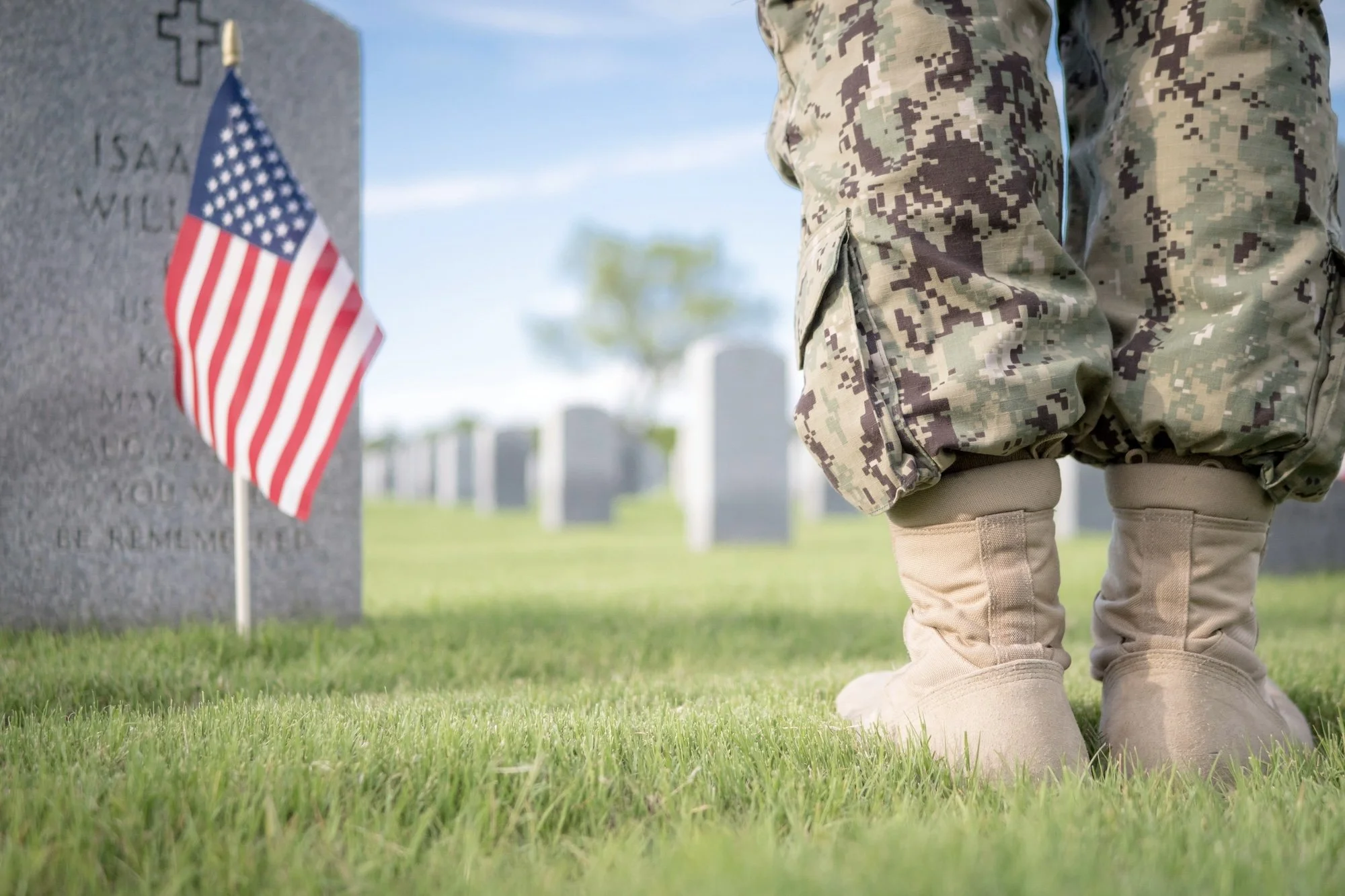
Photo by Jonathan Wells on Unsplash
Spent gunpowder hung in the air as Soldiers packed equipment after a long day on the range. Machine guns echoed in the distance, radios chirped, and the rumble of military vehicles moved in and out of the training area. "Chap, do you have a minute?"
The Soldier and I stepped away from the noise, and what began as a casual conversation quickly became something deeper. Without defining what was shared in confidence, the reality is that connections like this almost always lead to something deeper. Not looking for a sermon, this Soldier needed someone willing to listen.
We were not in a church building. I did not have a worship band or an altar call. Just a Soldier carrying a burden and a chaplain willing to stop and lean in.
That experience reinforced a lesson I continue to pray in my heart every day: “God, I am not here to be everyone’s favorite. I am here to listen to your voice and serve in obedience to whom you send me.” Ministry happens wherever people are—in the grocery store, at the gas pump, on street corners, and on Wall Street.
Distant thuds of artillery are not what most people think of when considering ministry life, yet this is my parish.
Some of the most sacred moments of my ministry have happened while wearing camouflage and body armor. Some of my most sacred spaces consisted of nothing more than a field table with camouflage netting, where Holy Communion was offered.
From Infantry to Chaplain
I served as an Infantryman in the United States Army from 2000 to 2006. During those years, I learned firsthand the demands military life places on soldiers and families. I also encountered chaplains whose ministry left a lasting impression on me, both positive and negative.
When deployed to Afghanistan in 2004-2005, I attended a few chapel services, but what I remember most was not the preaching. I remember the chaplain's presence. When people were hurting, he showed up. When tragedy struck, he did his best to bring peace and comfort, all while remaining unarmed in places where soldiers would never willingly go without protection.
I would have laughed at the time if anyone had said I would enter pastoral ministry after the Army, much less return to the Army in 2021 as an Army chaplain. I never desired to be a minister or a chaplain, but, as is often the case, God had other plans.
Looking back, I did not appreciate the chaplain's influence on my life as much as I do now. I realize he was teaching me one of the most important lessons of ministry long before I ever became a minister. Presence is the first sermon people hear and the foundation upon which all ministry begins.
Twenty years later, after serving in the local church, God opened a door I never expected. I returned to the Army, not as an Infantryman, but as a Chaplain. Today, I wear a Protestant cross and a Combat Infantryman Badge on my chest. That combination has not only shaped how I approach ministry, but it has also allowed me to understand how important my presence is to those I serve.
When I walk through a motor pool, spend time in a training area, or sit beside a soldier wrestling with life's challenges, I understand many of the realities they face because I have lived them myself. I understand the strain military service can place on marriages, the uncertainty of deployments, and the burdens that often follow people home after the workday ends and long after wars are over.
The Ministry of Presence
My days are never the same. One afternoon, I found myself praying with an employee at the post exchange who had recently lost her best friend in a tragic accident. I had not arrived expecting a ministry opportunity. I was looking for an item for my uniform. Nevertheless, God divinely led me to a place far removed from what anyone would consider sacred, and I found myself present and available when someone needed His reassurance the most.
Experiences like these happen often in the space I serve. In our world, people carry far more than we often see. Both in and out of uniform, the Army has taught me to be aware of the confident leader who may be battling anxiety, the high-performing Soldier who may be struggling at home, and the person who appears strong who is carrying a heavy grief, loneliness, or fear.
Most people do not publicly acknowledge those struggles, especially in the military, where the preferred image is that of a battle-hardened warrior. However, everything changes when someone earns the right to listen. Hearts open when presence precedes words.
That reality helps explain why chaplains often speak about the ministry of presence. The phrase sounds simple because it is. Presence means showing up, listening well, and caring before a crisis ever occurs. In the Army, we call this getting “left of the bang.”
The reality is that trust is rarely built in a single moment. It develops through hundreds of ordinary interactions. A conversation after physical training, a visit to a workplace, a walk through the company area, or a few minutes spent asking someone how they spent their weekend, or doing hard things with the people around you. Presence creates trust, and trust creates organic opportunities for ministry.
The World Is My Parish
The more I have reflected on this principle, the more I realize how deeply it aligns with our Wesleyan heritage. John Wesley did not confine ministry to church buildings. Not that there is anything wrong with the local church setting; we love visiting our home church. Wesley preached in fields, marketplaces, and public spaces, not because of a lack of love for the local church, but because he believed God was doing some extraordinary things outside of the ordinary places.
Wesley's statement, “The world is my parish,” still challenges me. Military chaplaincy certainly looks different from eighteenth-century field preaching, but the roots remain remarkably similar. The mission field is wherever people need Christ, and it is right outside our door.
Serving Christ in a Pluralistic Environment
My daily rhythm has also shaped how I respond to misconceptions about military chaplaincy. Over the years, I have heard people suggest that chaplains cannot preach the Gospel, openly pray in Jesus’ name, or remain faithful to their convictions while serving in uniform.
My experience has been quite the opposite.
I preach the Gospel. I pray in the name of Jesus. I counsel from a biblical worldview, serve in a chapel setting weekly, and, through every invocation or benediction, serve as a Wesleyan minister endorsed by The Wesleyan Church. Far from weakening my faith, military chaplaincy has required me to depend upon it every day.
The military is one of the most religiously diverse environments in the world. On any given day, I may serve Protestant Christians, Catholics, Orthodox believers, Jews, Muslims, members of other faith groups, and soldiers who claim no religious affiliation at all. The Army calls this a pluralistic environment. Rather than asking chaplains to abandon their faith convictions, the Army relies on us to represent our own faith traditions with integrity while ensuring every soldier has the freedom to practice or not practice their faith according to their conscience.
This pluralistic setting is why my endorsement is so important. In the military, a chaplain does not serve independently but under the authority and accountability of an endorsing faith group. Not all endorsers are the same. My endorsement through The Wesleyan Church affirms my qualifications for ministry and defines the theological convictions I represent in uniform as a Wesleyan minister. The Army expects me to minister faithfully within the beliefs and practices of my endorsing body while respecting the religious freedoms of those I serve. In many ways, endorsement protects both religious liberty and chaplain integrity.
As a result, I never have to choose between being a faithful Wesleyan minister and being an Army chaplain. The Army expects me to be both.
More Than a Ministry, A Mission Field
A final misconception is that military chaplaincy is easy.
I can tell you that military chaplaincy is not an easier form of ministry. It requires theological conviction, emotional resilience, leadership credibility, and a willingness to enter difficult situations. It also requires physical readiness. Chaplains train alongside soldiers, participate in field exercises, spend long days in demanding environments, and must maintain Army fitness standards to remain present where soldiers live and work.
In addition, a typical Army battalion ranges from 300 to 1000 Soldiers, and the battalion Unit Ministry Team consists of two soldiers: a Religious Affairs Specialist (56M) and the Battalion Chaplain (56A). There are no associate or care-pastors. Just two teammates are entrusted with the religious support of an entire formation, its command teams, and battle staff.
Furthermore, the ministry often takes place far from the comfort of an office or sanctuary. Whether walking through waist-high swamp, visiting a weapons range, supporting a field exercise, or accompanying Soldiers during deployment, chaplains must be prepared to go wherever their people go– prepared to go where there is suffering. It requires ministers who are willing to leave familiar spaces and meet people where they are, no matter the conditions.
This is one reason I believe military chaplaincy remains one of the church's most significant yet underrepresented mission fields. Every day, chaplains comfort grieving families, counsel struggling marriages, encourage leaders carrying heavy responsibilities, and fulfill the sacred responsibility of advising commanders on matters of religion, ethics, morals, and morale.
A Calling for Every Believer
The lesson the Army has taught me is not limited to chaplains.
Many reading this will never wear a military uniform, walk through a motor pool, or deploy overseas. Nevertheless, each of us encounters people who need someone to be there when it matters most.
Those opportunities may look like an unchurched neighbor experiencing loss, a coworker navigating uncertainty, a friend battling discouragement, or a family member carrying burdens that very few can see. The ministry of presence belongs to all of us.
You do not need a seminary degree to practice it. You simply show up, listen well, care deeply, and point people toward Christ. Those steps sound simple because they are, yet they remain among the most powerful, often overlooked expressions of ministry available to every believer.
Sacred Ground Beyond the Sanctuary
When I first sensed God's call to military chaplaincy, I assumed ministry would take me beyond the pulpit. What I did not realize was how many sacred moments would be found in places that looked nothing like a church.
In training areas, hospitals, deployment sites, parade fields, the commissary, and ordinary workplaces, I have repeatedly discovered that God is already at work long before I arrive.
Daily, the Army reminds me that the mission field is often closer than we think and much larger than we can ever imagine.
For some readers, God's call may involve serving as a military chaplain. For others, it may simply mean becoming more intentional about practicing the ministry of presence in everyday life.
Either way, the invitation remains the same: go where people are, listen well, love faithfully, and trust God to do the rest. Right place, right time, right ministry.
Shane Beauvais is an ordained minister in The Wesleyan Church and is currently serving as a U.S. Army Chaplain.