
The Image of God, Beloved and Restored: "Theo of Golden" and the Wesleyan Imagination

Photo by Apostolos Vamvouras on Unsplash
You could be a saint.
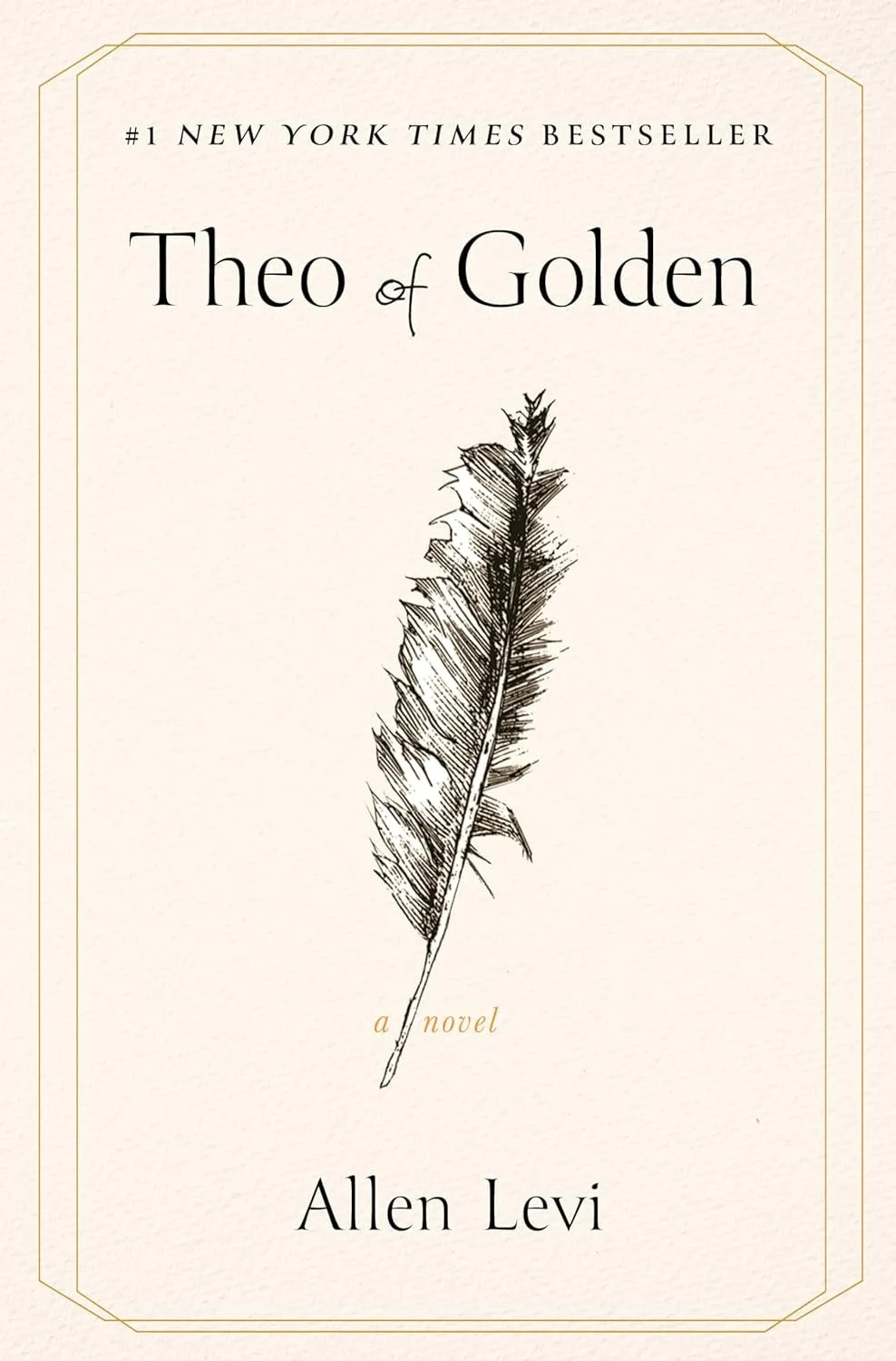
Through the death and resurrection of Jesus and the work of the Spirit, every single person is not only called to holiness but capable of it. C.S. Lewis argued forcefully in his classic Mere Christianity that the whole purpose of the church was to make us “little Christs.” Lewis had a gift like few others for sharing classic Christian convictions in a compelling manner for popular audiences. In its own way, the bestselling recent novel Theo of Golden offers something similar: an engrossing vision of the Christian life that is at once insightful and inspiring, not only to disciples of Jesus but also to skeptics and other outsiders.
Theo of Golden is the first novel by Allen Levi, an attorney and judge who lives in Georgia (small-town Georgia is the setting of the novel). His debut novel was an unlikely success, described as a “word-of-mouth bestseller.” The narrative centers on a mysterious but kind old man named Theo, who moves to the small town of Golden and begins buying up art. Not just any art, but portraits of townspeople created by a local artist. One by one, Theo begins to find his calling, as he meets with each portrait’s subjects, inquires about their lives, and gifts the portraits to them.
On the surface, this sounds like a recipe for a quaint but repetitive succession of vignettes, or an excuse to mash together a gaggle of short stories and call it a novel. But as the individual narratives begin to unfold, Levi also begins to unravel the mystery of Theo and his connection to Golden. By the end of the novel, we learn of Theo’s remarkable life story, the highlights of which I will not spoil for those who have not yet read the novel. (You can wait for the forthcoming movie if you prefer.)
Theo is a Christian who faithfully attends the local Catholic parish, quotes Scripture and saints, speaks confidently and wisely about matters of faith, and models a gentle evangelism of both words and deeds. He is Christlike with grumpy doubters, the poor and broken, the young and ambitious alike. From a Wesleyan perspective, what is most compelling is Theo’s practice of telling his interviewees what he sees in them: their gifts, their goodness, their charm, and their love. He closes each of these interactions with some version of, “you could be a saint.” Many of them dismiss his invitation as mere politeness, but he is sincere. The generous pilgrim sees the potential for sanctity in everyone he meets.
Admittedly, Theo at times seems too good to be believable. This is tempered as the story goes on, however, and we learn about the mistakes and stumbles of his youth. Beyond the unveiling of his past faults, the only time we see Theo act questionably is when he seems to get irrationally angry when a suspicious boyfriend destroys the portrait of a young woman with whom Theo was trying to meet.
In context, however, Theo’s anger here was righteous, and the interaction seems modeled on Jesus’ cleansing of the Temple. The portraits were, to Theo, works of great beauty, and beyond that had become a critical part of his vocation in Golden: to connect to the subjects, remind them of their loveliness, and give them a gift. To destroy that beauty and the possibility of that encounter was a sacrilege. One of the more memorable lines of the novel is, “God gave us faces so we can see each other better.” This connects to a deeply Wesleyan thread running throughout the novel.
Among John Wesley’s favorite language to describe redemption was the restoration of the divine image. Following both Scripture (Genesis 1:26-27) and writers of the early church, the Imago Dei was the cornerstone of Wesley’s vision of humanity. For our founding father, we are made in God’s image, and this is the first and deepest truth of human identity. That image is, of course, marred by sin. The image of God is damaged by our rebellion against God, but through Jesus redemption is offered to all. The human person can be restored such that we can reflect the divine glory of the One in whose image we were made. To worship the Lord in what Psalm 29:2 calls the “beauty of holiness,” then, is to do so as redeemed image-bearers, made whole by Christ’s love.
The radical message of Wesleyan Christianity is that this fullness of salvation, the complete restoration of the Imago Dei, is God’s desire for everyone. As followers of Jesus, in the company the Wesleys, we believe in the gift of sanctification. That is, God’s gift of holiness, a process of growing in grace after justification. We desire to receive this gift even to the point of “perfection in love.” This is not mere moral theory but a genuine possibility, and not only in the cloister or among a spiritual elite as rare exemplars, but for every person. Sainthood is not a rare golden ticket in Wesleyan soteriology; it is the telos of every human life, the gift God wants to give to every image-bearer.
This is why I would argue that Theo of Golden is a thoroughly Wesleyan novel. Theo’s constant reminder to every portrait subject he meets, “you could be a saint,” aligns well with our historic desire to invite every disciple to full salvation. The fact that his entry into their lives is quite literally a portrait, a window through which Theo can see the divine image shine through in them, is also quite fitting.
Christian Perfection, also referred to as entire sanctification, is the most distinctive doctrine that we Wesleyans possess. Wesley himself said it was the “grand depositum” entrusted to the movement, the reason God raised us up in the first place. (See his “Letter to Robert Carr Brackenbury,” 1790) Whatever part of the Wesleyan family we find ourselves in, if we are not inviting people into the fullness of redemption, we are in danger of becoming just one more instantiation of mainline Protestantism or generic evangelicalism. If that happens, we have lost our reason to exist as a particular branch of the Body of Christ.
Opinions vary these days as to whether the doctrine of Christian Perfection functionally exists much anymore. In my tribe of Mainline Methodism, it is rarely heard outside of an awkward question in the ordination service as demanded by the Discipline. But if a church or denomination wishes to reclaim entire sanctification, it will require powerful preaching and convincing teaching, along with the support of leadership and other resources.
Art can also spark the imagination and invite transformation. By the grace of God, creative works such as film, literature, poetry, and other endeavors can point us to sanctification. In a postmodern culture, in which the good and the true are highly contestable, beauty perhaps has the potential to break through where hardened hearts and skeptical minds seem to be adamantine. Indeed, much of Theo’s magic in the novel rests in telling people about the beauty he sees within them.
With that in mind, Theo of Golden might serve as a powerful conversation starter, and a gentle but lovely apologetic, to open up the imagination of persons and communities to Christian Perfection. Yes, the main character of the novel is Catholic, but Theo’s vocation to invite his interlocutors to consider the divine image within and urge them toward sainthood aligns quite well with Wesleyan instincts.
You, yes you, could be a saint. Theo of Golden is a signpost which points us toward that calling, a catalyst by which the Spirit may stir up in you, and in others, that holy longing. At a time when Wesleyan identity is too often fuzzy, this winsome novel is a gift to the movement whose founding purpose was holiness. Thanks be to God for a work of art which directs our minds to God’s transformative love, and invites us to the beauty of holiness.
Drew McIntyre is the pastor of Grace United Methodist Church in Greensboro, NC and a ThD student at United Theological Seminary. He serves on the Editorial Board for Firebrand.