
Beauty of His Holiness: Toward a Wesleyan Theological Aesthetic
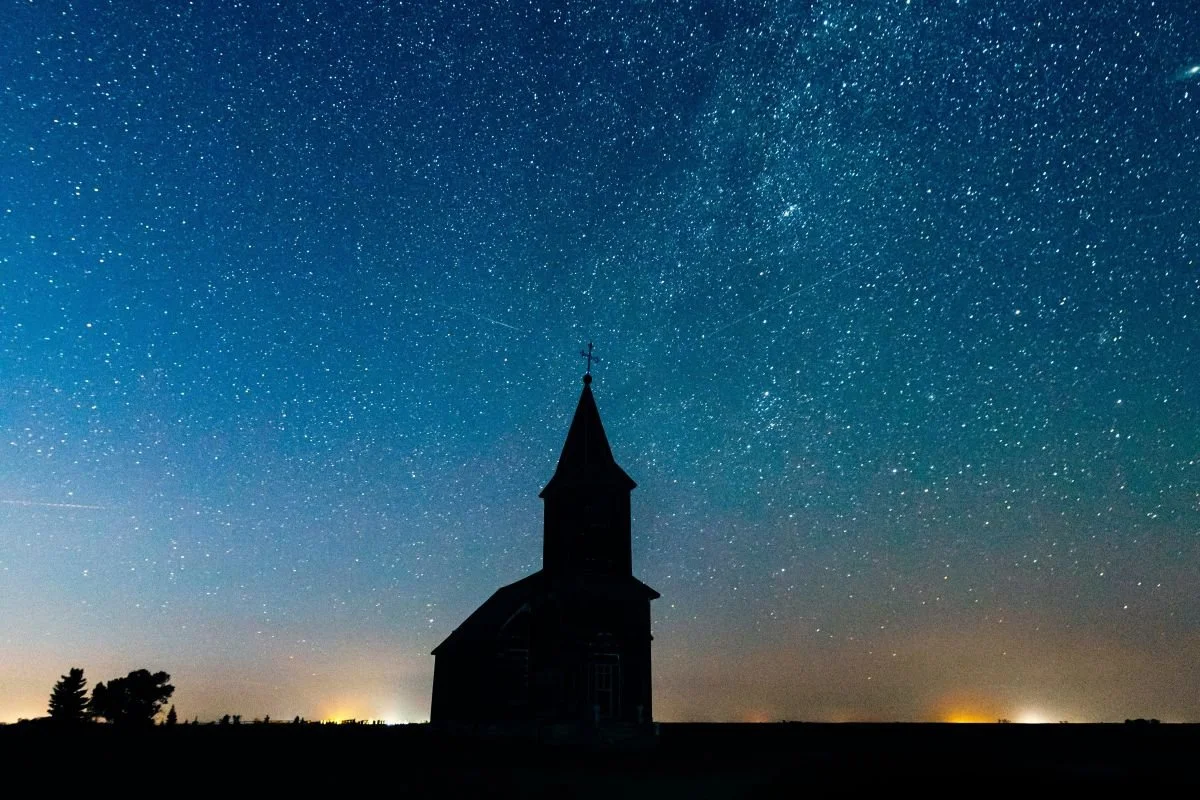
Photo by Ruvim Kerimov on Unsplash
It is time for a Wesleyan theological aesthetic.
To date, I have seen few make this attempt. Certainly, there are numerous Wesleyans making art, and beautiful art at that, but our theological value for the role of the beautiful in our salvation and sanctification is lacking. Our various takes on the doctrine of holiness rarely seem to mention beauty. Yet, does not the Psalmist say on multiple occasions, “worship the Lord in the beauty of his holiness” ( Psalm 29:2 & Psalm 96:9)? What about Moses in Exodus, “Who among the gods is like you, LORD? Who is like you— majestic in holiness, awesome in glory, working wonders” (Exodus 15:11). His holiness is not just powerful, or morally other, but beautiful. A theological vision and imagination for the necessity of the beautiful is beckoning us in this missional moment, and our tradition already contains the resources necessary for this task to not only be affirmed but pursued. Few Protestant movements have built into their doctrinal distinctives a grounding for why beauty matters, theologically, formationally, and missionally as the Wesleyan movement does.
In classical philosophy, wherever something exists, three fundamental qualities are present that transcend every material category of existence—both the Wesleys would have been familiar with this at Oxford. Those qualities are: truth, goodness, and beauty. Which means, according to St. Thomas Aquinas and other philosopher-theologians, if God is existence itself, and the source of all that is, then within God there exists goodness, truth, and beauty. These three are qualities of ultimate reality. Aquinas believed, uniquely though, that goodness was intricately tied to beauty. Wherever there is goodness, there is beauty. This is why whenever we hear a story of redemption, see an act of mercy, or enjoy dinner with our neighbors, we acknowledge the good, but we may also say, “This is beautiful.” Aquinas understood this principle, but so did Peter, James, and John. On a mountain, in the moment of our Lord’s glorious transfiguration, they exclaim, “It is good for us to be here.” However, when you zoom in, you realize that the Greek word for “good,” kalos, can also mean beautiful, excellent, or magnificent. Needless to say, not only were they experiencing the truth, but it was also good and beautiful for them to be there.
If goodness and beauty are inseparably conjoined in a Holy God, then they must be inseparably conjoined in holiness. Yet, for most Wesleyans, our understanding of the doctrine of holiness begins with goodness alone. It is initiated by our response to the question, “What is good?” Even holiness depicted in relational terms, most consistently in the word love, or devotion, rings of moral goodness and the quality of the relationship. Which is true, there is an ethical component, but also an aesthetic component. Aesthetics, more broadly, is the field of inquiry that examines art and beauty; more narrowly, it concerns how we experience the world through the senses. IKEA has an aesthetic. So does your local grocery store. Coastal North Carolina, where I grew up, has one, and so does central Indiana, where I live now. Aesthetics involves all the senses, but is most keenly associated with sight. Why did Peter, James, and John say it was beautiful to be on the mountain? Because they saw the beauty of the Lord. They beheld his glory. His holiness had an aesthetic. Psalm 93:5 echoes that sentiment: “Holiness adorns your house for endless days.” When something is adorned, it means it is made beautiful. Holiness decorates the house of the Lord; it is its aesthetic. Even the items consecrated in the temple, including the temple itself, representing his holiness, were delicately crafted by an artist. The interior design and decor style of the house of the Lord is not mid-century modern, rustic farmhouse, or boho; it is holiness. Consequently, as we inhabit His house and live in holiness, we look like Jesus. As it says in 2 Corinthians 3:18, “And we all, who with unveiled faces contemplate the Lord's glory, are being transformed into his image.” Holiness transforms us; it renews us in the image of Christ. This is what Wesley preached. Our aesthetic and form changes, and I don’t mean in the superficial sense, but in the character sense. A renovation happens. Our life takes on a renewed image and becomes beautiful living. What people see in us and experience of us, actually changes—a holiness of heart and life. As we behold the beauty and glory of the Lord in his presence, we grow in holiness. To quote my colleague at Indiana Wesleyan, Lanta Davis, “we become what we behold.” We then begin to reflect, or radiate, that beauty in the world. For without holiness, no one will see the Lord. Holiness has an aesthetic.
Recently, the singer-songwriter John Mark McMillan wrote a song called “Beauty of the Lord,” in which he sings these lyrics:
“I've been born again into a house of many wonders
I've been saved by the beauty of the Lord.”
If beauty is a transcendental value, something beyond all categories of existence, then beauty is not a subjective experience, as is claimed in the mantra, “beauty is in the eye of the beholder.” Instead, beauty is something real, seen and encountered. It transcends our perception. When an object or an act is beautiful, it is full-of-beauty. A vast ocean is full of beauty. A mountain sunset is full of beauty. Van Gogh’s “Starry Night” is full of beauty. A celebration of someone’s life well lived is full of beauty. When we encounter beauty, it has a way of grabbing our attention, marking our imagination, and inviting us into the transcendent. It goes without saying, beauty does something to us. The philosopher Dietrich von Hildebrand, in his Aesthetics, said, “[Beauty] does not draw us into a self-centered pleasure where our only wish is to indulge ourselves. On the contrary, it opens our hearts, inviting us to transcendence and leading us…before the face of God.” Did you catch that? Beauty draws and opens the heart. It awakens us. He goes as far as saying, genuine beauty “kindles love.” Thus, the beautiful is actually a means by which God draws us to himself, calling for a response. If this is what beauty does, then it functions analogously to how Wesley described prevenient grace. Beauty is a prevenient grace.
Herein lies the crux of why the Wesleyan tradition has the resources for a robust theological aesthetic: we believe in God's prevenient grace. Not to be confused with what is often called common grace, prevenient grace refers specifically to God’s prior action that awakens and enables the human heart to respond to salvation. In the same way Hildebrand conceptualizes beauty, it opens and kindles the heart, enabling response-ability. The beauty of the Lord captures the gaze of our heart. He woos our wandering soul with wonder. He lures our loves—often with great surprise. As light peers through the blinds, waking us up in the morning to get our day going, the radiance of God’s prevenient grace does the same. We just have the option to heed the call and get up and live, or roll over and go back to bed. With this in mind, if prevenient grace is the starting point on “the way to heaven,” then McMillan got something right when he said, “I’ve been saved by the beauty of the Lord.” It could be argued that our strongest, most original contribution in a conversation on the imperative for beauty and theological aesthetics is prevenient grace. In a profound sense, prevenient grace is our theological aesthetic.
This article is by no means exhaustive, nor was it intended to be. Rather, my hope is that a conversation has been opened. This piece is intended to serve as a “hallway with many doors” toward a Wesleyan theological aesthetic. As someone with a front-row seat to all that God is doing in Gen Z, I see the hunger for holiness, for prayer, and for presence. But I also see the desire for a better narrative, a more compelling vision, a more beautiful apologetic. A desire to reclaim the role of beauty and the arts in our witness as the church. What if our new circuit riders were creatives, makers, artists, and storytellers? Was not one of the Wesley brothers an artist? Did our movement not have a melody and song? A Wesleyan theological aesthetic would be an invitation not just to Wesleyan creatives but to all artists and makers following the way of Jesus, seeking a robust, redemptive, and theological foundation for their work. It would be quite empowering for a painter to hear that their artwork could lead someone to salvation. (CREO Arts, started at Asbury, is attempting to pursue this at a practitioner level.) Truth has rooted us as Wesleyans, goodness marked us, but beauty calls us. Will we respond to the beauty of his holiness? It is time for a Wesleyan theological aesthetic.
Spencer Loman is a former church planter and currently serves in campus spiritual formation as the Discipleship Pastor at Indiana Wesleyan University. He is a PhD Candidate at Kairos University.