
The Global Methodist General Conference in South Africa: A Recap and Testimony
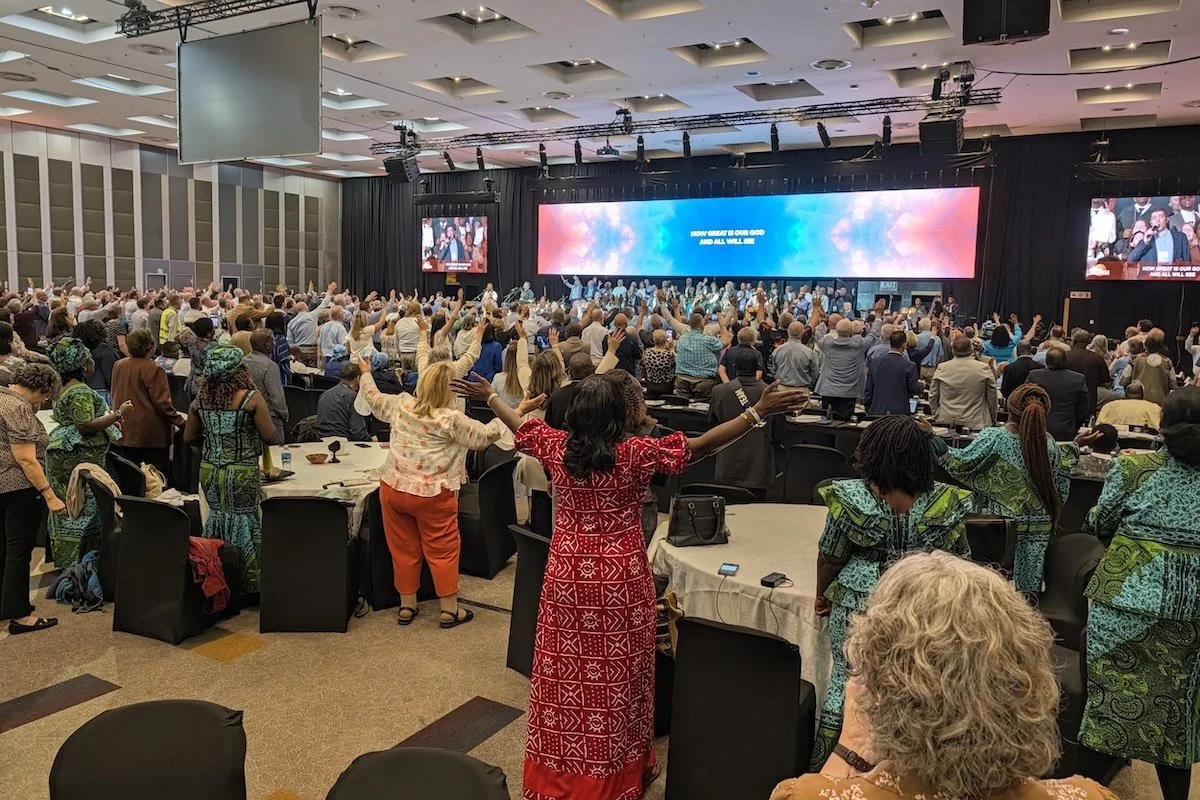
Opening worship at the 2026 Global Methodist Church General Conference in Johannesburg, South Africa. Photo by Matt Reynolds.
As I prepare for a 16-hour flight back to the United States, I find myself reflecting on the beauty I just witnessed at the Global Methodist General Conference in Johannesburg, South Africa. I do not take for granted the gift it is to have a front row seat to these formative years in a new denomination. All is not perfect. There are people involved, after all. But there is much to celebrate. I believe that what is being built in the GMC both honors the Lord and continues the very best of the Methodist tradition as we recapture our doctrine, spirit, and discipline. Here are a few highlights and reflections:
Evangelism and Mission
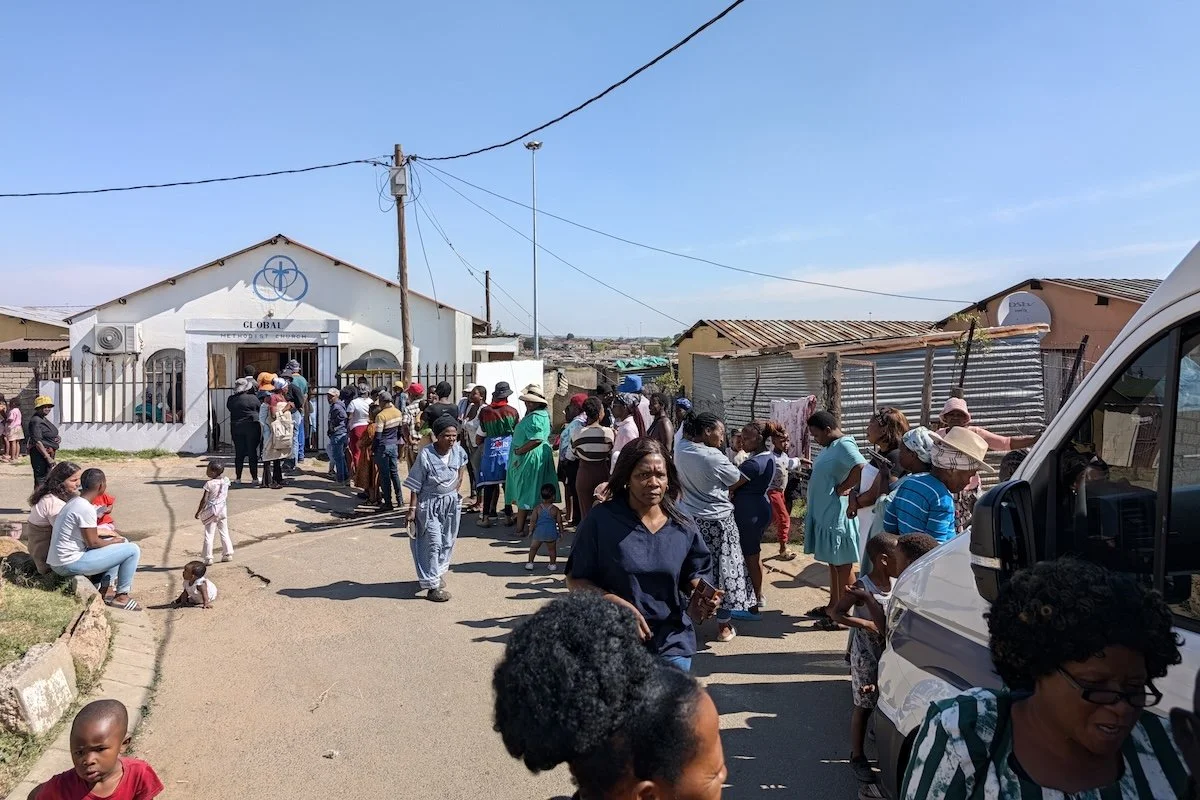
A GMC Congregation in the Soweto slums where outreach occurred during the week. Photo by Matt Reynolds.
My time in South Africa started before the official launch of the conference. The day before, I led evangelism training open to any and all delegation members and guests who wanted to attend. We met in a community center in Soweto. It was a powerful time of prayer and training around ways to intentionally practice evangelism as individuals. After the training, we proceeded to the slums nearby where we offered a free health clinic and distributed food. On that first day of outreach there were never less than 100-200 people waiting in line for the clinic. Hundreds, if not thousands, were fed. The mission team was not planning to start children's Bible programming until Monday, two days later, but without any planning, word spread and soon 200+ children gathered at the tent. As people left the clinic we offered prayer and, at times, were able to share about Jesus. In the first afternoon alone I think our prayer team prayed for at least 100 people. Rev. Tim Beardsley led an incredible team of volunteers who continued the mission and evangelism work throughout the conference. At one point nearly 1000 children from the slums gathered to learn more about Jesus. I begin my reflection here because it speaks volumes about the DNA we are attempting to build into the GMC. My heart is overjoyed to be a part of a denomination that includes such kingdom efforts during a gathering that is primarily focused on church legislation.
The Articles of Faith and the Miracle of Unity
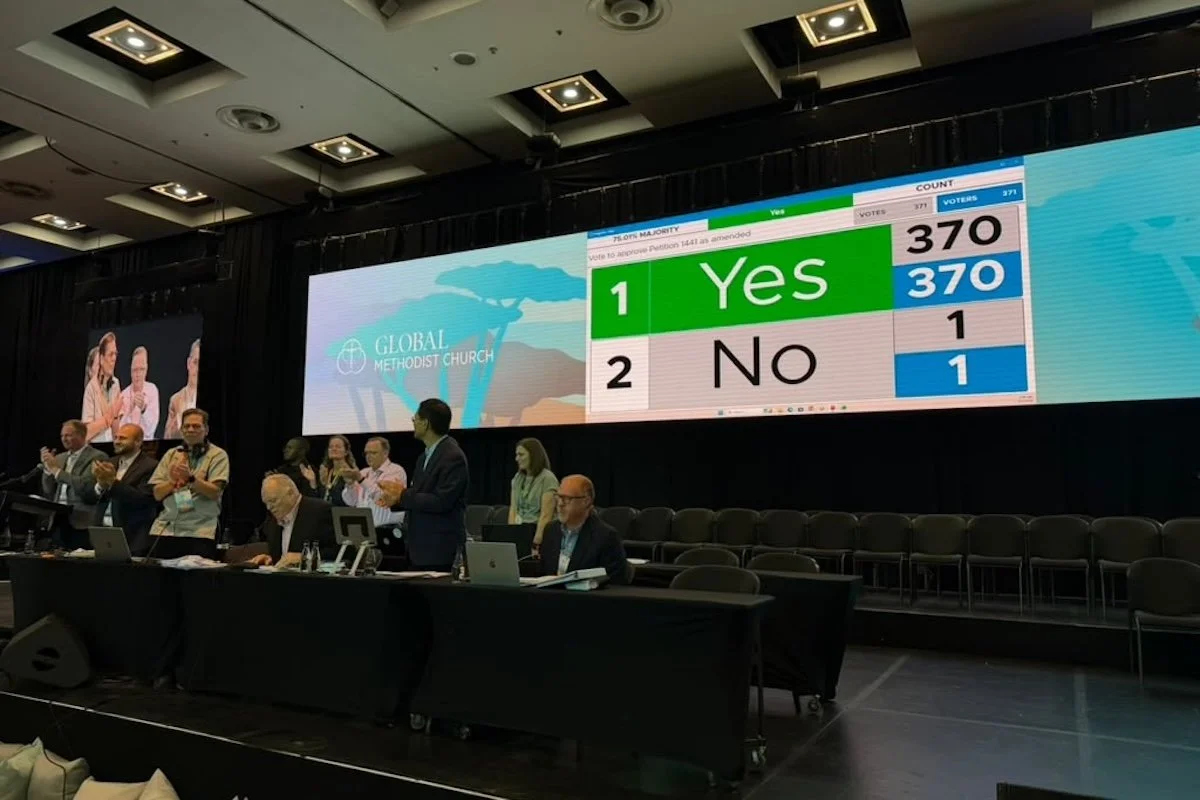
Voting results on the Articles of Faith. Photo by Brian Choi.
Unquestionably, the most historic action of the general conference was the adoption of new Articles of Faith, which combine and replace the Articles of Religion of the Methodist Episcopal Church and the Confession of Faith of the Evangelical United Brethren Church. Both were inherited from previous denominations. The EUB Confession of Faith was approved in 1962, but merged documents that went back to the late 1700s. The Evangelical Association's contribution (the EA Articles of Religion) was the same MEC Articles of Religion but translated in German. These came from the Anglican Church, with some edits by Wesley, to the Christmas Conference in 1784. But most of those Articles dated back to at least 1571. To put this in context, the actions of the GMC General Conference to replace the Articles of Religion was a once-in-455 years occurrence. It was breathtaking to behold.
Like many other historical moments associated with Methodism there is a miraculous testimony to how the events unfolded. I had the blessing of observing the deliberations within the Doctrine and Sacraments committee. In the room were some of the most respected minds in our denomination, representing many, if not most, of our approved seminaries: Dr. Matt O'Reilly of Wesley Biblical Seminary, Dr. Timothy Tennent of the Beeson Divinity School, Dr. David Watson, president of Asbury Theological Seminary, Dr. Luther Oconer, professor and now bishop, Dr. Suzanne Nicholson, New Testament professor at Asbury University, and Dr. Ken Collins of Asbury Theological Seminary. And this doesn't include all those who have been deeply involved for months leading up to the conference, like Dr. Jason Vickers of Truett Theological Seminary.
I founded and lead Spirit & Truth which publishes Firebrand Magazine. I have had the pleasure of regularly interacting with many of these brilliant folks for years. I can say from firsthand experience that, when it comes to our Wesleyan scholars, there is no shortage of strong and deeply formed opinions! They are good at their jobs precisely because they are doggedly focused on the small details of what we believe and the important implications for Christian life and ministry in the Wesleyan tradition. Interestingly, what makes them good professors, writers, and scholars also often makes unity and compromise very difficult. This is why I believe that what I witnessed in the work of the committee this week was nothing short of a miracle from God.
There were some tense moments. One particular point of strain was around finding the exact right words to affirm the GMC’s high commitment to the authority of Scripture. Leading up to the general conference there was considerable debate surrounding the proposed articles of religion and whether proposing a new document should even be done at all. The committee’s job seemed impossible. And yet at the end of the process, all of these knowledgeable and faithful men and women, by the grace of God, were able to craft language that unifies us. It does not prefer one person or academic institution. It is thoroughly Wesleyan, historic, and at the same time, understandable by people in the cities of the United States, the slums of Soweto, the towns of Eastern Europe and every other corner of the globe. This is miraculous.
And here is the testimony I most want you to hear. As the members of the committee approached the end of their deliberations, chairperson Matt O'Reilly realized they had reached the end of amendments and debate. The work was finished and it was time to vote. The awareness of the truly historic nature of this document and moment was palpable. As Dr. O'Reilly called for the vote someone asked him to first pray. The weight of God fell upon the room, and as he prayed, Dr. O'Reilly began to tremble and cry. The Holy Spirit met us in the room at that moment. Dr. O'Reilly prayed one of the most humble and beautiful prayers I have ever heard. He acknowledged our lowly place before a Holy and almighty God, and then offered these Articles from our place of weakness, to the glory of God.
After the prayer, they held the vote, and every scholar, pastor, and lay person, who had debated nearly every word in the document, raised a hand in perfect unity to pass the statement. It was a unanimous decision. Many of us were in tears. After the unanimous vote was acknowledged, everyone stood in joy, applauding, and like something written for the climax of a movie-script, unprompted by any human instruction, we spontaneously began to sing the doxology. Praise God from whom all blessings flow!
I have been in full-time ministry for nearly 22 years in the Methodist church. I have sat through a lot of meetings. I can say without a doubt it was the most holy moment I have ever experienced in a meeting in my life.
I believe the new articles are scripturally faithful, historically sound, and will be a tremendous gift to the church. My greatest hope is that these new articles will be embraced as a robust teaching tool to embed sound Wesleyan doctrine in local churches.
Election of Bishops
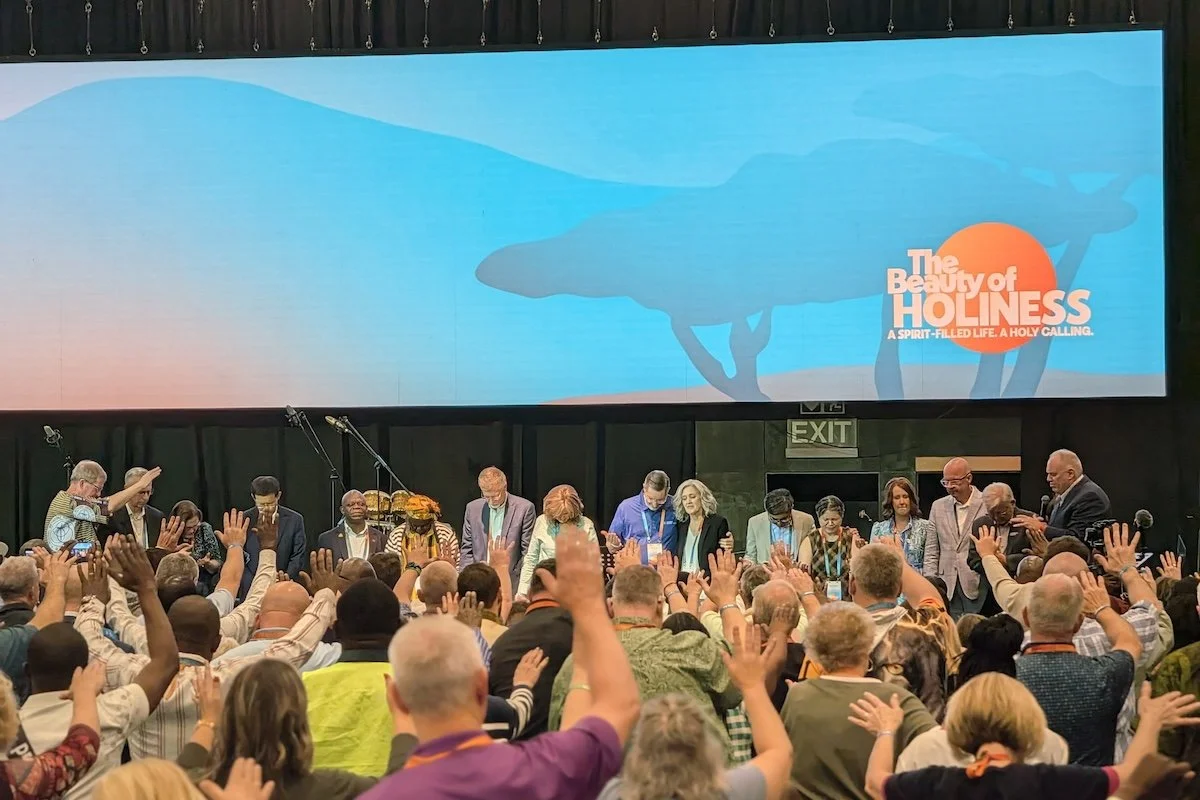
Praying over the new bishops immediately after election. Photo by Matt Reynolds.
Besides the Articles of Faith, perhaps the other most consequential action that impacts the next six years was the election of bishops. For the first time in our history, the GMC will have eight full-time bishops who will lead the church through the apostolic ministry of teaching, defending the faith, holding us accountable to our doctrine and mission, and serving as spiritual shepherds. Employing a new election process that both elected bishops while simultaneously appointing them to specific episcopal areas, the body finished elections in a relatively short amount of time.
The following bishops will serve for the next six years:
Episcopal Area 1: Bishop Luther Oconer
Episcopal Area 2: Bishop Johnathan Lee
Episcopal Area 3: Bishop Mark Webb
Episcopal Area 4: Bishop Lyndol Loyd
Episcopal Area 5: Bishop Jerry Kulah
Episcopal Area 6: Bishop Eduard Khegay
Episcopal Area 7: Bishop Paul Lawler
Episcopal Area 8: Bishop Carolyn Moore
I know many of these bishops personally and believe that the GMC is in good hands in the days to come. These are sincere Christians who serve the church humbly. They are sharp, wise, and faithful. I trust they will lead us with integrity and help us move further into our mission.
A Truly Global CHURCH
One of the most beautiful aspects of the gathering in Johannesburg was how much of the globe was represented. The GMC now has over 7,200 churches with 55 annual conferences. Delegates came from all over Africa, Asia, Europe, North America, and South America. I even met someone from Australia. If only we could have had someone from Antarctica we would have had all seven continents represented.
During the conference languages from around the world were spoken both in legislative discussions as well as worship. Compared to my experience in Costa Rica two years ago, there was a noticeable increase in delegates from outside the U.S., and it was wonderful. I praise God for the opportunity to connect with his body through so many different tongues, tribes, and nations. Even if our multinationalism adds complicating factors, it’s worth it. We are better when we are shaped by brothers and sisters in Christ from outside our immediate bubble. This is one of the central reasons I am committed to this particular denomination. Having substantive connection with the global church is important.
It was also remarkable to be meeting on the continent of Africa. From what I can gather, this was the first time any major Methodist denomination has ever held a general conference on African soil. I praise God for this historic opportunity. Given that the African Methodists have contended so strongly for orthodoxy in recent years it seemed very appropriate.
Formative Legislation
This second general conference of the GMC had many substantive questions to tackle. While the convening conference in Costa Rica provided a spirited launch, this gathering was about starting to discern the bones of this body that will provide structure for the foreseeable future. Delegates weighed in on 451 petitions. The process began with deliberations in legislative committees and the fruit of those meetings was presented on the plenary floor.
The general conference wrestled with a number of topics, including how to adjust our process of electing bishops after experiencing the pros and cons of this first election. We also strengthened our social witness statements to reflect grace-filled, Biblically-rooted positions for the general church. Many issues related to ministry, like credentialing, education, sacramental practice, and more, were debated.
In my opinion, we made some positive adjustments to our still-forming-structures and provided a firm foundation for faith and practice in the Book of Doctrines and Discipline, without adding unnecessary material to bloat our church law. I believe the changes and adjustments made will serve us well for the next six years until we meet again to reassess the state of our movement.
Worship, Joy, and Holiness
The times of worship were the anchoring framework for our time together. It was Spirit-filled, biblically sound, and rooted in the historic sacraments. Not to mention, the preachers for the week were phenomenal.
I also want to celebrate the spirit I saw among most attendees. People were joyful, and they walked in holiness. Before we headed to South Africa I wrote about my hope regarding how we would conduct our business during general conference. I prayed we would model scriptural holiness, the mission that we say we want to share with the world. For the most part, I believe we did that. Were there some tense moments? Yes. Will there be tense moments with so many strong leaders, convictions, and opinions in play? Sure. But our leaders modeled integrity and honored the Lord, and we followed suit.
Conclusion
God is good. The GMC is a work in progress, but we are starting to see more pieces come together. We came to South Africa with much work to do, and by the grace of God we achieved much. We certainly exceeded my personal expectations of what I thought could be accomplished! I leave Johannesburg even more hopeful than when I arrived. There have been some difficult decades for Methodists in recent history, but if this general conference is any indication, God is not done with Methodists quite yet. Something bold, holy, and beautiful is brewing in the Global Methodist Church.
Matt Reynolds is the founder and president of Spirit & Truth, a church-equipping, resourcing, and missions ministry based out of Dayton, Ohio. Firebrand is a ministry of Spirit & Truth.