
Weakness is the Way: What Could a Wesleyan Theological Resurgence Look Like?
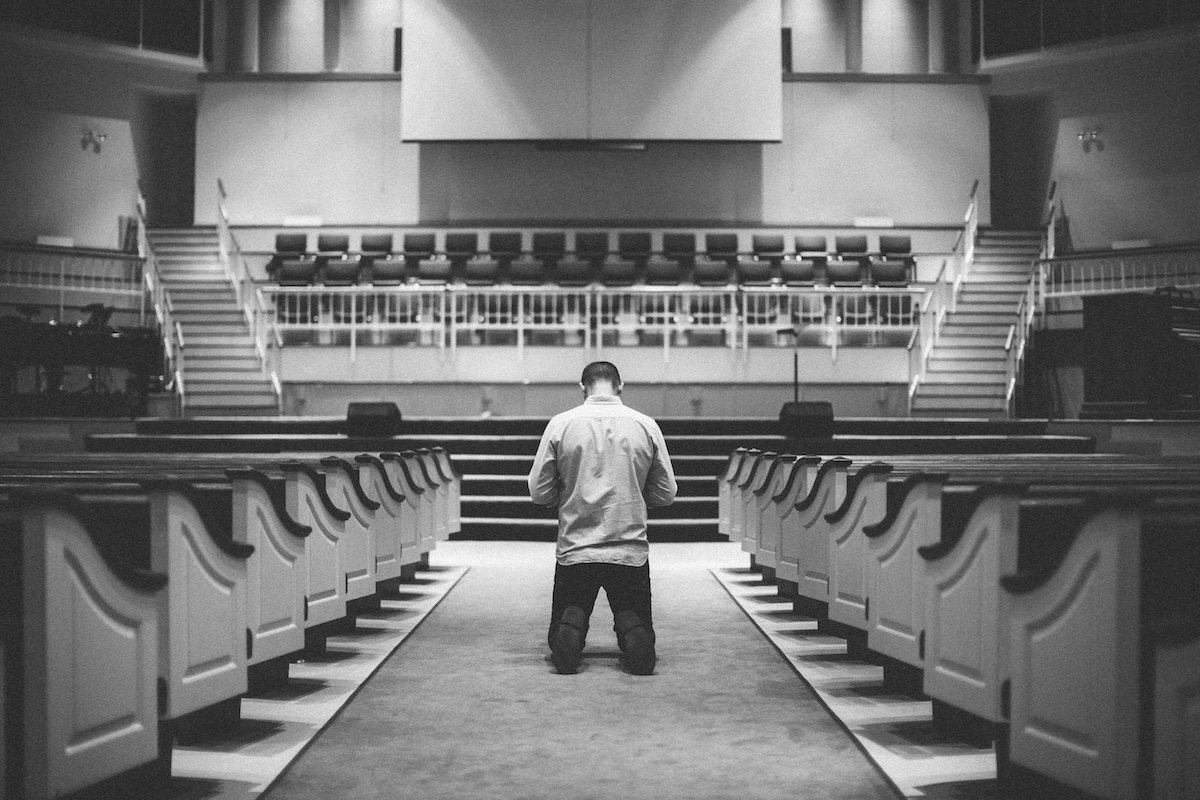
Photo by Pearl
“Wesleyan theology is weak theology.”
That is the message I received from a Calvinist pastor friend during a phone call recently when discussing Wesleyan theology. The statement took me by surprise because I held (and still hold) this man of God and his opinions in high regard. I was dumbfounded and saddened because I know so many Christians following Jesus faithfully in the Wesleyan/Methodist tradition. After considering it further, I actually agree with my friend, though not in the same way he thinks. Wesleyan theology is indeed weak theology, but not because it contradicts Scripture, and not because it goes against what Christians have believed throughout the centuries of church history. As the late Dennis Kinlaw pointed out, all theology, Wesleyan or otherwise, should start with Jesus. Jesus showed us that weakness is the way.
“Weakness,” or astheneia in the Greek, as articulated in Scripture, means “without strength,” or “sickness.” Scripture describes humanity this way to show its neediness and dependency on God (1 Cor. 1:26-29, 2 Cor. 11:30, Rom. 5:6). Thankfully for humans, if they draw near to God, His power is made perfect in weakness (2 Cor. 12:9). Weakness is a sign of surrender and desire for God. For any movement to have legs, it must first acknowledge its dependency on God for strength. The power of Wesleyan theology is the dominant view that the work of God is present and active through the infilling of the Holy Spirit. In Wesleyan contexts today, I can see this notion of divine agency through the work of ordinary pastors, healthy churches, and thriving ministries seeking to churn out helpful, biblical resources.
To be clear, this essay is not a polemic against Calvinism or Reformed theology. I have read and have benefited from Reformed and Calvinistic authors like John Piper, John MacArthur, and R.C. Sproul. The church that I currently call home and worship holds to more Reformed Baptist categories of theology. My heart is not to rebuke my friends and family, but to encourage a different movement that molded and shaped me as well. Christ saved me and I was baptized at a church in the Missionary Church USA denomination, and I graduated from Bethel University (Indiana). What some may see as a splintering of one of the largest movements in Protestant Christianity, with the splitting of the United Methodist and Global Methodist Churches, I see a golden opportunity for orthodox Wesleyan theology to thrive and capture young hearts.
My reporting in a September 17, 2024 article, which was published in Christianity Today magazine, showed many long-standing Wesleyan institutions are growing and interest in Wesleyan theology is rising. Wesleyan spirituality caught national news attention with the 2023 Asbury Outpouring. New Wesleyan institutions like Firebrand magazine, Seedbed, and Holy Joys are being built to provide resources to pastors and laypeople at an academic and popular level. As some have rightly pointed out, Wesleyan theology is not new and has existed for centuries, but I would still argue that the resurgence of interest is new and could continue to grow.
In the 2000’s and 2010’s, the Young, Restless, Reformed movement saw growing interest through the popular teachings of evangelical preachers in multiple denominations and caught national media attention. There are some things to learn from this short-lived movement, but there are also some cautions. In some cases today, it has become fashionable for young Protestant Christians to convert to Eastern Orthodoxy and Roman Catholicism due to the allure of tradition and mystery. The Wesleyan movement is decidedly different from each of these traditions, but its tradition and grounding in Scripture can be attractive to young Christians as well. Here is what I think a Wesleyan theological revival could look like.
Recovering the Gospel
Before any tradition can thrive with its own distinctives, it must first preach on, practice in community, and live out the Gospel of Jesus Christ. Living out the truth that God the Father sent Jesus Christ the Son to Earth to live the sinless life of perfection, die a horrific death in the place of humanity for the sins of the world, and be raised on the third day to defeat sin and death is what should be the focus of every sound church and every doctrine that follows. Every Christian will nod their head at this truth like it’s a given, but the truth is, even in self-professed churches and in the broader culture, it is no longer a given. The Gospel demands, through the conviction of the Holy Spirit, humanity’s response, and humanity has fallen asleep and yawned at the notion that the God-Man is reigning as Lord and King, and desires a relationship with us.
What made Methodism and the Wesleyan movement in general such a force in the late 18th and 19th centuries was its fervent and persistent evangelism. In order to recover the evangelistic fervor of John Wesley and those circuit riders who came after him, Wesleyans must proclaim the Gospel. More importantly, Wesleyans must start by preaching the Gospel to themselves and believe it passionately. John Wesley, in a September 20, 1788 letter to Francis Asbury, said, “O beware, do not seek to be something! Let me be nothing, and ‘Christ be all in all!’” How do we want the world to see us? As bickering loudmouths or proud people filled with hatred towards the world? We must seek to behold Christ above all else, just as Wesley sought to do.
As Christians from any theological movement seek to preach and live out the Gospel, the goal is to do it in love because the world should know us by our love (John 13:35). One of the potential pitfalls in this era of Wesleyan Christianity is the danger of falling into bitterness and anger towards its perceived enemies. The Gospel should humble everyone to get low before the cross. If Wesleyan Christians want to see revival in their churches and see younger believers come to or stay in the church, everyone should rally around the Gospel. Many faithful pastors and teachers like Robert Coleman and others have been beating this drum for a long time. The Wesleyan movement would do well to start here.
Humble Leadership
One of the most insightful and faithful voices that influenced the Young, Restless, Reformed movement was the late Tim Keller, founding pastor of Redeemer Presbyterian Church in New York City. What made Keller attractive to so many young Christians was not necessarily what he defended, though he was a Calvinist through and through, but how he defended it. He communicated the truth in love and was grace-driven in his response to critics. He preached on and lived out humility. Shortly before and after his death, critics liked to say he was too soft on sin and promoted “third-wayism,” but the truth is he was sometimes scorned for his strong beliefs on sin in one of the most secular cities in the United States and his theology was more driven by the Gospel than by political allegiances.
While Wesleyans can disagree sometimes with the theology of Keller, everyone, regardless of theological convictions, should agree with how he chose and tried to lead himself and his church. Without a doubt, Wesleyans should be clear in their convictions, but if it is not done so in love, grace, and humility, it is not worth preaching and passing on to the next generation of believers. I am aware that some twisted definitions of humility, defined in a postmodern culture, believe that being humble in one’s theology means that we cannot possibly know the truth; therefore, we should not hold to strong convictions. That is categorically false. A Calvinist understanding of irresistible grace and a Wesleyan’s view of prevenient grace cannot both be true because they are fundamentally different, to give just one example. Calvinists and Wesleyans may not be in agreement, and they should hold true to their convictions, but they should be humble in how they carry themselves in theological disagreement.
We live in a time when “strong man” leadership is more valued in some corners of the world, and humble, honest leadership has seemed to take a backseat. There is nothing wrong with desiring strong leadership, but only if leaders find their strength from humbling themselves before the cross. I admire John Wesley. He was a man of conviction and a giant in the pulpit, but he valued a character of humility. In a May 30, 1776 letter, Wesley wrote, “The knowledge of ourselves is true humility; and without this we cannot be freed from vanity, a desire of praise being inseparably connected with every degree of pride.” Strong leadership, in Wesley’s view, would be void of proud preaching and would suffocate any hint of narcissism in leadership. Instead, we must look at ourselves as deeply sinful and realize, as the late Carl F.H. Henry once said, “How can anyone be arrogant when he stands beside the cross?”
There are many strong pastoral and theological candidates for how humble Wesleyan leadership is to be attained and lived out, but there are not many who speak to the broader evangelical movement. There are a few Wesleyan theologians and pastors who cross denominational and theological lines to meet the cultural moment, such as Thomas McCall, Timothy Tennent, Beth Felker Jones, and countless others, but none who have led the conversation in evangelical Christianity. The tide could be turning in the coming years. The Wesleyan movement must ask God through prayer to lift up the right voices at the right time. It will not be manufactured or conjured up by any one person or group, only God does the work.
Clear Wesleyan Convictions
Love or hate it, what has made the Reformed tradition so successful lately is its ability to churn out clear presentations of their particular theological framework. Preaching and teaching the so-called doctrines of grace in Calvinist theology have become synonymous with preaching the Bible. Many Wesleyans and Methodists from various denominations know that they preach and teach the Bible too, but their interpretation may be labeled as “weak” or “unbiblical” by others. The solution is not to oppose Calvinism or Reformed theology, but to cast a positive vision for Wesleyan theology by being clear with convictions. Some pastors and teachers may be inclined to shy away from teaching clear doctrines from the Wesleyan tradition because they are fearful of being labeled “divisive” or “dogmatic.” However, I would argue that young Christians are craving authenticity and truth in a postmodern culture.
If a Wesleyan pastor knows the Bible teaches prevenient grace, then they should teach on prevenient grace. If a pastor discerns that the Bible talks about entire sanctification, then that pastor should clearly articulate that doctrine with help from the Holy Spirit. If a pastor is convinced that the Bible teaches that genuine faith produces inward and outward holiness, they should plainly state that doctrine in a sermon. The optimism of grace and the holy love of God should permeate the entirety of a Wesleyan pastor’s preaching and teaching. Knowing and loving these doctrines will help guide and protect the flock from embracing and being discipled by other theologies and teachers.
Holding to clear convictions does not give a pastor or layperson a license to be mean, but to be generous in spirit. The outpouring of the Spirit should lead to a perfect balance of truth and grace. These convictions should also be drawn from wise counsel and faithful interpreters from the past, including voices such as Richard Watson, William Burt Pope, and Richard Allen. Consulting the past as well as the present helps pastors and laypeople see the need to root one’s theology in the history of the church. Good retrieval theology is already being done by theologians and pastors such as Kevin Watson and Scott Kisker. The Wesleyan movement would do well to heed their example.
Holy Spirit and Local Church-led
The caution for any theological movement in evangelicalism is to not allow celebrity and fads to guide a movement. One of the encouraging things about my reporting on a possible Wesleyan theological resurgence was the 2023 Asbury Outpouring. No celebrity or fashionable trend was going to overtake the movement—it was a clear outpouring of the Holy Spirit. Even the most skeptical observer could see that there was a hunger for authenticity and a genuine movement among young Christians in Generation Z. I am thankful for the public ministries of many pastors and teachers in the Protestant Christian world, but the extraordinary work of the Holy Spirit among ordinary believers is something I treasure more.
As Generation Z and Generation Alpha grow up, how will they be discipled? Will they be discipled by the celebrity pastor whose podcast sermons, YouTube clips, TikTok videos, and Instagram reels go viral? Or will they be discipled by their local church? If the Wesleyan tradition wants to capture the hearts and minds of young Christians with the message of the optimism of grace and God’s holy love, and they want to see the Holy Spirit’s work continue past the Asbury Outpouring, then it all has to be led by the local church. The Wesleyan movement cannot wait for its Tim Keller or John Piper equivalent to come boost it. Only by trusting in the Holy Spirit’s power and reaching the wayward children through the local church can a flame be ignited in the movement.
Returning to the idea of theological retrieval, Wesleyans must recover the authentic community found in the local church. Taking cues from Kevin Watson and Scott Kisker, the Wesleyan movement grew in centuries past because of band and class meetings. Lives were transformed and hearts were renewed or changed because of the community forged within these circles, and sin was confessed. The same phenomenon could happen again if local churches are led by conviction of the Holy Spirit and cultivate a healthy place for confession and renewal.
Starting with Weakness
Before the Wesleyan movement can begin again or continue with the work in front of it, pastors and leaders must acknowledge and address their weakness before the Lord. God’s power is made perfect in weakness (2 Cor. 12:9), so all people should rely on him for strength. If there is to be a Wesleyan theological revival in the evangelical movement, the solution is simple, yet difficult. Wesleyans and Methodists of all denominations must relinquish control and put down their man-made systems and trust the Lord with the outcome. Some faithful people have been praying for a movement for years and nothing has come yet. I am hopeful the time for the Wesleyan movement to grow has come. The question is, is the movement ready?
Clayton Sidenbender is a member of Gospel City Church in Granger, IN, and a newspaper journalist based in Elkhart, IN. Clayton also writes at his Substack.