
The Moravian Influence on Methodism
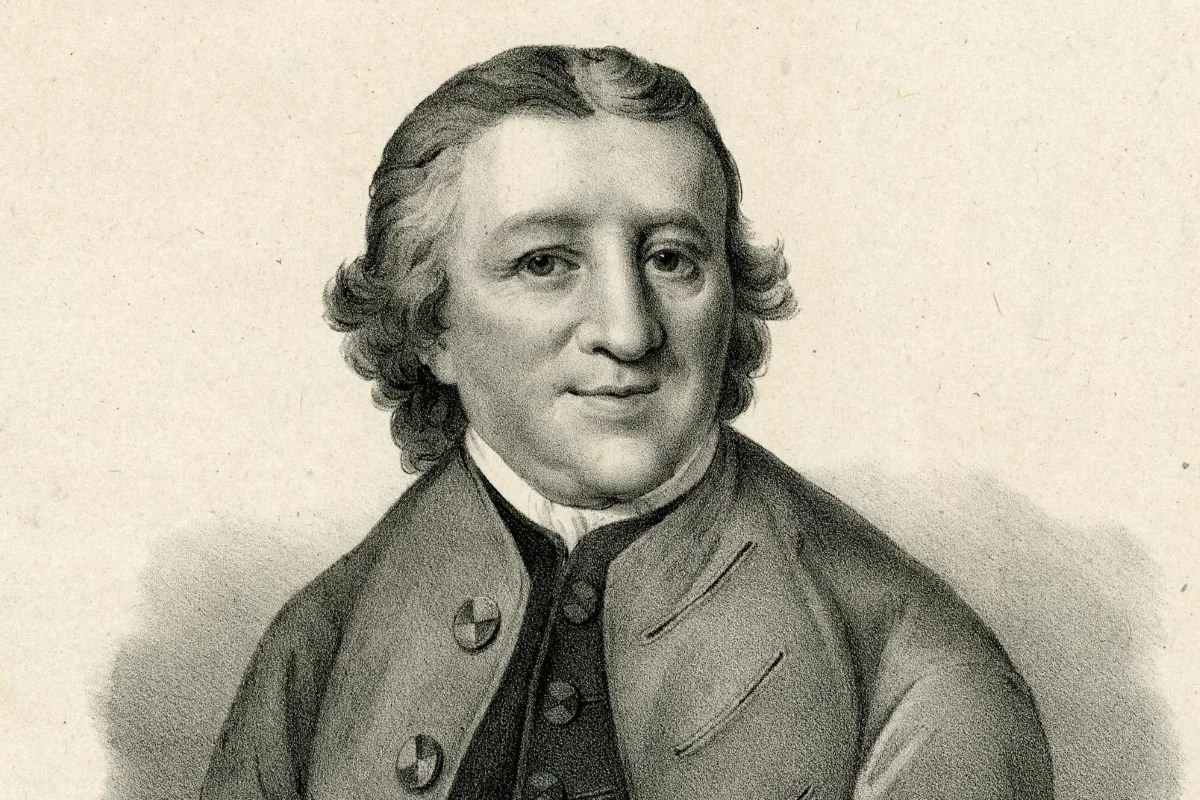
Petrus Böhler, circa 1816-1853. (Source: WikiCommons)
John Wesley often wrote of how deeply the Moravians shaped his inner life. Their habits and theology entered his bloodstream, and their practices helped form what later became Methodism. The roots of many Methodist distinctives run perfectly parallel to Moravian practices.
Wesley returned to London from Savannah on February 3, 1738. The voyage left him shaken. He felt he had failed as a missionary and he carried a quiet fear that he might not have a talent for missionary work. That anxiety moved him toward daily meetings with Peter Böhler, the Moravian mentor who changed everything.
Böhler was young, serene, and confident. He spoke plainly about trust in Christ being the only requirement. He dismissed scrupulosity and offered a simple path of faith. Wesley absorbed this with a mixture of fascination and discomfort. Can trust in Christ alone simply be the source of faith without requiring a rational understanding?
Their almost daily conversations lasted nearly four months, and ended just days before Wesley’s Aldersgate experience. The intensity of these four months with Böhler provided Wesley extensive exposure to Moravian praxis, and points to Böhler as Wesley’s primary source on Moravianism.
Moravian life was unlike anything in the Anglican world. They lived in the Gemeine, a communal daily life. They met in common homes and shared buildings, and they had no priests or bishops. They relied completely on one another and practiced a tender, immediate piety. Imagine how different this must have felt to a priest trained in hierarchy and order, sacrament and liturgy.
Moravians organized themselves into Choirs and Bands. Each Choir gathered believers of similar age, gender or marital status. Bands were personally intimate circles where individuals confessed their sins to each other, revealed fears and temptations, and offered plain observations of God’s daily activity and presence. Wesley surely considered how courage and love deepened under such scrutiny. I think a hunger for such candor must have been in Wesley’s mind when he instituted small groups.
The Moravian belief in the assurance doctrine surprised Wesley as well. Moravians held, with Luther, that the Holy Spirit gives every believer a distinct and locatable inner witness. A believer could always name the moment when their salvation became evident or else they must return and reflect on the possibility of false assurance.
Wesley was a reflector from the time of his interview by Moravian A.G. Spangenberg in Savannah until Aldersgate. He wrote about his inability to answer honestly when pressed for evidence of his salvation with the questions, “Do you know Jesus Christ?” and “Do you know that He has saved you?” Little wonder Wesley made the Moravian Assurance Doctrine central to Methodism even though it was not a feature of Anglican theology.
Hymnody also set the Moravians apart. They lived by song. Hymns were prayer, doctrine, and emotional lifelines. They were not liturgical punctuation but instead they were the believer’s breath and heartbeat. Wesley never forgot the way the Moravians sang aboard the ship Simmonds. Their peace, singing softly in the face of death, stirred him more than any sermon could. Wesley’s Methodism changed Anglican singing from choral performance into personal and communal worship, and today we remain a gathered people singing joyously together.
The Moravians carried their peace across oceans. They embraced itinerancy with a reckless devotion that bordered on the heroic and would travel anywhere for a chance to share the gospel. They dismissed comfort. They distrusted complacency and ignored ecclesiastical boundaries. Wesley admired this energy, but I think he may have feared it a little too.
Field preaching offered one of the clearest borrowings. Wesley learned the basic technique from George Whitefield, but the informality was fully Moravian. Worship did not need a building, and faith did not need a pew. The open air was quite enough. Wesley adopted these freedoms, and Methodist preaching soon reached miners, laborers and the working poor. This was the beginning of itinerant Methodist pastors and the circuit riders. Could the Methodist movement have blanketed the American frontier so quickly without this Moravian permission to roam?
Yet Wesley remained Anglican in his soul. He admired the Moravians, but he never joined them. He knew the rough edges of their system, but he must have also known that what worked for a small community would not work for thirteen expanding colonies. Wesley’s knowledge of magisterial Anglicanism was perfect for giving emerging Methodism the architectural scaffolding that the Moravian faith lacked.
Wesley thought institutionally and he built structures where the Moravians trusted spontaneity. He created the annual conference. He shaped the class ticket system. He developed rules for lay preachers and he pursued doctrinal unity. Little of this resembled the intimate faith of the Gemeine, but Wesley fearlessly adopted and adapted Moravian practices into his systematic sensibilities.
Wesley also resisted the Moravian drift towards Quietism. Moravians often urged believers to relax and wait for God to act, but Wesley feared this could lead to passivity. He believed in assurance, but he believed in holiness too. Faith leads to a changed life, and grace yields discipline. The heart must warm, and the hands must work.
The incorporation and modification of Moravian classes and bands, the added emphasis of the doctrine of assurance, mission-centered itinerant preaching, and hymnody as a means of prayer and cohesion mark Wesley as a master strategist. These features gave Methodism the ability to scale rapidly and keep pace with frontier expansion.
Wesley’s synthesis became the American Methodist identity. It blended Moravian heart religion with Anglican order and sacrament. It welcomed the emotional piety of the Moravians while preserving the moral and intellectual rigor of Anglicanism. It offered a democratic framework suitable for a restless America. The mixture proved powerful. It shaped a movement that touched the lives of farmers, artisans, merchants, and pioneers.
The Moravians gave Wesley the courage to trust. They showed him a serenity that awakened desire. They handed him a vocabulary of assurance that became the pulse of Methodism. They offered him a glimpse of faith that lived in the flesh as well as in the mind.
The Moravian influence remains visible whenever a Methodist speaks of assurance, sings with quiet joy, or seeks holiness of heart and life. It lingers like a fragrance. It deepened Wesley’s soul, and it still echoes in the living tradition he built.
David C. Clark lives in Maitland, Florida. He holds an M.Div. from Asbury Theological Seminary.